Spain's Ceuta Crisis Exposes the Cracks in Europe's Migration Consensus
Madrid calls the mass crossing an 'attack.' Paris tightens its border with Spain. The 57 dead and the 60,000 who crossed in a single weekend reveal how a border policy meant to be common has become a per-country calculation.
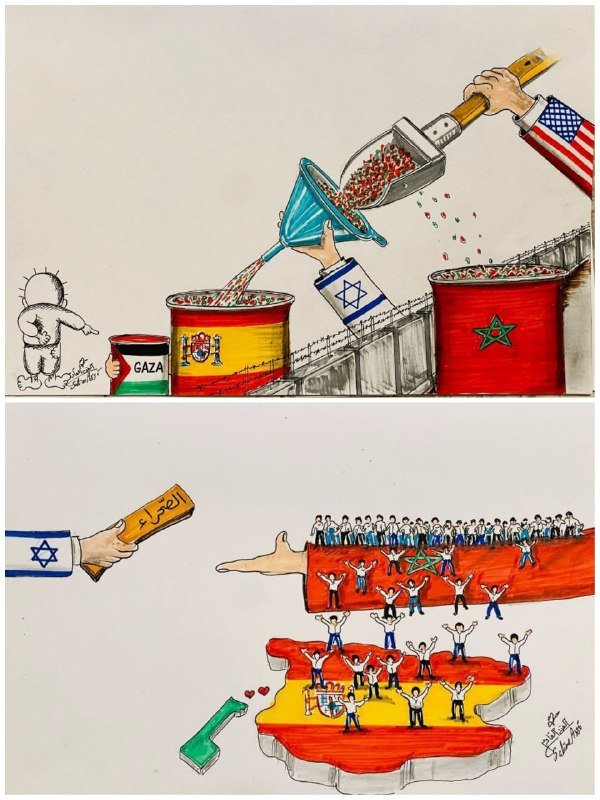
On 31 July 2026, Madrid disclosed that at least 57 people had died during a mass crossing into the Spanish enclave of Ceuta from Morocco, and that almost all of the survivors had been returned across the border (per CNN, reported via @unusual_whales, 2026-07-31T21:31Z). Spanish Prime Minister Pedro Sánchez described the arrivals, which officials placed at up to 60,000 in a single weekend, as an "attack" on Spain's territorial integrity (@unusual_whales, 2026-07-31T18:57Z; @Polymarket, 2026-07-31T13:48Z). Within hours, France had tightened its frontier with Spain in a move that effectively breaks the Schengen fiction of a single external border. The picture this draws is not a migration story in the ordinary European sense. It is a stress test of the political bargain that holds the bloc together.
Monexus assessment: the framing the Spanish government has chosen is doing real work. Calling the crossing an "attack" converts an upstream migration problem into a security event, and a security event mobilises border-hardening reflexes across the union faster than any humanitarian plea could. The political utility of the word is the point.
What actually happened in Ceuta
Mass crossings are not new to Ceuta, but the scale reported this week breaks prior records by orders of magnitude. The episode has produced an immediate casualty figure of at least 57 dead and a return operation that cleared most of the arrivals back to Moroccan territory within roughly 48 hours (@unusual_whales, 2026-07-31T21:31Z). Reported crossings of up to 60,000 occurred in a single weekend, per public summaries of Spanish government statements relayed through @unusual_whales (2026-07-31T18:57Z).
The returns are the part that should focus the analysis. That Madrid was able to move tens of thousands of people back across a contested border within a weekend suggests an operational arrangement between Madrid and Rabat that has more substance than the public commentary acknowledged. The available source items do not specify the operational details of the return mechanism or any prior negotiation between Madrid and Rabat; readers should treat the timeline as provisional.
Madrid's letter, and who it is aimed at
On 1 August 2026, Sánchez sent a letter to his EU counterparts warning of "selfish" reactions by some member states to the Ceuta crisis and calling for a ministerial meeting (@insiderpaper, 2026-08-01T09:07Z). The letter is a piece of political theatre, but the line it takes is precise. Madrid is treating the French tightening as illegitimate within Schengen. Madrid is also treating the broader reflex of re-fortifying the Franco-Spanish border as the failure mode the Ceuta crisis was always going to expose. The political demand embedded in the letter is that union members absorb, fund, or process at least some of the burden that the geography of Ceuta pushes onto Spain alone.
There is a competing reading, which the cited material does not rule out. The Spanish government has an interest in characterising the arrival as an "attack" partly because doing so deflects the question of why so many people were able to cross a defended border in a single weekend. A security framing shifts responsibility away from operational failure and onto an external state actor. Both readings can be true at once. Monexus finds that the available source items do not specify the operational details of any fence breach; readers should treat that part of the timeline as unverified.
Schengen as a per-country calculation
France's announcement that it was strengthening controls with Spain (@Polymarket, 2026-07-31T21:15Z) is the unambiguous headline. Schengen was sold to European publics as a single external frontier with free movement inside. The political problem is not legal but cumulative. Each time a member state tightens, the underlying bargain loses credibility with the publics of every other member state that has not yet tightened, and the cascade accelerates.
The structural reading is that Schengen has become a per-country calculation dressed up as a common policy. Border states process or hold. Transit states police. Destination states complain. The shared border exists on a map and in treaty text; the operation of it is nationalised.
The cost of the 57
Casualty counts of 57 in a single weekend are not the worst European migration events in raw numbers, but the optics carry weight for a reason. Most of those who died were attempting to enter a territory that is in the EU but geographically inside another continent. The dead are not abstractions: the cited reporting places them, by route and by weekend, in a way that will be documented.
The counter-point worth registering is that calling the influx an "attack" carries its own risks. Securitisation language produces securitised policy. Once the frame is set, the political space for a humanitarian read narrows quickly, both in Madrid and in the capitals watching. Spain will get solidarity within that frame because the frame rewards solidarity for security, not solidarity for welfare.
The plausible next moves are visible already. Expect another reintroduction of border controls at additional EU internal frontiers within the next 72 hours if a second weekend produces comparable crossings; expect Madrid to call an extraordinary JHA council within the same window; expect Rabat to be cast alternately as the operator behind the crossings and as the indispensable partner in the returns, depending on who in Brussels is speaking. These are this publication's forward readings, not sourced forecasts.
How Monexus framed this: the wire has treated Ceuta as a migration story with a security tag. Monexus treats it as a stress test of the Schengen bargain, because the political response inside the EU now governs more of the consequences than the crossing itself does.
Wire provenance
This editorial synthesis draws on the following public wire/social posts:
- https://t.me/insiderpaper/43672
- https://x.com/unusual_whales/status/2083275755824554143
- https://x.com/unusual_whales/status/2083265689306251704
- https://x.com/Polymarket/status/2083300665929912556
- https://x.com/Polymarket/status/2083188171194441868