Sudanese army drone strike on Darfur village hits traditional court, killing at least 35
A drone strike attributed to the Sudanese army hit a traditional court in a Rapid Support Forces-held village in North Darfur, killing at least 35 people, according to the rights group Emergency Lawyers, as reported by France 24 on 3 August 2026.
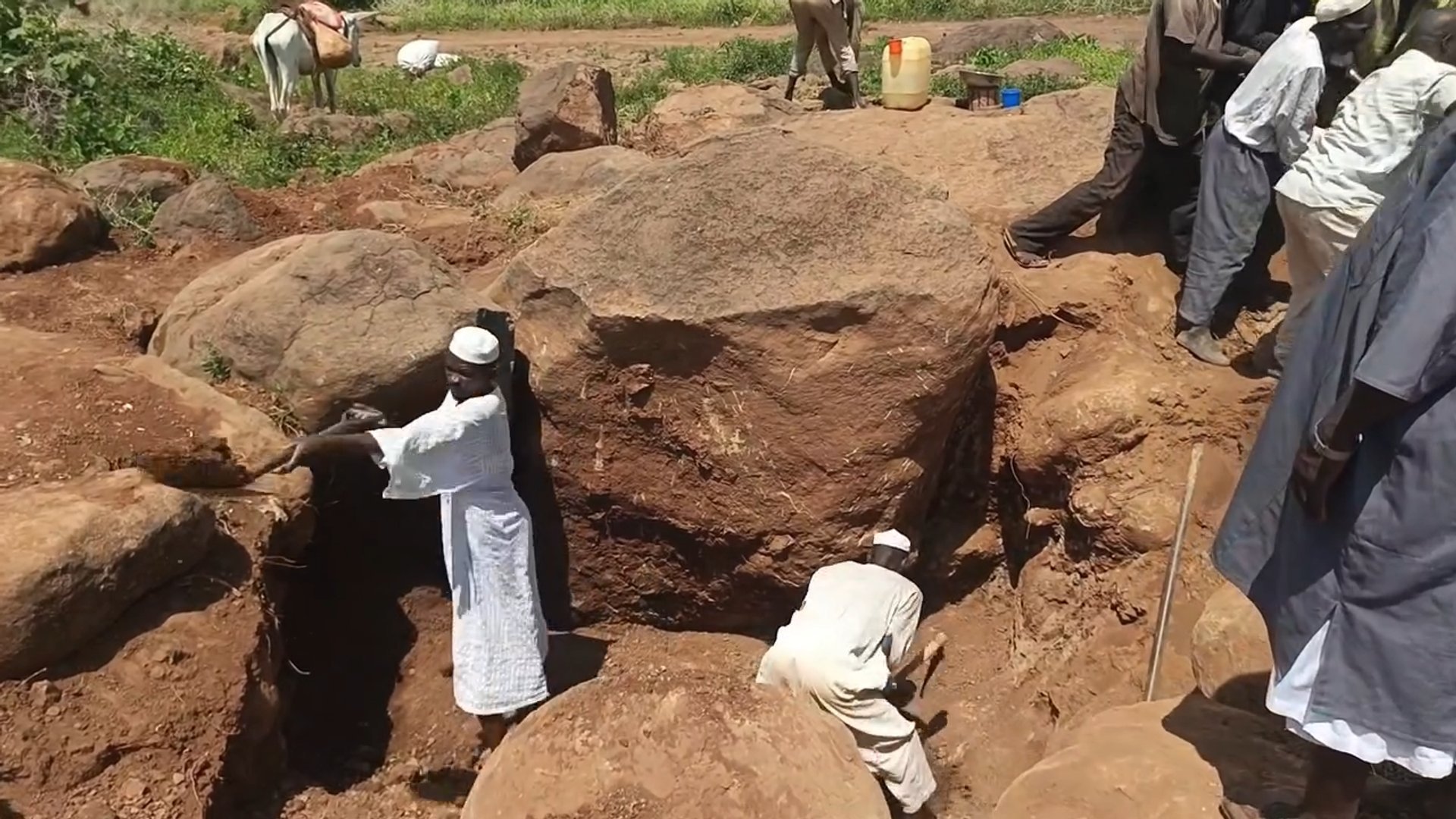
A drone strike hit the village of Garra al-Zawaya in the state of North Darfur on Sunday, killing at least 35 people during a court session, the Sudanese rights group Emergency Lawyers said. The wire reporting by France 24, published on 3 August 2026, situates the village inside territory held by the paramilitary Rapid Support Forces, and identifies the target as a traditional court, a customary-law institution in a rural village where disputes over land, marriage, and debt are adjudicated. France 24's French service reported that the attack struck during the afternoon and that several others were wounded in addition to those killed. The strike lands inside Sudan's civil war, and against a backdrop of escalating drone use by both sides.
The core facts in circulation as of the early UTC hours of 3 August 2026 are narrow: a drone strike attributed to the Sudanese army, a rights group's casualty count, and a condemned target that was, in the group's own framing, a court rather than a command post. Everything beyond that, including the army's own characterisation of the war, the front-line geometry, and the broader tactical pattern, is contested terrain. This article separates what the three cited source items actually establish from the read Monexus puts on top of them, and is explicit where it does so.
What the wire says, in plain terms
Three points are entailed by the source items and can be asserted directly. First, a drone strike hit Garra al-Zawaya in North Darfur on Sunday, with the strike attributed to the Sudanese army in the rights group's account relayed by France 24. Second, the target described by Emergency Lawyers was a traditional court, not a military installation; the group did not characterise it as a command post, weapons cache, or staging area. Third, the death toll reported by Emergency Lawyers stood at at least 35, with several others wounded according to the French service's report.
The village is described in the wire as held by the RSF. That characterisation is the rights group's and France 24's reporting on it, not an independent ground-truth claim about territorial control on 3 August 2026. The available source items do not specify how either side's forces were arrayed around the village at the time of the strike, nor whether the army issued any operational statement ahead of it. They do not specify the court's relationship to RSF command, if any. The casualty figure itself is the rights group's count; the available source items do not specify whether any other monitor or authority has independently corroborated it.
The army's public framing
The available source items do not specify the Sudanese army's public characterisation of the strike, nor do they describe a formal statement from the Sovereign Council or any state-aligned outlet framing the conflict as a counter-insurgency. Monexus analysis: in the absence of a cited statement, the dominant framing in the cited material comes from the rights group, which describes a civilian-site strike, and from the RSF-aligned administration, which condemned the strike as a horrible crime, according to France 24's French service. The contest of readings visible in the three cited items is therefore between a rights-group framing of a civilian target hit, and an RSF-aligned framing of a crime committed. The army's own voice is not present in the cited wire.
That absence matters for the read. Where a state's own justification is not in the public record, the available counter-claim material comes only from the opposing party, which has its own interest in maximising the political cost of the strike. Monexus analysis: the cited material does not establish that the strike was a battlefield operation against a uniformed command, nor does it establish that it was indiscriminate. It establishes only what the rights group and France 24 reported, and what the RSF-aligned administration said about it. The rest is inference, and is labelled as such.
What is not in the cited material
Several claims that might reasonably be made about this strike are not, on the strength of the three source items, supportable as direct assertions. The available source items do not specify that the war between the Sudanese Armed Forces and the RSF is now in its third year; they do not specify the current configuration of front lines; they do not specify that Khartoum and much of the north are under army control; they do not specify which external mediation tracks, if any, are presently active. They do not name the commanders of either side. They do not specify whether the RSF's self-proclaimed administration governs Garra al-Zawaya in any formal sense, or whether the court's customary-law function places it inside or outside RSF authority.
Any reading of the strike that leans on those background claims is, on this evidence base, Monexus analysis rather than a stated fact. The cited material is sufficient to report the strike, the target's reported character, the casualty count, and the RSF-aligned condemnation. It is not sufficient to anchor a structural account of the war's progress, command structure, or territorial map.
What to watch next
Three developments would change the read. First, a statement from the Sudanese Armed Forces, or from the Sovereign Council, confirming or denying involvement, and offering or declining to offer a target justification. The available source items do not specify which path it will take. Second, an independent corroboration of the casualty count by a second monitor with access to the site, or a contradicting count; the available source items do not specify access conditions for outside monitors in North Darfur. Third, a mediation-side statement from any external actor currently engaged with the SAF and the RSF; the available source items do not specify whether such a track is presently active.
Monexus analysis: the read on 3 August 2026 is that the cited material supports reporting the strike and its immediate human cost, and supports flagging the target profile reported by Emergency Lawyers. It does not, on its own, support a verdict on the army's intent, on the war's wider trajectory, or on the strike's place in a longer pattern of civilian-adjacent targeting. Until the army speaks, and until independent monitors access the site, the rights group's account and the RSF-aligned condemnation are the public record. The honest reporting job is to say so, and to mark the line between what is established and what is inferred.
Desk note: wire coverage of 3 August 2026 led on France 24's English and French services, with Emergency Lawyers as the principal named source for the casualty count and target description, and the RSF-aligned administration's condemnation as the immediate counter-statement; this article foregrounds both, while explicitly flagging that the Sudanese army's own public characterisation is not present in the cited items.
Wire provenance
This editorial synthesis draws on the following public wire/social posts:
- https://www.france24.com/en/africa/20260803-sudan-darfur-drone-army-kill
- https://t.me/france24_en/18056
- https://t.me/france24_fr/22432
- https://f24.my/C5SE.g
- https://f24.my/C5SG.g