Trump says Iran talks are live, Tehran says they aren't, US officials tell CBS the same: three-way contradiction
At 18:09 UTC on 3 August 2026, Donald Trump told reporters the US is "talking right now" to Iran at Tehran's request, backed by Saudi Arabia, the UAE and Qatar. The denial came from two directions, not one: Tehran said no talks are being held, and US officials told CBS none are planned.
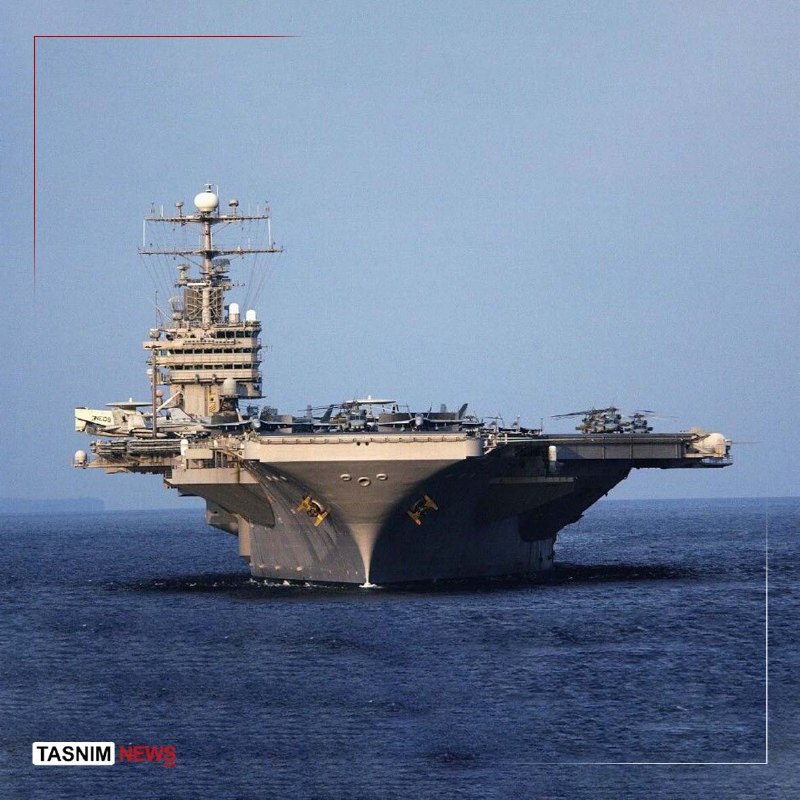
At 18:09 UTC on 3 August 2026, Donald Trump told reporters that the United States is in active talks with Iran, that those talks are happening at Iran's request, and that Saudi Arabia, the United Arab Emirates and Qatar are backing the channel. He called the moment Tehran's "last chance" to sign a deal, a phrase three of his remarks carried inside a fifteen-minute window [1][2][3]. The denial came from two directions, not one. A Polymarket-relayed statement attributed to Iran held that Iran is "not currently holding any talks" with the United States, despite the Monday afternoon announcement [9]. CBS reporting relayed at 16:33 UTC added a third data point: US officials said no new negotiations with Iran are actually planned [6].
The contradiction is not a wire tick. It is the story. Three sides are publicly committed to incompatible positions on the same 24-hour clock, and a fourth, the Gulf monarchies invoked as a backstop, has produced no on-the-record confirmation in the available record. The simplest reading is also the most inconvenient: the talks exist, if at all, as performance, not as a working channel with agendas, text exchanges and a confirmed venue. That distinction will decide whether the next 72 hours produce a deal framework, a fresh sanctions package, or another round of escalation rhetoric that ends where it began.
What Trump actually said, in order
The remarks that drove the headlines came in a tight cluster. At 17:54 UTC, Trump described "the confrontation with Iran" as "going well," a line the Israeli analyst Amit Segal posted to his channel without further context [5]. At 18:02, via Clash Report's relay, Trump added the operational claim: "We are talking right now at the request of Iran, backed by Saudi Arabia, the UAE, and Qatar, and others also" [4]. At 18:03, the same relay carried the deadline language: "This is their last chance to sign a good document" [3]. At 18:06, the Segal channel posted the cleaner sentence: "This is Iran's last chance to sign an agreement" [2]. At 18:09, the disclosetv feed consolidated the picture: talks are underway, the Gulf states are behind them, and the moment is being framed as Tehran's final opportunity [1].
The shape of the remarks matters. Three of them carry an explicit ultimatum. All three invoke the same three Gulf monarchies by name. None cite a venue, a mediator, a draft text or a date for a follow-up meeting. The absence of those particulars is itself the news, because every prior US-Iran channel since the collapse of the 2015 Joint Comprehensive Plan of Action's working track has been defined by procedural specificity: who met whom, where, on which draft, with which sanctions waivers on the table.
The Iranian denial, and what it actually says
The Polymarket-relayed statement attributed to Iran, posted at 12:19 UTC, is flat in its wording: Iran "is not currently holding any talks" with the United States [9]. The available source items carry that line through a single relay account, not through a direct foreign-ministry release or a first-party spokesperson quote. The substance is consistent with Iran's broader posture since the 2 August Polymarket-relayed announcement that negotiations would begin Monday afternoon, a claim Tehran had not echoed in the available record at the time of Trump's remarks [10]. Read together, the two Polymarket items sketch a sequence in which the US side announced a process, then the Iranian side publicly declined to confirm it, then the US president described it as live anyway.
That sequence matters because it limits the interpretive options. If Tehran's denial is read at face value, Trump's "talking right now" claim is unsupported by any on-the-record Iranian acknowledgement. If the denial is read as a calibrated opening posture, the contradiction narrows but does not disappear, because a government that wants to negotiate while saying it is not negotiating typically still confirms the channel through a third party before the US president goes public. Neither reading resolves the gap.
The third contradiction: US officials against the White House
The most uncomfortable data point in the 24-hour record is the one that points inward. CBS reporting, carried via the Unusual Whales relay at 16:33 UTC, has US officials saying there are "no new negotiations with Iran planned" [6]. That formulation precedes Trump's afternoon remarks by roughly half an hour, which means the contradiction is not a reaction to Trump's statement. It is a pre-existing gap between the US president and parts of his own diplomatic apparatus. The CBS-relayed formulation also leaves a narrow door open: "no new negotiations" is consistent with a back-channel conversation that has not yet been formalised as a negotiation. Read in that light, Trump's "talking right now" could refer to exactly that kind of contact, and the contradiction becomes one of labelling rather than of substance.
The Gulf-state endorsement compounds the problem. Saudi Arabia, the UAE and Qatar are named in Trump's remarks as backers of the channel [1][4]. The available source items do not specify whether any of the three governments has confirmed that role on the record. Gulf states have acted as intermediaries in prior US-Iran episodes, and the absence of confirmation here is not evidence of refusal. But the framing depends on those governments being willing to publicly own a process that Tehran publicly disowns. Until they do, the "backed by Saudi Arabia, the UAE and Qatar" line is a White House claim, not a regional consensus.
Monexus analysis: what the pattern suggests
The cleanest way to read the 24-hour sequence is as a layered messaging strategy, not a diplomatic breakthrough. The 2 August announcement that negotiations would begin Monday afternoon [10], the 3 August Iranian denial carried via Polymarket at 12:19 UTC [9], the 3 August CBS relay that no formal track is planned [6], and the 3 August afternoon Trump remarks about an active channel [1][2][3][4][5] sit inside a familiar playbook: announce momentum, test the other side's public posture, calibrate the next step against the response. The relevant comparison is not the 2015 Joint Plan of Action, which was preceded by months of secret talks in Oman with verifiable technical exchanges; it is the public-statements-only phase of earlier episodes, where Washington and Tehran used parallel press conferences to manage escalation rather than to deliver substance.
The deadline language is the second tell. Three separate remarks inside the same quarter-hour framed the moment as Tehran's "last chance" [1][2][3]. That cadence is not the rhetoric of a working channel with a draft on the table. It is the rhetoric of a public ultimatum, of the kind issued before a sanctions snapback or a designation package, not before a deal. The implication is that the 3 August events are positioning for a decision that has not yet been made, not the opening of a negotiation that will produce a signed document this week.
A third tell sits in the internal US contradiction. When a president says talks are live and his own officials tell a major network that none are planned, the most natural read is that two audiences are being addressed simultaneously: a political audience that wants movement on the file, and a diplomatic audience that wants to keep the door open without committing to a process that Iran has not yet accepted. That kind of split messaging is common enough; what is unusual here is the timing, with the denial on the record before the affirmation goes out.
What is actually at stake
If the talks exist in the form Trump described, the upside is concrete: a renewed nuclear constraint framework, sanctions relief calibrated to verified roll-back, and a Gulf-state architecture that gives Saudi Arabia, the UAE and Qatar a defined role in verification. The downside, if the talks do not exist as described, is also concrete: a credibility hit to the US negotiating posture, an Iranian narrative that the US talks under pressure but does not deliver, and an internal Iranian political dynamic in which any figure seen as engaging Washington becomes a target for hardliners who can now point to a documented denial. The available source items do not specify which of those outcomes is likelier; they do specify that all three principals, Trump, Tehran, and unnamed US officials, are publicly committed to incompatible positions inside the same news cycle.
The next window to watch is narrow. If a Gulf-state foreign ministry issues a confirmation or denial in the next 24 hours, the picture resolves. If Iran moves from "not currently holding any talks" to a procedural acknowledgement of a channel, the picture resolves. If CBS, or another wire, puts a named US official on the record reconciling or hardening the "no new negotiations planned" line, the internal contradiction resolves or deepens. If none of those happens and the 4 August news cycle carries a fresh sanctions designation, an IRGC-related action, or another ultimatum, the 3 August remarks will be readable in retrospect as a coercion move rather than an opening gambit.
Where the evidence thins
Three things remain unsettled. First, the available source items do not specify whether Trump's "talking right now" refers to a direct US-Iran line, a Gulf-mediated exchange, or an Iranian statement received through a third party. Second, the same record contains no on-the-record confirmation from Riyadh, Abu Dhabi or Doha, and no specification of what "backed by" means in operational terms. Third, every consequential claim in the 24-hour record arrives through relays rather than first-party statements: Trump's words via disclosetv, Clash Report and Amit Segal [1][2][3][4][5], the Iranian denial via Polymarket [9], and the US-official denial via Unusual Whales relaying CBS [6]. The underlying CBS report, the Iranian foreign-ministry statement and the Gulf foreign-ministry readouts are not in the available source items, and the contradictions they contain are best treated as provisional until those primary documents are verified directly. Where the evidence thins, this publication labels it as relay rather than upgrading it to first-party sourcing.
Desk note: Monexus framed this as a three-way contradiction rather than a two-way one because the CBS-relayed US-official position is in the available record and runs against Trump's afternoon remarks, and because every consequential claim arrives through relays. Where the sources are relay-only, the article labels them as such rather than upgrading them to first-party statements. The Iranian denial is paraphrased as a Polymarket-relayed statement rather than paraphrased as a foreign-ministry quote, because no first-party Iranian foreign-ministry source appears in the available source items.
Wire provenance
This editorial synthesis draws on the following public wire/social posts:
- https://t.me/disclosetv/21650
- https://t.me/amitsegal/63615
- https://t.me/ClashReport/91418
- https://t.me/ClashReport/91417
- https://t.me/amitsegal/63614
- https://x.com/unusual_whales/status/2084316719196344410
- https://x.com/Polymarket/status/2084252928198549977
- https://x.com/Polymarket/status/2084062439252128094
Follow the event.
These dated source records provide context. They do not retrospectively verify this archive article.
Separate what the nuclear watchdog reported from what it could not determine after the June 2025 strikes.
- https://t.me/disclosetv/21650
- https://t.me/amitsegal/63615
- https://t.me/ClashReport/91418
- https://t.me/ClashReport/91417
- https://t.me/amitsegal/63614
- https://x.com/unusual_whales/status/2084316719196344410
- https://x.com/Polymarket/status/2084252928198549977
- https://x.com/Polymarket/status/2084062439252128094