157 pulled from a burning boat off Boulogne in one of the largest Channel rescue operations since 2018
A boat fire off Boulogne-sur-Mer on 4 August 2026 triggered one of the largest single-day Channel rescues since 2018, with 157 people pulled from the water by French and British vessels.
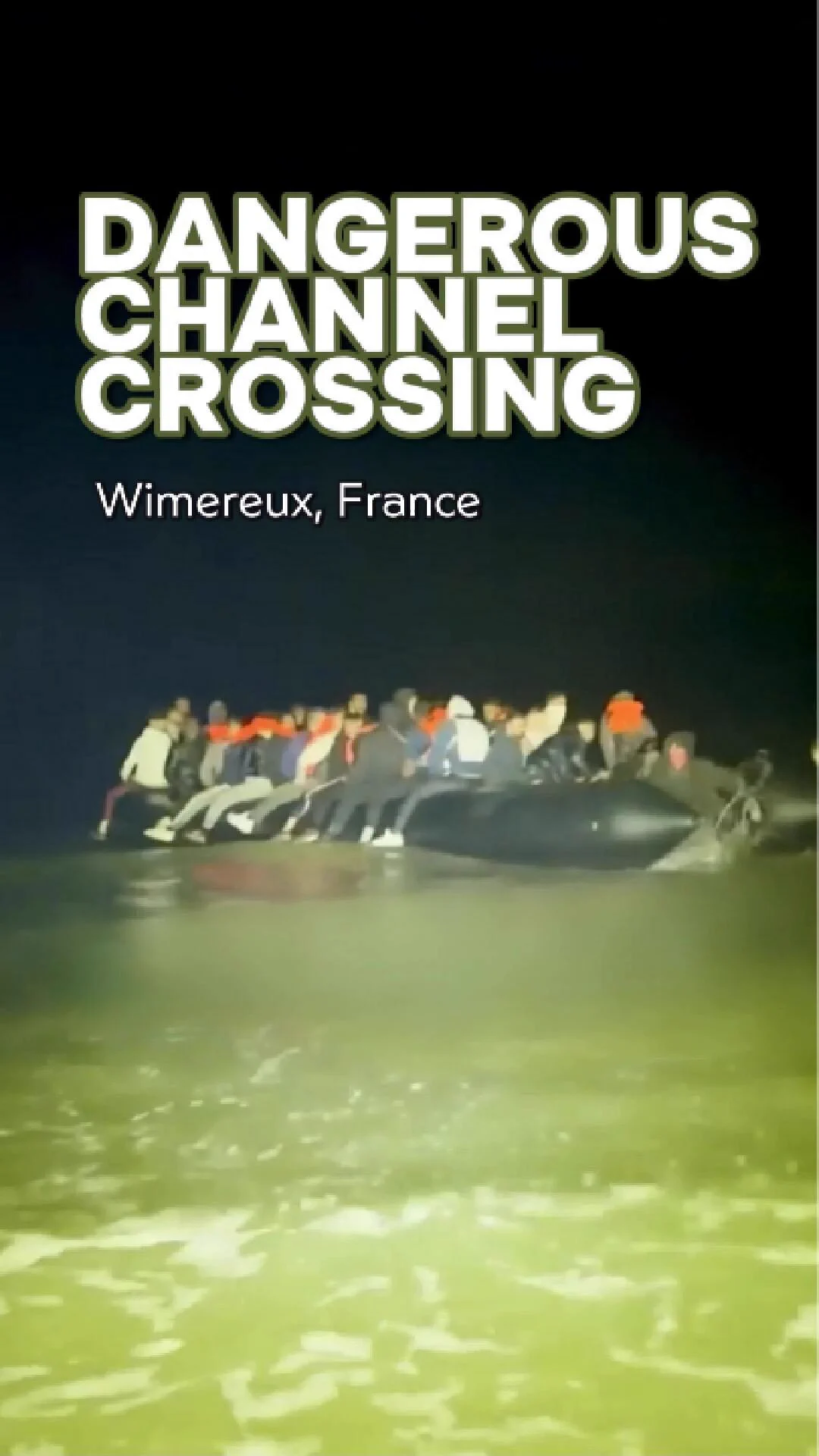
A boat carrying 157 people caught fire in the English Channel off the coast of Boulogne-sur-Mer on the morning of 4 August 2026, and every person aboard was pulled from the water by a coordinated French and British rescue effort. France's maritime prefecture for the Channel and North Sea announced the operation, and French authorities described it as one of the largest single-vessel rescue operations on the crossing since 2018, a characterisation the public wire has carried into the day's bulletins.
The geography is familiar and the politics are louder than the weather. The narrow strait between Cap Gris-Nez and the Kent coast is the world's busiest shipping lane and, in parallel, the route that irregular crossings have used for nearly three decades. A single overloaded boat, on fire, was sharing it on the morning of 4 August. The 157 recovered are not an abstraction but a case: one vessel, one prefecture command, one morning. The larger story sits in the framing the rescue itself has provoked. France 24's English desk has called it one of the largest Channel rescue operations since 2018, a temporal marker that places it on a multi-year curve, not on the daily news ticker alone.
The numbers that travel with the photo
The headline figure of 157 is consistent across the French and English-language wire copy put out by France 24 from the same bulletin window. The French version of the report rounds the total to "nearly 160"; the English wire sticks to the precise 157. The discrepancy is rounding, not dispute. Both accounts agree on the mechanics: a boat, a fire, a rescue, and a count that places this firmly among the larger single-vessel operations on the route in recent years.
The editorial weight sits in the "since 2018" framing. That temporal marker does work the "of the year" framing cannot: it ties the 4 August operation to a documented curve rather than to a single season, and it implicitly locates the event against the eight years of policy debate, bilateral negotiation, and operational build-up that have followed. The characterisation is France 24's, not this publication's, and the language has been carried as quoted attribution rather than asserted as fact.
The UK–France engine behind the rescue
The Channel rescue pipeline is, in practice, a binational one. The available wire confirms that French and British vessels took part in the 4 August operation, coordinated by France's maritime prefecture for the Channel and North Sea. The cooperation is not new; it is the operational expression of a much-maligned agreement that has been renewed, renegotiated, and rebranded across successive UK Home Secretaries. The political fight around the agreement runs hot; the operational coordination runs cooler.
On 4 August the coordination appears to have worked as designed. People were recovered, the boat was extinguished, and medical triage began on shore. The French-language wire from France 24 locates the rescue off the coast of Boulogne-sur-Mer; the English wire describes the same event as taking place while the boat was trying to cross the Channel. The two readings are consistent: the boat was attempting the crossing, and the fire happened in French waters, or close enough to them that the French prefecture led the response. None of the source items specify whether any of the 157 ultimately disembarked in Britain. The available wire does not include a UK Home Office statement on the outcome.
What the boat's fire changes, and what it does not
A fire on a Channel boat is not a new phenomenon, but it is a recurrent one, and the recurrence is the story. The vessels involved are typically inflatable, packed well beyond their rated capacity, fuelled by a small outboard, and carrying people who have often crossed multiple borders to reach the French coast. The fire risk is structural: a single engine in a single-hull inflatable, with petrol stored close to the people it is propelling. The 4 August rescue sits inside that pattern. The difference, here, is the scale.
The political reading of the incident will run in two directions, and both are plausible. The first treats the 157 as evidence that current enforcement is failing and that the bilateral agreement with Paris needs to be tightened, repriced, or replaced. The second treats the 157 as evidence that the deterrence model is failing on its own terms: that the demand for crossings is not responsive to the marginal risk of more patrols, and that the policy mix needs to shift toward legal pathways and processing on the French side. Neither side claims the 157 themselves are at fault, and neither has yet had to account for what would have happened if the French prefecture had not been able to muster the response it did.
What comes next, and what the wires do not yet say
The near-term procedural steps are predictable and visible. The 157 will be processed by French authorities, with medical assessment first and asylum-related interviews second. Some will request asylum in France; some will attempt to make the UK claim that motivated the crossing in the first place, a category that has driven repeated bilateral friction. The French and British interior ministries will, in the coming days, publish figures consistent with their respective political incentives. The bilateral agreement that funds much of the UK presence on the French coast will, if recent pattern holds, be held up by one side as proof of cooperation and by the other as proof of insufficient return.
What the available source material does not specify is the demographic breakdown of the 157, the nationality mix, the gender and age distribution, the cause of the fire, and whether any injuries required hospitalisation beyond triage. The wire summary describes it as a rescue; it does not itemise a casualty count. The French-language dispatch frames the rescue in operational terms; the English-language dispatch frames it in policy-relevant terms. Both are accurate; neither is complete. This publication's read of the gap is straightforward: the headline figure is unusually high and the French prefecture's "since 2018" framing is the cleanest temporal anchor the day's wire provides, but the absence of UK-side detail and the absence of medical specifics leave the political follow-on underdetermined until the interior ministries publish.
The bigger question sits one level up. A 157-person rescue off Boulogne in early August is not a one-off; it is a data point on a curve that has bent upward for the better part of a decade. The boats are larger, the crossings are more frequent, the political resistance to the underlying demand is more entrenched, and the operational capacity on the water has been built up precisely to absorb the kind of event the 157 represent. The fire on the morning of 4 August is a story about a specific boat and a specific outcome. The story it sits inside is about a system that has learned to respond to events it has not yet learned to prevent.
Desk note: Monexus framed the 4 August Channel rescue as an operational event with structural consequences, declining the tabloid framing of crisis and the rhetorical framing of breakthrough in equal measure. The English and French versions of the same France 24 bulletin differ only in rounding; both are cited. The "since 2018" temporal marker is France 24's attribution, not this publication's, and the title and excerpt carry it as such. Absent a Home Office or Interior Ministry statement at the time of writing, this piece does not assert a UK-side outcome.
Wire provenance
This editorial synthesis draws on the following public wire/social posts:
- https://www.france24.com/en/europe/20260804-157-migrants-rescued-after-boat-catches-fire-during-channel-crossing
- https://t.me/france24_en/18077
- https://t.me/france24_fr/22452
- https://f24.my/C5aQ.g
- https://f24.my/C5aX.g