The Strait of Hormuz deal that wasn't, and what it tells us about Tehran's
'On Wednesday, the Telegram wires filled in detail that Tuesday''s statements
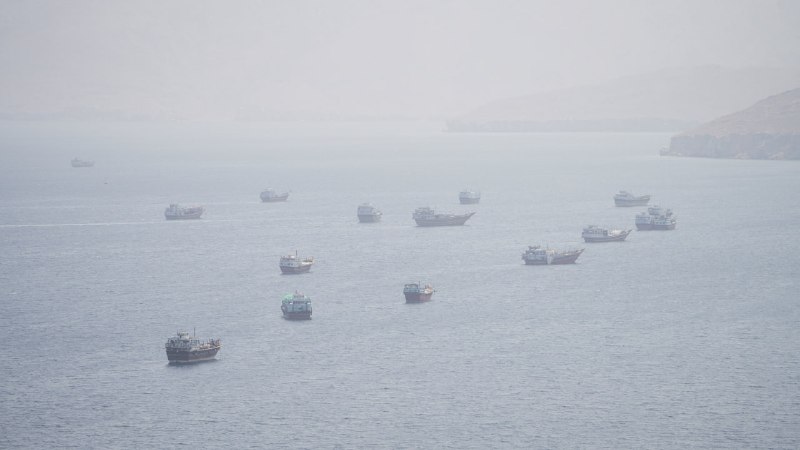
Within twenty-seven minutes on Wednesday afternoon, the same Hormuz story acquired four pieces of substance that the previous day's carefully staged cascade had conspicuously omitted: a single central shipping corridor with a defined transition geometry, a management split between Tehran and Muscat, a banned-flags list, and a tariff figure that the cited record itself contradicts. At 16:12 UTC on 6 August 2026, the Telegram channel ClashReport, citing the proposal, set out the geometry: the plan would "gradually replace" the existing northern and southern lanes with a central corridor, with ships initially entering via the northern lane and exiting via the southern lane during a transition period. At 16:19 UTC, the channel osintlive laid out the operational logic, with Iran managing entry into the corridor and sharing exit control with Oman, and framed transit fees as service charges rather than tolls. At 16:36 UTC, wfwitness relayed a Telegraph item describing a voluntary fund, fed by Gulf states and some European IMO members, to cover navigation, environmental, and search-and-rescue costs. The same wfwitness channel, in a separate post at 16:38 UTC, relayed Fars news on the political spine of the deal: a transition period after which vessels from the United States, Israel, and "hostile" framings would be barred, alongside a Reuters-sourced line that Iran intends to demand five to seven percent of cargo value while Oman requests three percent. At 16:39 UTC, the Telegram channel rnintel posted what reads as a closing formulation, and flagged the tariff contradiction explicitly: "An agreement has been reached with Oman regarding the geographical coordinates of the route for ships passing through the Strait of Hormuz… This is in contradiction to an earlier Reuters report that stated a fixed 3-7% tariff on cargo value."
Tuesday's article in this publication argued that Tehran's information cycle was the story. Wednesday's cascade confirms the reading, but also fills in the substantive architecture that the Tuesday cycle, by design, kept out of frame, and introduces a contradiction inside the cited material that the deal's authors have not resolved.
The shape of the corridor
The Wednesday reporting, drawing on what the channels describe as the proposal under negotiation, sets out a single central lane replacing today's bifurcated traffic. Under the geometry reported at 16:12 UTC by ClashReport, ships would initially enter via the existing northern lane and exit via the existing southern lane during a transition period, after which the central corridor becomes the only legal route. Iran would manage entry; Oman would share exit control with Tehran, in the formulation reported at 16:19 UTC by osintlive.
Monexus analysis: the corridor geometry is the giveaway. A single central lane, policed at entry by one coastal state and at exit by two, converts the strait from open water into a controlled conduit. It does for shipping what a checkpoint regime does for land borders. The transition design is, on the cited evidence, equally pointed: the parties have reportedly agreed to a starting configuration in which northern entry and southern exit remain operational, then plan to ratchet both ends into the central corridor. That sequencing tells you the deal is engineered to be reversible in stages rather than imposed in a single act. Insurance underwriters will read this as a single point of failure: any disruption at entry or exit stops the route, full stop. The market consequence is not subtle; it is the entire point.
Transit fees, on the osintlive reading, would be characterised as service charges, not tolls, an attempt to keep the arrangement outside the IMO's compulsory-route framework. The voluntary fund floated via the Telegraph, fed by Gulf states and some European IMO members, would cover the operational costs the service-charge model is designed to legitimise: navigation management, environmental protection, and search and rescue. The political-economy bet is that small, recurring contributions buy a stake in the regime's legitimacy without conferring veto.
The tariff that the deal contradicts
The Wednesday cascade carries two irreconcilable tariff stories inside the same cited record, and the contradiction is unresolved at the level of the Telegram traffic itself. The wfwitness post at 16:38 UTC, relaying a Reuters line, sets out a split demand: Iran at five to seven percent of cargo value, Oman at three percent. The osintlive post at 16:19 UTC frames transit fees as service charges that fall outside a toll regime. And the rnintel post at 16:39 UTC, closing the window, flags the conflict in plain text: "This is in contradiction to an earlier Reuters report that stated a fixed 3-7% tariff on cargo value."
Monexus assessment: the contradiction is on the page, not a press artefact. A service-charge model and a cargo-value percentage are not the same instrument, and the cited channels have not reconciled them. The most natural reading is that the proposal is still moving: a fixed tariff appears in one relay, a service-charge framing appears in another, and a percentage split appears in a third. The deal's authors have not yet had to choose, because no joint text exists for them to be contradicted by. Until they do, the financial architecture of the corridor is genuinely undetermined, and underwriters pricing the risk have to pick which Telegram post to underwrite against.
The political spine
The proposal's most consequential feature is not the corridor but the flag list. According to Fars news, as relayed at 16:38 UTC by wfwitness, the deal would bar ships from the United States, Israel, and "hostile" framings from passing through Hormuz once the transition period closes. The framing language was not specified in the cited posts.
That the ban is reported via Fars rather than confirmed by a Western wire is itself worth noting. Fars is an Iranian state outlet with a defined editorial line; on a matter as consequential as a flag ban in the world's most important oil chokepoint, the cited sourcing is, at this stage, a Tehran state outlet relaying a political claim about who may use a waterway. The cited thread material available to this publication does not include a Western-wire confirmation of the ban language and does not include an Omani foreign ministry statement on substance. Those omissions are noted as observations about the cited thread; this publication has not independently established whether such confirmations exist outside the thread.
Read narrowly, the ban is the part of the deal that will not survive contact with European capitals. Read as signal, it tells you who the deal is for: a domestic Iranian audience that reads Fars, and a Gulf audience that wants the legal architecture of the strait rewritten around a coastal-states compact that excludes Washington and Tel Aviv. Both audiences are real, and the deal's domestic political viability in Tehran depends on the flag list being there.
Why the timing changed
Tuesday's cascade ended at 15:22 UTC with a conditional denial: the deal was in "final stages," not signed. Wednesday's cascade opened roughly twenty-five hours later with blueprints attached, and closed with the cited record openly contradicting itself on the tariff. The change in register is the change in the story.
Monexus assessment: the previous publication's reading still holds. The pattern is the message. Wednesday's geometry and flag list arrived in the same controlled-window format that Tuesday's confirmation and retraction used: five Telegram channels, each posting within a defined window, each carrying one element of the package. The architecture is the same. Only the payload is bigger, and bigger in a way that exposes the seams. The conditional denial on Tuesday bought Iran the diplomatic upside of "talks ongoing" without the cost of an irrevocable text. The Wednesday cascade buys Iran the domestic-political upside of a flag list without the cost of an Omani signoff, while leaving the tariff question openly contradicted inside the Telegram traffic itself.
There is a structural reading here that the new material sharpens. The states bordering the strait are the states with the strongest standing to rewrite its rules. The Western wire line treats such negotiations as inherently welcome; the Iranian framing treats them as evidence that the security architecture of the Gulf should be set by the states that sit on the water. Both readings can be true at the same time, and the diplomatic room to manoeuvre lives in that gap.
What remains uncertain
The near-term questions are concrete and have multiplied. Whether Oman's foreign ministry confirms any element of the agreement, including the corridor geometry; whether a joint statement is published with text; whether the banned-flag list is corroborated by any non-Iranian source; whether the tariff is a service charge, a cargo-value percentage, or both; whether Iran's Supreme National Security Council signs off and whether that sign-off is disclosed; and whether the proposed corridor is named, charted, or communicated to the IMO. Until at least one of those steps happens with text, the deal is, on the plainest reading, a draft that Iran has allowed the world to over-read, twice.
What remains uncertain is the destination. Tehran wants a Hormuz regime that recognises its coastal primacy and excludes its adversaries, and the financial architecture that would make that regime work. Muscat wants a stable, internationally legible corridor that does not become a regional flashpoint every quarter. The Wednesday reporting papers over that gap with a managed-corridor geometry and a service-charge funding model on one channel, and a cargo-value tariff split on another, and reserves the political content of the flag list for Tehran's own wire. The published language so far papers over the gap; the tariff contradiction inside the cited record widens it.
The watch list, as of 16:39 UTC on 6 August 2026, is a Telegram channel count, not a diplomatic document. That will change when Oman speaks, when the IMO is briefed, when a major Western wire carries the flag list on the record, or when the tariff question is resolved. Until then, the deal is real as architecture and unreal as text.
Desk note: this update integrates the Wednesday cascade (16:12 to 16:39 UTC on 6 August 2026) into the Tuesday file, retaining the original thesis about Tehran's information cycle. The new material, corridor geometry, transition sequencing, management split, Fars-flag list, Telegraph-funded service-charge model, and the Reuters-sourced five-to-seven percent / three percent split, is sourced to Telegram relays of named outlets (Fars news, The Telegraph, Reuters via wfwitness and rnintel), which are cited as relay evidence rather than independent confirmation. The cited thread material available to this publication does not include an Omani foreign ministry statement, a Western-wire confirmation of the flag ban, or an IMO communication; those omissions are noted as observations about the cited thread, not as claims about the silence of those parties. The tariff contradiction inside the cited record (service charge vs. fixed percentage vs. split cargo-value percentage) is treated as an open question in the text rather than a resolved one.
Wire provenance
This editorial synthesis draws on the following public wire/social posts:
- https://t.me/ClashReport/91716
- https://t.me/osintlive/562328
- https://t.me/osintlive/562329
- https://t.me/wfwitness/106265
- https://t.me/wfwitness/106266
- https://t.me/rnintel/65366
- https://t.me/Middle_East_Spectator/35747
- https://t.me/rnintel/65336
- https://t.me/rnintel/65335
- https://t.me/presstv/201700
- https://t.me/alalamarabic/492602
- https://t.me/alalamarabic/492600
- https://t.me/alalamarabic/492598
- https://t.me/tasnimnews_en/29823