Iran's parliamentary committee reviews Hormuz draft targeting US and Israeli shipping
An Iranian parliamentary committee on 6 August 2026 began reviewing a draft bill, reported by Fars news agency via Reuters, that would bar US and Israeli ships from the Strait of Hormuz and fine "hostile" vessels up to 20 percent of cargo value.
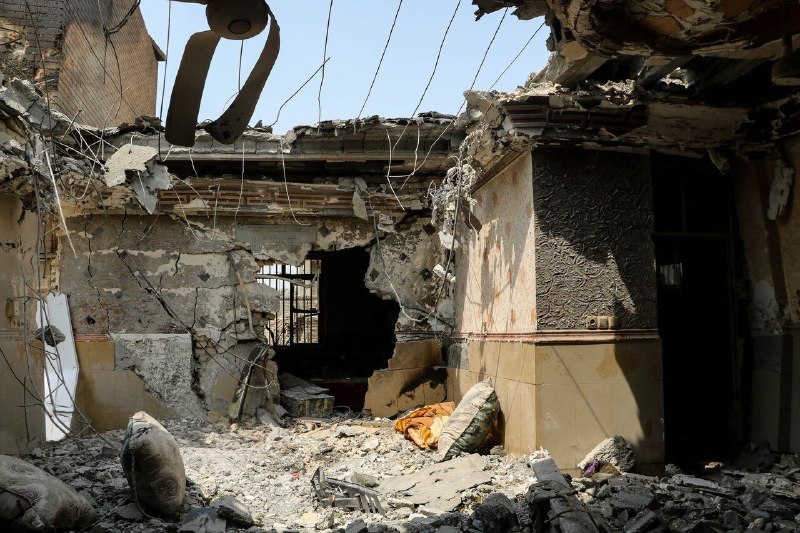
An Iranian parliamentary committee on 6 August 2026 began clause-by-clause review of a draft bill that would bar US and Israeli flagged vessels from transiting the Strait of Hormuz and would expose "hostile" ships to fines of up to 20 percent of cargo value, according to Fars news agency, as relayed by Reuters in a post timestamped 17:10 UTC the same day. The text of the draft has not been published in the cited accounts. Polymarket's markets desk flagged the same 20 percent figure in a post timestamped 17:34 UTC and followed it with a separate post at 17:38 UTC assigning a 51 percent probability that Iran would charge Hormuz transit fees by the end of 2026. The available reporting does not specify a trigger date, a list of additional flags captured by the "hostile" definition, the authority that would collect any fine, or a plenary schedule. Monexus analysis: the headline figures reported in the cited posts describe a committee-stage draft with a percentage-of-cargo penalty and a named-target list, not an enacted tariff.
The bill as described by Fars, relayed by Reuters
The Fars account, as Reuters summarised it on 6 August 2026, frames the draft as a committee review of a bill that would prohibit US and Israeli ships from transiting the strait and would fine violators up to 20 percent of cargo value. The Reuters post does not name a trigger date, a list of additional flags beyond US and Israeli that would fall into the "hostile" category, or the authority that would administer the fines. The Polymarket post at 17:34 UTC attributes the 20 percent figure to the same reporting thread and uses quotation marks around "hostile," indicating that the framing is Iranian (Fars) rather than Polymarket's own characterisation. The available source items contain only the Fars-as-relayed-by-Reuters description; the underlying text of the bill, the committee's rapporteur's report, and any parliamentary procedural timetable have not been cited.
The market is already pricing in enactment
A Polymarket contract on the question of whether Iran will charge Hormuz transit fees by the end of 2026 traded at an implied 51 percent probability in a post timestamped 17:38 UTC on 6 August 2026 (market page poly.market/xDNW0mD). The contract moved in the same window as the Reuters and Polymarket news posts about the committee review, consistent with traders reacting to the legislative step itself rather than to any separate shipping incident. The resolution criteria for the contract are not specified in the cited posts, so the 51 percent price is read here as a market-implied probability on the contract's stated question, not as a derived or weighted estimate. The cited posts do not specify which authority would be responsible for triggering any fee collection or how enforcement would be signalled.
What the draft does and does not specify
The version of the draft available through the cited posts specifies three things: the bill is in committee review, US and Israeli ships would be barred from transit, and fines could reach 20 percent of cargo value. It does not specify, in the cited accounts, which additional flags would fall into the "hostile" category, what authority would collect the fines, how disputes would be adjudicated, whether the bill would apply to LNG cargo specifically, what the transit rate for a non-hostile vessel would be, or whether the committee has scheduled a plenary vote. Monexus assessment: those gaps are not editorial ambiguity; they are the operative unknowns for any commercial shipper trying to price the draft, and they will only be resolved when (and if) the committee publishes the text or the parliament schedules a vote. The cited material does not establish how the committee intends to handle flag-of-convenience vessels, ships under time charter to a non-targeted operator, or transit by vessels carrying cargo owned by a third party under a US or Israeli bill of lading.
What the structure of the draft suggests
Monexus analysis: the structural shape of the bill, as described in the cited posts, points to a tariff-like penalty rather than a single-event closure. A closure is a one-off decision; a percentage-of-cargo fine is a recurring mechanism that does not need to be enforced ship-by-ship against the named-target fleets so long as it can be enforced against the third-party operators who would carry cargo for them. The mechanism, if enacted as described in the Fars-as-relayed-by-Reuters account, would let the Iranian collecting authority set the rate, the exemptions, and the enforcement timetable as policy choices rather than as one-off decisions. The 51 percent Polymarket price is a read on whether that mechanism reaches enactment by year-end 2026, not a read on any single enforcement incident. Where the evidence thins: the cited source items address only the committee review of the draft as reported by Fars via Reuters and the Polymarket posts of 17:34 UTC and 17:38 UTC on 6 August 2026; they do not establish prior parliamentary action on a similar bill, the committee's prior voting record on shipping measures, or any first-party Iranian ministerial statement on the draft beyond the Fars account.
What to watch
The next data points are the publication of the bill text by the committee, the list of flags captured by the "hostile" definition, the identity of the collecting authority, and any plenary scheduling. Until those appear, the public reading is that an Iranian parliamentary committee has begun clause review of a draft bill that, on the figures reported by Fars via Reuters and flagged by Polymarket, would put a tariff-style penalty on US and Israeli shipping through the Strait of Hormuz. The market, per the 51 percent Polymarket contract, is sitting at roughly even odds on whether such a mechanism is in force by 31 December 2026.
Desk note: Monexus framed the 6 August reporting as a committee-stage draft, not an enacted tariff, and labelled the structural reading of the penalty mechanism as Monexus analysis. The cited source items are limited to the Reuters, Polymarket, and Fars accounts referenced above; this article has not independently established whether prior parliamentary or ministerial statements address the same penalty mechanism.
Wire provenance
This editorial synthesis draws on the following public wire/social posts:
- http://reut.rs/4q5BDSm
- https://x.com/Reuters/status/2085413159217639652
- https://x.com/Polymarket/status/2085419168958960066
- https://x.com/Polymarket/status/2085420229522325672
- https://poly.market/xDNW0mD