Tehran denies active US talks, points to intermediaries still working to recreate conditions
Iran's foreign minister told state media on 9 August 2026 that no negotiations with Washington are currently underway, while mediators continue efforts to find ways back to the table.
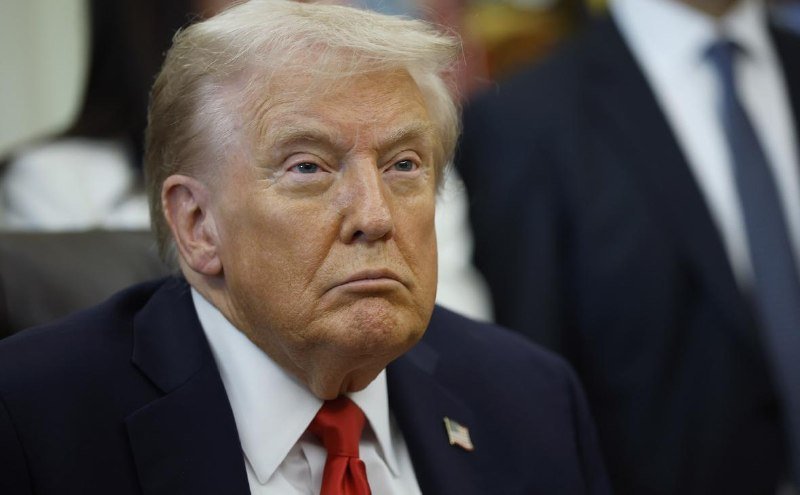
Iranian Foreign Minister Abbas Araghchi declared on 9 August 2026 that Tehran is not currently conducting negotiations with the United States, framing the diplomatic surface as limited to messages carried by intermediaries while mediators work to find ways to reopen formal talks. The remarks, posted within the same hour to a coordinated set of Iranian state and Iran-aligned channels, drew a sharp line between back-channel messaging and a live negotiating track.
The statement is best read as a calibrated posture rather than a rupture. Iran has for months kept two registers running at once: a public maximalist line that demands guarantees, and an operational posture that allows messages to move through third parties. What Araghchi's morning remarks changed is the rhetorical weight: the foreign minister chose, on the record, to draw the line between "no talks" and "messages through intermediaries" in public, in front of both domestic and foreign audiences.
What Araghchi actually said
Araghchi's core message, carried across Iranian state-aligned Telegram channels within the same hour, was consistent in substance and short on concession. There are no negotiations taking place with the United States, he said; messages are being conveyed through intermediaries, and that does not constitute a negotiation. The Mehr News and Tasnim channels, both official Iranian state outlets, posted video of the remarks on 9 August 2026. The Cradle, a Beirut-based outlet that often relays Iranian framing, summarised the position in a short post minutes later. A translation circulating on the English-language Abu Ali channel, which tracks Iran's regional posture, used the same formulation.
The phrasing matters. Araghchi added that mediators are still trying to find new ways to negotiate, and that this work continues until the cases of violations of the Memorandum of Understanding are resolved. The available source items do not specify which document that memorandum refers to, nor do they enumerate the violations Araghchi raised, beyond the public framing that those violations must be addressed before any formal channel is restored.
The mediator pattern, in plain language
The architecture on display is familiar. Iran's negotiating posture, when it engages at all, has historically run through a small cast of regional intermediaries who carry messages, signal red lines, and test whether the other side will move before any direct meeting is convened. Araghchi's remarks fit that template with two adjustments. First, the public denial is unusually pointed for a foreign minister who has previously left ambiguity in place to preserve optionality. Second, the framing of mediators as still trying to find new ways to negotiate implies that Tehran believes the work of recreating the conditions for talks remains an open task, not a stalled one.
Monexus analysis: the statement reads as a calibrated denial designed to keep the diplomatic surface intact while closing off the political space around it. The most natural reading is that Tehran wants to be courted, not to be seen as courting. The explicit naming of a Memorandum of Understanding and its alleged violations suggests that any Iranian re-engagement will be conditional on reparation framing being acknowledged in the mediator track before a formal channel is restored.
Why the public denial now
Diplomatic silence is a tool, and so is its opposite. By stating on the record that no negotiations are taking place, Araghchi accomplishes three things at once. He signals to domestic constituencies that the government is not in a posture of concession. He preserves room for the intermediary track to move without the political cost of being seen to negotiate. And he creates a clean record against which any future announcement of talks can be measured, useful if Tehran later wants to claim that a resumption was forced by external movement rather than Iranian need.
The signal is also directed inward. The reference to violations of the Memorandum of Understanding positions the public denial as a defence of an existing agreement, not as an opening of a new one. That framing has more purchase inside Iranian domestic politics than the bare statement that there are no talks would have on its own.
Stakes and the next move
The immediate stakes are modest. No round of talks has been formally scheduled; the available source items do not specify that any was imminent before Araghchi's remarks, and the statement does not foreclose the possibility of one being scheduled in the weeks ahead. The larger stakes are structural. A re-opened channel would, in the first instance, be a function of Iranian confidence that the conditions around the memorandum and its alleged violations are addressed before any formal session is convened. The 9 August statement suggests that confidence is currently measured rather than expansive.
What to watch next is the messaging traffic from the intermediaries themselves. The available source items do not specify any statement from intermediary capitals on 9 August 2026; this article has not independently established whether any third capital confirmed or denied an active shuttle on the day of Araghchi's remarks. The next credible inflection point is any public naming, by either Washington or Tehran, of a date or venue, or any further characterisation of the Memorandum of Understanding and the violations Araghchi referenced.
How Monexus framed this vs the wire: the wire cycle on 9 August is dominated by Iranian state outlets and relays carrying Araghchi's remarks in near-identical wording. We treated the redundancy as a feature, not noise: the convergence across Mehr News, Tasnim, and the English-language Abu Ali channel is itself the news, indicating that the statement was coordinated for broadcast across Tehran's domestic and external-facing media architecture. Western-wire confirmation of Araghchi's specific formulation, including the reference to the Memorandum of Understanding, has not, as of this draft, appeared in the available source items. The article avoids attributing specific conditions to Araghchi beyond the two named in the public excerpts, that mediators are still trying to find ways to negotiate, and that the cases of violations of the Memorandum of Understanding remain unresolved, and it does not characterise the identity of the intermediary or intermediaries, which the available source items do not specify.
Wire provenance
This editorial synthesis draws on the following public wire/social posts:
- https://t.me/thecradlemedia/65862
- https://t.me/TheCradleMedia/65862
- https://t.me/englishabuali/77464
- https://t.me/abualiexpress/128161
- https://t.me/mehrnews/403224
- https://t.me/JahanTasnim/229121
Follow the event.
These dated source records provide context. They do not retrospectively verify this archive article.
Separate what the nuclear watchdog reported from what it could not determine after the June 2025 strikes.