Strait of Hormuz: Trump's "open" declaration collides with Tehran's vow and an $8bn UAE pipeline
Hours after the US president declared the chokepoint "open," Tehran said it would not return to pre-war conditions and Abu Dhabi unveiled an $8bn gas plan to bypass it. The contradiction is the story.
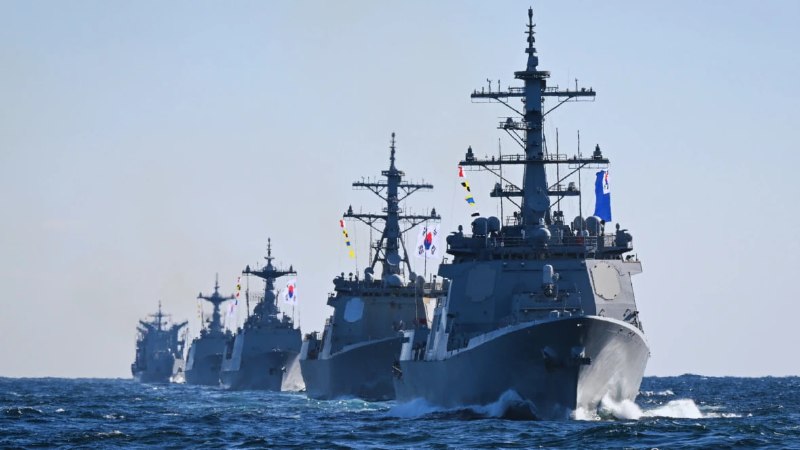
The Strait of Hormuz is, in the telling of the US president on 10 August 2026, already open. Standing before reporters the same day, Donald Trump declared the waterway clear, and an account linked to the prediction platform Polymarket relayed his claim that the United States now has "100%" control of the corridor. Hours later, a rival claim from Tehran landed: the strait, Iran said, will not return to its pre-war operating conditions, and traffic is projected to remain disrupted through the rest of the year on a 54% probability reading on the same platform.
Three statements, three different realities, one waterway. The contradiction is no longer a fringe diplomatic squabble; it is now the operating environment for shippers, refiners, and the planners of $8bn pipelines. As long as Washington and Tehran are publicly reading the same sea lane in opposite directions, the price of that ambiguity is paid by everyone who books a tanker or signs a long-term gas contract.
The American claim
Trump's exchange with a reporter was short and quotable. Asked when the strait would be opened, the president replied: "It's open now." The clip circulated within minutes on Telegram channels and was picked up by Polymarket's account on X, which framed it as a declaration that the US now has "100%" control of the chokepoint. Polymarket's own market on the strait traded the comment in real time, signalling that a meaningful slice of bettors took the statement at face value, or at least as a tradable event. The operative fact is not whether the strait is militarily secure but whether the US is now willing to assert, publicly and unilaterally, that it is. That is a diplomatic claim as much as a naval one, and it lands as one.
The Iranian counter
Tehran's response was swift and structured. Two separate posts on 10 August carried its position: first, that the strait would not return to pre-war operating conditions, and second, that it would remain closed until Trump agrees to Iran's demands. Neither post named the demands. The framing matters more than the content for now, because Tehran has substituted a political condition ("until Trump agrees") for a purely military one. The implication is that even a fully secured strait remains closed in Iranian terms so long as a diplomatic track is unresolved. Read together with the pre-war-conditions line, it amounts to a declaration that the status quo ante, the era of unchallenged commercial transit, is over regardless of who is patrolling the water.
The Emirati reroute
While Washington and Tehran argued over the water, Abu Dhabi was quietly moving on land. The UAE's state energy company, Adnoc, announced an $8bn gas expansion the same day, with regional outlet Middle East Eye reporting that the UAE could become the first country to plan a gas pipeline bypassing the Strait of Hormuz. The political and commercial logic is the same: if the chokepoint cannot be relied upon, even temporarily, the most credible hedge is a pipe that never enters the chokepoint. An $8bn commitment is not a paper study; it is a board-level decision to bet the next decade's export architecture on the proposition that Hormuz is a permanent risk rather than a passing one. Whether that bet is justified is a separate question. The fact that a Gulf petrostate is making it tells you how the regional threat assessment has moved.
The market and the standoff
The prediction market is, for the moment, the cleanest public barometer of the standoff. Polymarket's contract on Hormuz traffic disruption for the remainder of the year sat at a 54% probability on 10 August, up sharply from where it would have been priced in any earlier window this decade. That is not a forecast; it is an aggregation of what traders are willing to pay to bet against normalcy. Read against Iran's explicit political condition for reopening and the UAE's $8bn bypass commitment, the price is a working definition of the new baseline: a more than even chance that shippers should plan for a disrupted corridor through to year-end, regardless of who is declaring victory on any given news cycle.
The alternative read deserves airtime too. It is possible that Trump's declaration was less a maritime assessment than an attempt to set a market-clearing price by fiat, and that Tehran's condition is posturing meant for a domestic audience rather than tanker captains. If both governments intend to de-escalate, the visible contradiction could dissolve within days, and the prediction market would reprice quickly. But the UAE has not waited. Capital is being committed on the assumption that this cycle is not the last. That is the asymmetry: declarations can be reversed on a single news conference, but a pipeline has to be built.
The structural read is straightforward. The chokepoint economy of the Gulf has always rested on two pillars: a working waterway and a benign political settlement around it. For two decades, shippers priced the second pillar at near zero. Iran is now repricing it, and the UAE is hedging by drawing a line on a map that leaves the water behind. The shipping lanes still move the oil. The political premium on the route, however, has just been re-rated upward, and the most credible response from a sovereign wealth fund is not a tweet but a pipe.
What remains genuinely uncertain is the shape of the US-Iran track itself. The available source items do not specify Iran's named demands, the venue of any negotiation, or whether one is even under way. Wire confirmations from Reuters, the Associated Press or others have not, in the items available to this publication, yet carried first-party confirmation of either side's operational posture at sea. Until those primary confirmations land, the gap between Trump's "open" and Tehran's "closed until our demands are met" will be filled by prediction markets, by Telegram clips, and by $8bn pipeline announcements from Gulf capitals that are tired of waiting for the strait to settle its own argument.
Desk note: Where Western wires on this story would lead with the presidential declaration and treat Iran's position as a reaction, this article leads with the contradiction and treats the UAE's pipeline announcement as a third, independent verdict on the same day. The market data is reported as a market price, not as a forecast.
Wire provenance
This editorial synthesis draws on the following public wire/social posts:
- https://t.me/ClashReport/92171
- https://x.com/MiddleEastEye/status/2086893162937684358
- https://x.com/Polymarket/status/2086902486997098691
- https://x.com/unusual_whales/status/2086859368923078997
- https://x.com/Polymarket/status/2086841547148918837
- https://x.com/Polymarket/status/2086825543492657338
- https://poly.market/AOtP0Qj
Follow the event.
These dated source records provide context. They do not retrospectively verify this archive article.
Separate what the nuclear watchdog reported from what it could not determine after the June 2025 strikes.
- https://t.me/ClashReport/92171
- https://x.com/MiddleEastEye/status/2086893162937684358
- https://x.com/Polymarket/status/2086902486997098691
- https://x.com/unusual_whales/status/2086859368923078997
- https://x.com/Polymarket/status/2086841547148918837
- https://x.com/Polymarket/status/2086825543492657338
- https://poly.market/AOtP0Qj