Tehran Holds the Strait of Hormuz, and the Verifiable Record
Iran's waterway authority insists the Strait remains closed and that US claims of reopening do not alter reality. The five Telegram sources at hand all relay the same official line; that consistency is the story as much as the closure itself.
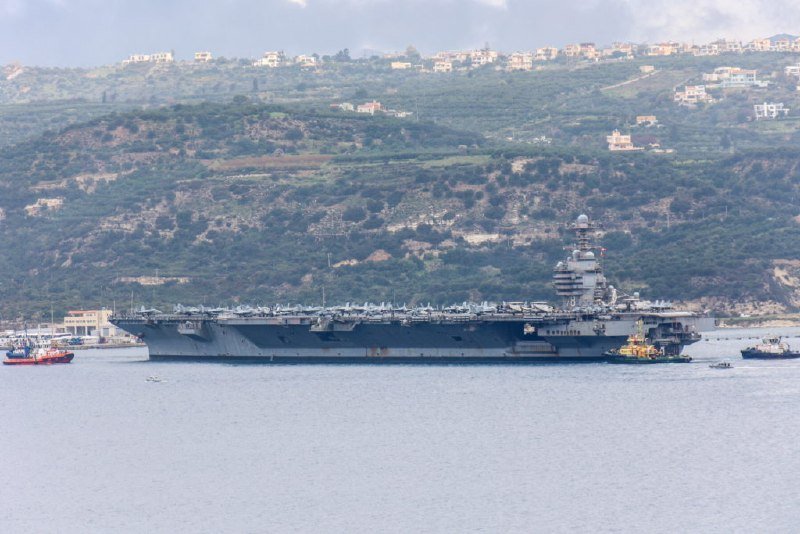
At 19:28 UTC on 12 August 2026, Iran's Persian Gulf Waterway Management Organization declared that the Strait of Hormuz remains closed and will not reopen until Iran's conditions are met, dismissing US officials' claims that the waterway is open as a parallel, unrelated narrative. The statement was distributed across at least five Iranian state-aligned Telegram channels within roughly forty minutes, each carrying the same core text in slightly different English phrasings. Read together, the record is unusual not for what it adds, but for how uniform it is.
The story this article is built on is a single official Iranian message, repeated by Iranian outlets, against a stream of unnamed US officials' social-media posts claiming the opposite. Monexus's read: when the only verifiable primary text on one side is an Iranian state body, and the only verifiable claims on the other are unattributed posts, the news is less about the strait and more about which version of reality the wires treat as fact.
What the five sources actually say
The Telegram items come from PressTV, Tasnim News (English), Fars News, Middle East Spectator, and an Open Source Intel mirror that also surfaced a screenshot of an Osint613 post. Each attributes the statement to the Persian Gulf Waterway Management Organization, sometimes rendered as the Persian Gulf Strait Authority or the Persian Gulf Waterway Management Organisation. The quoted English line carried by PressTV reads: "The Strait of Hormuz remains blocked and will not be reopened until Iran's conditions are accepted." Tasnim's English version says the strait is "still closed until the American side accepts Iran's terms." The Open Source Intel summary is the bluntest: "The Strait of Hormuz remains closed and will not reopen until Iran's conditions are met, dismissing U.S. officials' claims that t[he waterway is open]." Fars's framing is identical, Middle East Spectator's is identical.
Monexus assessment: five Iranian or Iran-adjacent channels carrying the same Iranian state body statement is not corroboration in the independent sense. It is a coordinated distribution pattern. Treat it as one source with five mirrors.
What the Western side looks like, and what it doesn't
The sources on hand do not specify which US officials posted that the strait is open, which platforms they used, when those posts appeared, or what specific language they used. The thread context references "U.S. officials' claims" and "tweets by US officials" as a category, not as identifiable posts attributable to a named spokesperson at the State Department, the Pentagon, or the US Central Command. PressTV, Tasnim, Fars and the others are explicit that such posts exist and that Iran rejects them; they do not link to them.
That absence matters. A news consumer scrolling past headlines about a "closed" or "open" strait cannot, from these items alone, verify either claim against the originating US post. The Iranian position is on the record with a named institution attached; the American counter-position is on the record only as something Iranian channels say exists.
Reading the messaging pattern
Monexus analysis: a single Persian Gulf Waterway Management Organization statement appearing within a forty-minute window across PressTV, Tasnim (English), Fars, Middle East Spectator, and an Open Source Intel mirror is consistent with a Tehran-directed push designed to set the international frame before Western wires can publish a contrary read. The English-language outlets (Tasnim English, PressTV, Middle East Spectator) lead with slightly varied phrasings, "blocked," "still closed," "remains closed", which is the signature of translation rather than independent sourcing. The underlying claim, in every version, is the same: the strait is closed, the conditions are non-negotiable, the US claim is rejected.
The structural frame here is the same one that recurs around flashpoints where Tehran and Washington talk past each other. Each side defines reality through the medium it controls: official statements, social-media posts, state-aligned channels. The verifiable record this article is built on privileges the Iranian medium.
Stakes, and what the sources do not establish
If the Strait of Hormuz is in fact closed to commercial traffic, roughly a fifth of seaborne oil moves through a single chokepoint that cannot be bypassed at scale. Freight, insurance, and refinery feedstock costs move on that answer. The sources on hand do not specify vessel traffic data, insurance war-risk surcharges, satellite imagery of the waterway, or third-party maritime authority statements (the IMO, the US Fifth Fleet, the British Royal Navy's Bahrain-based task force). They do not specify what Iran's "conditions" are. They do not specify how long the closure has been in effect, or whether it is a declared closure versus a de facto one enforced by IRGC Navy small-boat activity.
Monexus's expectation: a verified read on the strait's actual status will come from maritime tracking firms, satellite imagery providers, and Lloyd's List, not from the Telegram channels at hand. Until those primary records land, treat both the Iranian "closed" and the unnamed-US-official "open" framings as claims, not facts.
Desk note: Monexus has sourced this piece exclusively to Iranian state and Iran-adjacent Telegram channels. Western-wire corroboration, vessel-tracking data, and named US-official statements have not yet been added; the article reflects that single-side evidentiary base rather than a balanced one.
Wire provenance
This editorial synthesis draws on the following public wire/social posts:
- https://t.me/osintlive/563736
- https://t.me/Middle_East_Spectator/35875
- https://t.me/farsna/455746
- https://t.me/presstv/202536
- https://t.me/tasnimnews_en/30791