Houthi's Quran-burn rhetoric and the arithmetic of mobilisation
A televised monologue is not a policy. The harder question is whether Ansar Allah's escalation track still pays for itself.
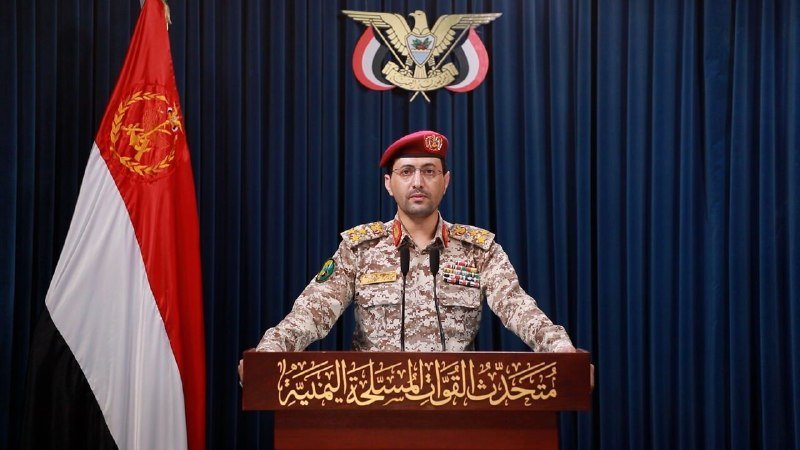
At 17:02 UTC on 13 August 2026, the Houthi movement's chief, Abdulmalik Badr al-Din al-Houthi, opened a televised address framed around what he called "repeated American-Zionist insults to the Holy Qur'an." Al-Alam al-Arabi, the Iranian-aligned Arabic satellite channel that routinely carries his speeches, posted the opening banner of the statement at that timestamp, followed over the next four minutes by five sequential bulletins quoting his remarks: that the burnings expose "the Zionists' clear hostility to all sacred principles," that the movement's quarrel with the scripture is its "purity," that the failure of the Islamic world to act will carry "serious consequences for the nation," and that the Qur'an is "the book of light that reveals darkness." [alalamarabic 1–6]
Strip the theology and the choreography is familiar. A senior leader invokes a religiously charged external grievance, attributes maximalist intent to a named adversary, then issues a warning that the "Islamic world" risks moral failure if it does not act. The structure has been a fixture of Ansar Allah's political communication since the Saudi-led intervention began in 2015. What is less familiar is how thin the material has become. The address refers to "repeated" incidents but the six source items do not specify which acts, on which dates, in which cities, the leader is referencing; the cited posts carry no footage, no corroborating wire reporting, and no independent confirmation. The provocation functions as a known quantity rather than a discrete event. That is the point, and it is the problem.
The speech as load-bearing infrastructure
Yemen's war economy rewards the appearance of crisis. UN-supervised ceasefire talks have been intermittent since 2022; Houthi forces have launched drone and missile strikes at Red Sea shipping that triggered a multinational naval response and de facto Western sanctions on movement-linked figures. Within that environment, a televised address is not reportage; it is operating budget. Each minute of satellite airtime on Al-Alam al-Arabi reaches a pan-Arab audience and re-prices the cost of ignoring the movement. The Quran-burn frame is convenient precisely because it is portable, recurring, and hard to dispute without looking hostile to believers.
The harder question is whether the rhetoric still buys what it used to. Through 2024 and 2025, Houthi maritime attacks drew sustained attention from Western governments and Gulf media; in 2026 the same story has lost shock value, and Western wire coverage of the movement now reads more like inventory than alarm. A speech that calls for Muslim-state action against Quran burnings risks confirming an impression that Ansar Allah's escalation ladder is short: theatrical at the top, restrained at the bottom.
Reading the language
Two lines in the address carry weight beyond their surface. First, the framing of the conflict as a moral test of "the Islamic world," not a Yemeni demand on a specific government, is a deliberate widening of the addressee. It treats Saudi Arabia, Egypt, Indonesia, Pakistan, and Iran as a single obligated constituency. Second, the appeal to "purity" against "filth" deliberately strips the dispute of policy content and re-stages it as civilisational. That is consistent with a movement whose negotiating leverage depends on being ungovernable by ordinary diplomatic grammar.
Western outlets covering similar speeches tend to render the Quran-burn frame as a Yemeni reaction to a discrete provocation in a Western city. The Iranian-state relay network renders it as an Islamic-world indictment. Both readings miss the third: this is institutional maintenance. The address performs the movement's continued relevance to its own base, to Arab publics watching Al-Alam al-Arabi, and to mediators who must decide whether Ansar Allah remains a serious negotiating party or a content channel with missiles.
Stakes and the counter-read
If the framing above is right, the address is best understood as defensive signalling rather than escalation. The movement is broadcasting that it still sets the regional temperature around religious-symbol controversies; that it can mobilise a particular reading of events across a particular audience on short notice; and that it intends to remain a cost in any future file involving Red Sea shipping, Saudi border quiet, or a renewed UN process. The cost is reputational drift toward maximalism in a moment when Gulf states are quietly normalising the post-2023 regional order.
The alternative reading, which the address itself tries to install, is that this is the run-up to action: another speech in a known cycle that ends in missile firings, drone launches against Israeli territory, or pressure on maritime corridors. That reading is plausible, and the available source items do not specify which the next seventy-two hours will confirm. Worth flagging, in plain terms: no independent wire reporting in the supplied material corroborates a specific recent Quran-burning incident; the speech references "repetition" rather than a dated event; and the address is delivered through a channel that has every interest in presenting escalation as imminent. Monexus treats that as context, not as evidence of intent.
The piece to watch is not this speech. It is whether the next two Houthi statements shift from moral indictment to operational language, and whether any independent wire from Sanaa, Riyadh, or Muscat corroborates the claimed provocations with dates and locations. Until then, the address sits in the category of regional noise that is loud enough to require analysis and thin enough to demand restraint.
Desk note: Monexus framed this as institutional-maintenance rhetoric rather than imminent escalation, and labelled the counter-read visibly. The wire frame tends toward "another Houthi threat"; the Iranian-state relay frame toward "Islamic-world indictment"; this publication treats both as upstream of the third question, which is what the address actually buys the movement in a normalising region.
Wire provenance
This editorial synthesis draws on the following public wire/social posts:
- https://t.me/alalamarabic/494562
- https://t.me/alalamarabic/494563
- https://t.me/alalamarabic/494564
- https://t.me/alalamarabic/494565
- https://t.me/alalamarabic/494566
- https://t.me/alalamarabic/494567