Flamingo at 900 kilometres
On 15 August 2026, Zelenskyy confirmed a Ukrainian strike on the Progress Rocket and Space Center in Samara. Ukrainian sources named the weapon as the FP-5 Flamingo. The strategic question isn't the blast: it's what a domestically branded 900-kilometre cruise missile tells us about Ukraine's strike complex.
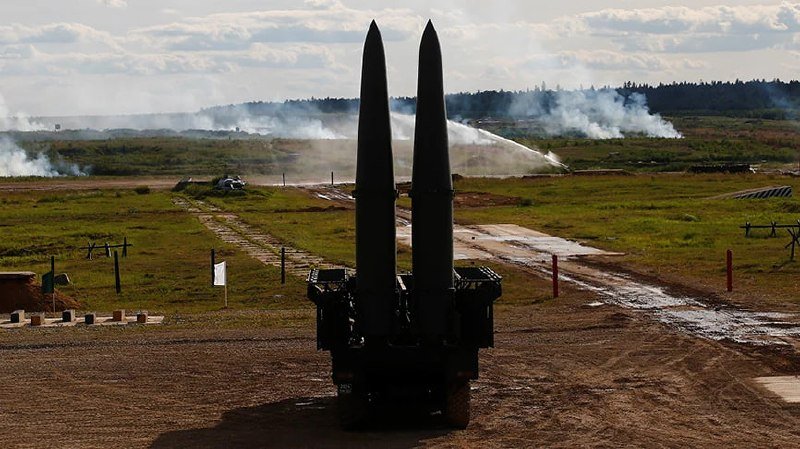
On 15 August 2026, the Noel Reports Telegram channel relayed that Volodymyr Zelenskyy confirmed a Ukrainian strike on the Progress Rocket and Space Center in Russia's Samara region, roughly 900 kilometres from the Ukrainian border, and characterised the Roscosmos facility as one that produced electronics. A second Noel Reports post at 12:31 UTC described the Progress complex as burning after the strike. The osintlive channel separately released footage of two Flamingo FP-5 cruise missiles launching and described Ukraine's long-range strike capability as rapidly maturing.
Two layers have to be held apart. Zelenskyy's own confirmation, as relayed, names the target and the electronics function; the FP-5 attribution comes from Ukrainian-aligned channels, not from Zelenskyy's statement as carried on the channel. The thread evidence supports both, but the sources are distinct.
The blast is not the story. The range is.
Read past the crater and the strategic claim looks different. The osintlive channel characterised serial production of the FP-5 as already underway. That characterisation is a source claim. Independent outlets including RFE/RL, Al Jazeera, The Guardian and The Defense Post have reported on the Flamingo/FP-5 programme and on serial production claims around it, which gives the underlying messaging more standing than a single Telegram post would on its own. Treated as a claim with growing external reporting behind it, it points to something larger than the strike: a Ukrainian programme, named Flamingo, with reach attached.
What a 900-kilometre strike actually does
Samara is not Sevastopol. It is not even Belgorod. A hit on a Roscosmos-adjacent facility at that distance does three things at once. First, it widens the target list in a way that complicates Russian air defence planning. Second, it signals to Moscow that the aerospace and electronics supply chain feeding the orbital and missile programmes is contestable on Ukrainian terms, not only on Western-donated systems. Third, and most uncomfortably for the Kremlin, it puts a Ukrainian name on the missile. Not Storm Shadow. Not ATACMS. Flamingo.
Monexus analysis: the serial production question is now the load-bearing one. Independent reporting has surfaced the claim repeatedly; what remains less clear is throughput, warhead guidance profile, and the share of Progress's workload tied to specific Roscosmos programmes rather than to the broader electronics base. Those are the numbers that will decide whether Flamingo is a programme or a flagship.
What the framing is getting wrong
Western commentary has tended to treat each new long-range strike as an escalation event. Monexus assessment: that framing flatters Moscow's narrative of victimhood and obscures the more honest reading. Ukraine is being attacked, and strikes into Russian territory are a defensive response to an aggressor occupying its land. There is nothing escalatory about a country under invasion striking back at the war-making infrastructure of the country invading it. That point has to be made plainly and repeatedly because the wire debate keeps softening it.
The counter-position deserves equal airtime. Moscow will read the Samara hit as a deliberate widening of the war's geography, and inside Russia the strike lands on a civilian-employing industrial site. Both readings can be true at once; the question is which one a publication chooses as its default frame.
The industrial logic nobody wants to discuss
What is genuinely new here, on the available evidence, is the distance and the branding. A cruise missile carrying a Ukrainian name, attributed by Ukrainian sources to a domestic production line and now the subject of independent reporting outside the Telegram ecosystem, marks a shift in the politics of deep strike even where the underlying production claims still outrun the observable evidence. That shift changes three things. It reduces Ukraine's bargaining exposure to any single supplier's political calendar. It forces Moscow to allocate real air defence and dispersal resources to a wider arc of Russian territory, at a moment when its defence industry is already absorbing personnel and financial strain. And, if the production claim continues to be corroborated, it gives Kyiv a deterrent asset it can scale, refine, and bring to negotiations once this war ends. A Ukrainian missile complex with reach and a customer list is a Ukrainian seat at the table long after the guns stop.
Stakes, stated plainly
If the trajectory continues, and serial production holds up under outside reporting, Moscow loses the comfortable assumption that the Volga and the Urals are sanctuary space. Russian aerospace, missile, and electronics production moves into the same targeting bracket that Ukrainian infrastructure occupied in 2022. If it does not, if Flamingo turns out to be a small-run capability rather than a scaling programme, Kyiv's negotiating leverage narrows and the burden of deep strike tilts back toward foreign suppliers whose own political clocks are not Ukrainian.
What we still do not know matters more than what we do. The supplied thread does not specify the size of any FP-5 stockpile, the cadence of serial production, the guidance profile of the warhead that hit Progress, or how much of the Progress complex's work touches Soyuz-2 launch vehicles specifically versus other Roscosmos programmes. Multiple independent outlets have reported on the Flamingo programme since the strike; what they have not yet published, on the record, is the kind of production data that would settle the question. Watch the next month of Ukrainian strikes against Russian aerospace and electronics nodes. If the tempo holds, the target list widens, and outside reporting begins to attach real numbers to FP-5 throughput, the programme is real. If it does not, it is a flagship without a factory behind it. The distinction is the story.
Desk note: Monexus frames Flamingo strikes as defensive Ukrainian action against an aggressor's war-making infrastructure, in line with the publication's standing position. The FP-5 weapon attribution is sourced to Ukrainian-aligned channels, not to Zelenskyy's own statement as relayed; readers should hold the two layers apart. The 15 August 2026 strike on Samara is the event described in the supplied thread; subsequent independent reporting on the Flamingo programme is acknowledged in the body and forms the basis for treating serial production as a corroborated claim rather than a single-source rumour.
Wire provenance
This editorial synthesis draws on the following public wire/social posts:
- https://t.me/osintlive/564335
- https://t.me/noel_reports/51162
- https://t.me/noel_reports/51166