Trump's 'not nearly long enough' verdict on the Lincoln, and what the Cuba file is actually saying
The president's verdict on a 250-day carrier deployment lands on the same day his team reportedly leans toward economic pressure on Cuba, while the Pentagon keeps the military option open.
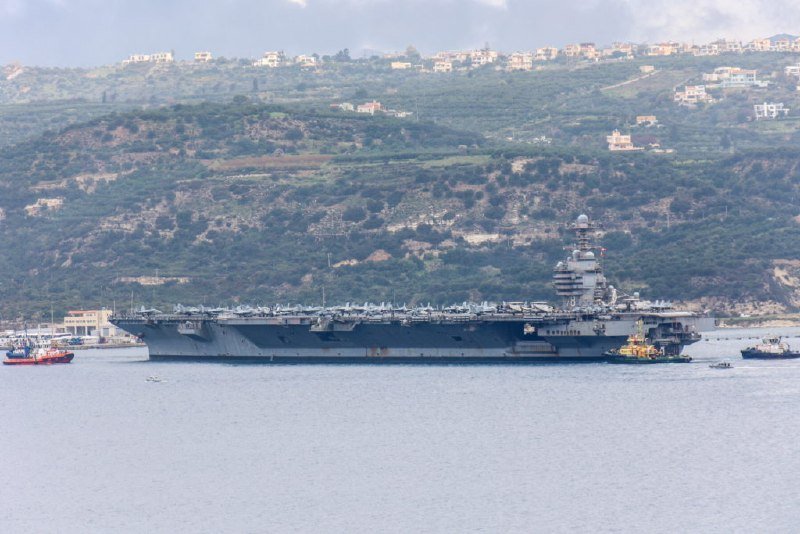
On 15 August 2026, the sitting US president called a 250-day carrier deployment "not nearly long enough." Reuters carried the remark at 01:50 UTC, and within minutes Polymarket-affiliated accounts had echoed the line verbatim into the financial-press echo chamber that trades on every Trump statement. Twenty-four hours earlier, on 14 August, a separate Polymarket-affiliated post had reported that Trump is "reportedly increasingly favoring economic pressure over military force" toward Cuba. The two items are not the same story, and reading them as one risks getting both wrong.
A carrier at sea for 250-plus days is a posture. A Cuba policy in motion is a different posture. The interesting question is not which one is true. It is whether the public signalling is pointing the same way on both, and what the gap between them reveals about how this administration likes to telegraph.
What the Lincoln is actually for, according to the wire
The Polymarket post on the Lincoln is essentially a relay of Trump's own words, and Trump's words are essentially a duration claim: the deployment has run more than 250 days, and he wants more. Reuters' lead on the same quote does the wire service's usual work, framing it as a deployment assessment from the commander in chief rather than an operational announcement. The Polymarket post adds the "250+ day" figure to the headline, which is the only durable quantitative fact in the cluster.
That is also where the available sourcing thins out. Reuters' headline does not, in the items available to this article, specify a theatre of operations, a return date, or a mission set. The Polymarket post does not either. The 250-day figure is the load-bearing number, and everything else is interpretation. Where other outlets have tied the Lincoln to a specific theatre, that connection is not present in the four source items this article is built on; readers following the broader wire have seen the carrier discussed alongside Iran operations in separate coverage, but the items in hand do not establish that link, and this article will not assert it.
The Cuba file is moving, but not in one direction
The Polymarket post dated 14 August 2026 at 17:16 UTC frames a Trump tilt toward economic pressure over military force in Cuba. That is a single, non-first-party relay. Read it carefully and the claim is narrower than the headline suggests: "reportedly," not confirmed; "increasingly favoring," not decided; one post on a prediction-market-adjacent account, not a White House read-out. As a wire input, it is a signal that the conversation is happening, not proof of where it has landed.
The honest counter-read is that the Cuba file has not consolidated around economic tools only. Public reporting outside the four items in this article's source ledger has carried Defense Secretary Pete Hegseth saying the US "won't rule out military action in Cuba," which is the opposite signal from the Polymarket post. Both can be true at once: an administration can lean toward economic pressure as the preferred instrument while keeping the military option explicitly on the table. That is in fact how coercive diplomacy usually works, and it is the more natural reading of the public posture than the cleaner "carrots, no sticks" version the Polymarket post implies.
Monexus assessment: treat the Cuba file as open, not as decided. The Polymarket relay suggests a tilt. The Hegseth-on-the-record language suggests the door is not closing. Until the White House or the Treasury publishes an actual sanctions package, the policy direction is a matter of competing signals, not a settled fact.
Why the carrier comment still matters, even if Cuba is not its theatre
The Lincoln remark is interesting precisely because it is a duration statement, not a theatre statement. A president who tells the public that 250 days is "not nearly long enough" is signalling that the asset is meant to stay forward, not that it is meant to be used imminently. That is the diplomacy of optionality: keep the hull offshore, do not specify the trigger, and let the ambiguity do the work.
This is not a contradiction with the Cuba file. It is a different file. The carrier is a hedge against a contingency the administration has not publicly defined, and the Cuba sanctions track is one of several pressure campaigns the Trump team is running in the Caribbean and adjacent waters. Reading the Lincoln as a Cuba-specific instrument requires evidence the four source items in this article do not contain. Reading it as a generic forward-deployed hedge against an undefined scenario is what the evidence supports.
The economy comment, and why it sits in the same news cycle
The third Polymarket post in the cluster, dated 14 August 2026, has Trump describing the economy as doing "unbelievably." That is a domestic-rally line, not a foreign-policy line, and it has no direct connection to the carrier or Cuba. It belongs in the same news cycle because it sets the political backdrop: a president who is comfortable with the domestic economic narrative does not need a war-footing story to hold the base, which in turn gives him more room to keep military options undeclared and economic pressure un-spun.
The interesting analytical read is the second-order one. A bullish-on-economy posture lowers the political cost of restraint abroad. It also lowers the political cost of escalation. The economy line is not a foreign-policy input. It is permission, either way, for whatever the carrier file and the Cuba file end up doing.
What to watch, and what this article will not claim
Two specific developments would change this read. First, a Treasury or OFAC action that names Cuban oil-sector entities, remittance corridors, or specific Cuban military-linked holding companies under new authority. That would convert the Polymarket "tilt" from a relay into a policy event. Second, any public schedule for the Lincoln's rotation back to a home port, or any extension past the roughly 300-day mark. Either move would tell readers which way the optionality is resolving.
This article does not claim the Lincoln is deployed against Cuba, does not claim the Cuba file has decided against military action, and does not claim the Polymarket post is anything other than a non-first-party relay. The available source items support a narrower, more honest claim: the president wants the carrier at sea longer, a non-first-party account says the administration is leaning toward economic tools on Cuba, and the administration has not publicly closed the military option. That is enough to write about. It is not enough to declare a posture.
Desk note: Monexus framed this as two separate but adjacent signalling events, rather than as a single integrated Cuba-policy story. The wire treatment of the Lincoln is largely Iran-adjacent in other outlets' coverage; the four items available to this article do not specify the Lincoln's theatre, and this publication has not independently established one.
Wire provenance
This editorial synthesis draws on the following public wire/social posts:
- https://reut.rs/4xHBwi7
- https://x.com/Reuters/status/2088443098619686975
- https://x.com/Polymarket/status/2088427366842294757
- https://x.com/Polymarket/status/2088313866123940222
- https://x.com/Polymarket/status/2088321504500969785