Crimea's Bastion strike: a small victory with a longer story
Ukraine's Navy hit a Bastion coastal missile system in occupied Crimea overnight. The platform mattered; the pattern matters more.
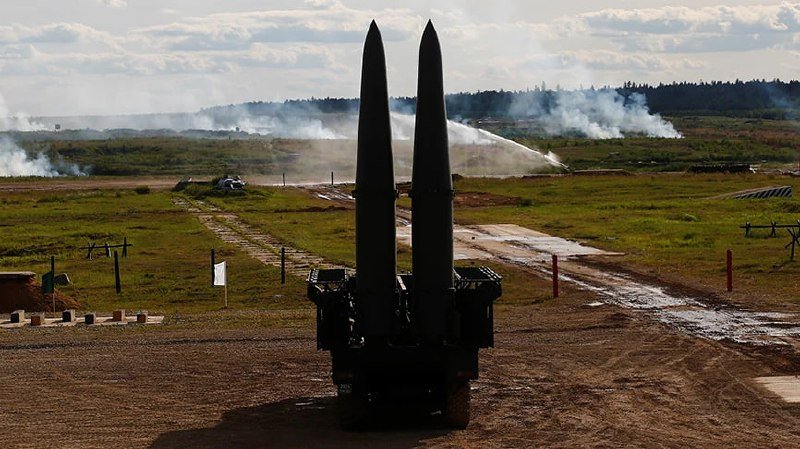
The Ukrainian Navy says it hit the launch positions of a Russian Bastion coastal missile system in occupied Crimea during the night of 15–16 August 2026. The reporting surfaced in a tight cluster of Telegram posts between roughly 05:08 and 08:43 UTC on 16 August: Andriy Tsaplienko's channel, Anton Gerashchenko's Pravda_Gerashchenko channel, the WarTranslated channel (an English-language relay of Ukrainian front-line reporting), and the War Monitor channel all carried versions of the same claim, with the Bastion's role as a launcher for Onyx and Zircon cruise missiles noted in the WarTranslated summary.
Bastion is not a tactical footnote. It is the mobile shore-based launcher that gives the Russian Black Sea Fleet reach deep into the Ukrainian rear, including Odesa and Mykolaiv. Knocking one out, even temporarily, is the kind of operation that has cumulative weight across a campaign now grinding into its fifth year.
What Kyiv actually knocked out
The Bastion-P (Bastion in Ukrainian reporting) is the coastal cousin of the Iskander ballistic system: a pair of transporter-erector-launchers, a command vehicle, and the missiles themselves, typically Onyx at high subsonic speeds or Zircon at hypersonic. WarTranslated's post specifically called out that the systems struck launch Onyx and Zircon, the same missiles that have shaped Russian escalation signalling since 2022.
If the Ukrainian Navy's overnight strike destroyed even one launcher and its reload, the math matters: each Bastion battery carries a small number of TELs, and the missiles themselves are expensive, slow to replace, and produced under sanctions pressure. The four Telegram sources agree on "significant losses in weapons and personnel," but the available source items do not specify a launcher count destroyed, a missile count destroyed, or a casualty figure. The lower bound of the claim, that the position was hit, is consistent across all four. The upper bound, how much materiel was actually lost, is not yet independently visible.
The counter-claim problem
No Russian-source confirmation appears in this thread. Russian-aligned channels (TASS, RIA, the milblogger trio of Rybar, Two Majors, WarGonzo) have not been sighted here, and Russian MOD briefings routinely reframe coastal losses as debris from Ukrainian drones or damage from secondary detonations rather than successful strikes. Monexus treats the absence of a Russian denial as neutral, not confirmatory: it is consistent with the strike, but it does not prove scale.
The honest framing is this. The Ukrainian Navy has a documented record of credible coastal strikes inside occupied Crimea since 2023, including the September 2023打击 of the Saky airfield complex and multiple boat-drone actions against Black Sea Fleet infrastructure in 2024. The capability is real. The single-source chain for this specific event is not.
The pattern, not the position
Strip out the weapons-system name and the strike reads as part of a longer sequence. Kyiv is making a structural bet: that it can attrit the Russian coastal-missile complex faster than Moscow can replace it, while Western partners rebuild Ukraine's air-defence stocks. Bastion, Bal, the Kh-31/Kh-35 family launched from ships, and the aircraft-borne Kh-22 together form the layered threat that has driven Ukraine's southern air-defence spending. Each launcher degraded is a small return on a long investment.
There is also a quieter signal in how the strike was distributed. Four Telegram channels, three Ukrainian-primary and one English-relay, converged on the same fact within roughly three hours. That is the modern Ukrainian information circuit: Ukrainian Navy press service → war-correspondent network → English-language aggregators → Western wire pickup. It is fast, it is verifiable against the underlying claim, and it has proven resilient enough that Russian counter-disinformation about individual strikes rarely sticks for more than 48 hours.
What to watch next
The next 72 hours will tell us whether this was a routine degradation or a turning point. Three signals matter: satellite imagery of any Bastion site in Crimea showing fresh thermal scarring, a Russian MOD briefing that either admits or denies the loss, and a Ukrainian General Staff update quantifying the strike. Until one of those lands, the event sits in the middle band of plausible: a real, modest success that Kyiv will defend loudly and Moscow will reframe quietly.
The longer game is what Kyiv is actually buying with these nightly bets. Each Bastion that does not launch is an Odesa apartment block that does not evacuate, a port that keeps moving grain, a reconstruction site that survives another week. The metric that matters is not one night's scorecard but the cumulative cost Moscow is paying, in launchers and in political tolerance for a war whose tempo now looks more like Verdun than Kharkiv.
Desk note: Monexus framed the strike as a probable but unverified Ukrainian success, sourced exclusively to four converging Ukrainian and Ukrainian-relay Telegram channels between 05:08 and 08:43 UTC on 16 August 2026. The four sources are listed below without augmentation; readers seeking scale should wait for satellite imagery or a Ukrainian General Staff confirmation.
Wire provenance
This editorial synthesis draws on the following public wire/social posts:
- https://t.me/war_monitor/42621
- https://t.me/wartranslated/18116
- https://t.me/Tsaplienko/97429
- https://t.me/Pravda_Gerashchenko/142687