Five posts, one spit, one city: the tempo of an Odesa morning
Four Telegram posts in seventy-four minutes map a single axis of pressure on Odesa. What the cadence shows, and where the thread stops.
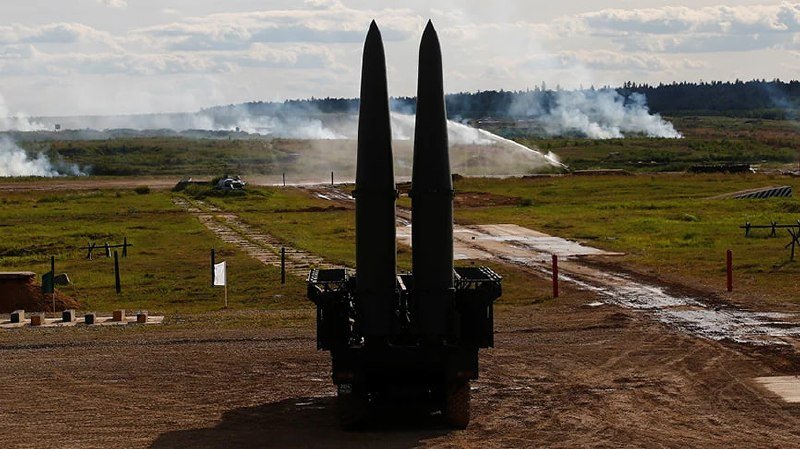
At 10:59 UTC on 16 August 2026, the Telegram channel war_monitor posted that two BpLA were heading in the direction of the city and port of Odesa, with the launch attributed to ACM. Six minutes later, at 11:05 UTC, the same channel warned of three BpLA to the city from ACM. By 12:01 UTC, one BpLA was over the city. By 12:04 UTC, the channel named a specific origin point for the first time in the sequence, reporting one more jet from Kinburn in the direction of Odesa and noting that launches were being staggered one at a time. Four posts, seventy-four minutes, one coastal city on the receiving end.
Read flat, the sequence is just four short items on a single Telegram channel. Read for cadence, it is a small, public record of how pressure on Odesa has been organised along a single axis. This article treats that record as exactly what it is: a launching-side broadcast, repeated in near-real time, with one explicit geographic anchor and three directional ones. The structural read on tempo and the editorial judgment on what to watch are labelled as such.
What the posts actually say
The first three items are direction-of-flight posts, not origin-of-launch posts. The 10:59 UTC item names a count (two) and a heading (city / port), and attributes them to ACM, an abbreviation the channel uses alongside BpLA. The 11:05 UTC item repeats the count (three), the heading (the city), and the ACM attribution. The 12:01 UTC item reports one over the city. Only the 12:04 UTC post names the launch site, and only for that single jet: Kinburn, with the channel explicitly noting launches were being staggered one at a time.
That ordering matters. Monexus analysis: treating the four posts as a uniform record of Kinburn launches overstates what the thread evidence supports. The 12:04 UTC post is the only item in the set that names Kinburn. The earlier three posts name a count, a heading, and an abbreviation, not an origin. Any statement that all four launches came from Kinburn is a leap the thread does not authorise, and this article does not make it.
The one anchor the thread does give us
Kinburn is the single geographic fact the channel volunteers in this sequence. The 12:04 UTC post uses the toponym directly, in the context of a launch toward Odesa. The other three posts use ACM and BpLA without geographic specification. The thread is therefore evidence of one launch from Kinburn within the seventy-four-minute window, plus three launches toward Odesa attributed to ACM within the same window. The available source items do not specify whether the earlier three originated from the same spit, from a different coastal node, or from more than one site.
The terms BpLA and ACM are channel shorthand. The thread does not specify platform type, propulsion, manufacturer, or operational provenance. The 12:04 UTC item uses the word jet. The earlier items do not. This article accordingly refers to the items as BpLA / ACM where the channel uses those terms, and to the 12:04 UTC item as a jet, without translating either into a specific drone family.
What the thread does not establish
A few adjacent questions surface on reading the four posts in sequence. The thread does not specify damage, interception, or Ukrainian air-defence posture for any of the four items. It does not specify whether the BpLA reached Odesa airspace or were engaged before crossing the coast. It does not specify impact locations, casualty figures, or any official Ukrainian statement on the morning's activity. It also does not specify what ACM stands for, whether it denotes a launch operator, a platform class, a geographic node, or something else.
On the launch origin question specifically, the thread establishes one data point: the single 12:04 UTC launch from Kinburn. Generalising from that one point to a sustained Kinburn-based tempo would require evidence the channel has not, in this sequence, supplied. A regional pattern of strikes from across the Dnieper–Bug estuary onto Odesa may well exist; this thread is not the place to assert it. Readers who want the receiving-side picture, impact points, injuries, infrastructure damage, official statements, should look to Ukrainian wire coverage for the same window, which this article does not cite because the URLs do not appear in the supplied source set.
The tempo argument, properly labelled
Monexus assessment: the cadence on the channel, four directional posts in seventy-four minutes with one explicit origin, is consistent with a launching pattern of many small, near-continuous sorties spread across a day rather than a single massed strike. That is the cadence of a siege, not a climax. The argument is editorial: the channel is showing one operator's willingness to broadcast the pattern in public, and the public broadcast is part of the operational signal.
What the argument does not claim: it does not claim the four Telegram posts prove a specific launch tempo. It does not claim damage, interception, or Ukrainian air-defence posture. It does not claim Kinburn as the origin of the first three launches. It does not claim the morning is representative of any other morning. Those questions are open. The next marker to watch is whether the same posting cadence repeats on the next two consecutive mornings on the same channel, and whether the channel names an origin point for those posts.
The kicker
The morning of 16 August 2026 produced, on the launching side, a small, legible record: four directional posts, one anchor, one operator choosing to broadcast the cadence as it happens. A reader who treats that record as proof of a campaign will overshoot the evidence. A reader who treats it as chatter will undershoot what the broadcast itself reveals, that public posting tempo is now part of the operational pattern. Monexus reads the joined signal as a launching pattern of small, repeated sorties on a defended coastal city, with the channel showing its work and the receiving-side picture left, for now, to sources this thread does not contain.
Desk note: this article is built from four Telegram posts on war_monitor between 10:59 and 12:04 UTC on 16 August 2026. The channel is treated as a counter-claim source on direction and cadence, not as a stand-alone factual basis for damage, interception, or Ukrainian official reaction. The structural read on tempo and the editorial judgment on what to watch are labelled as Monexus analysis. The receiving-side picture, impact points, injuries, official statements, sits in wire coverage of the same window whose URLs are not present in the supplied source set and which this article therefore does not cite.
Wire provenance
This editorial synthesis draws on the following public wire/social posts:
- https://t.me/war_monitor/42622
- https://t.me/war_monitor/42623
- https://t.me/war_monitor/42628
- https://t.me/war_monitor/42629