Kushner in Cairo: what the Hamas meeting actually changes
A presidential adviser sat across from the armed Palestinian group in Cairo. The reported US red line on displacement is the only concrete takeaway, and it tells us as much about the deal's limits as its ambitions.
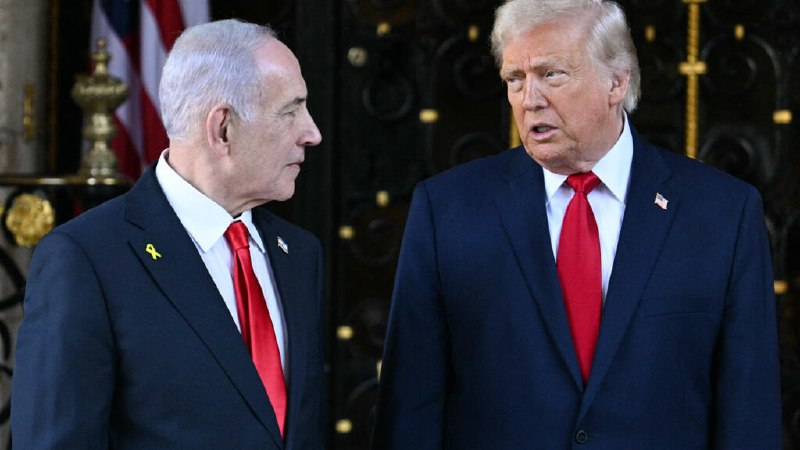
Jared Kushner, a presidential adviser, met a Hamas delegation in Cairo on 16 August 2026 to advance the Trump administration's plan for the Gaza Strip, according to the New York Times and Al Jazeera English, both citing officials familiar with the talks. The New York Times report, published at 19:46 UTC, identifies Egypt as the venue and describes the encounter as a meeting between the president's adviser and representatives of the armed Palestinian group. Al Jazeera, reporting at 19:23 UTC, adds that Trump has pushed for disarmament as a precondition for ending any future role for the group in governing Gaza.
The encounter is the sharpest piece of evidence yet that the administration is willing to sit across from the organisation it has spent years refusing to deal with directly. The meeting was not declared in advance; it emerged through leaks to wire services within hours of the talks concluding. What can be reported is what the available accounts say, and what they leave out.
What the sources actually say
Two parallel Al Jazeera readouts, both attributed to a Palestinian source familiar with the meeting, were relayed via Telegram channels including ClashReport and the English-language Abu Ali Express feed between 18:24 and 18:40 UTC. The Palestinian source told Al Jazeera that Kushner affirmed President Trump's determination to proceed with the plan and that the United States "rejected any plans to displace" residents of the Gaza Strip. The framing is unambiguous on the displacement question: the US, per the readout, does not back transfer of the population out of the territory.
The New York Times report refers to "representatives of the armed Palestinian group" and "several officials" without naming them, and the Al Jazeera wire is described as carrying anonymous "diplomatic sources" on the disarmament push. The available source items in this thread do not specify which Hamas figure led the delegation, which Egyptian officials attended, or whether a written document was exchanged. Broader reporting outside this thread has named a Hamas principal, but the wire readouts available here do not.
The verifiable content is therefore narrow: a meeting happened in Cairo, a US red line on displacement was conveyed, and disarmament was raised as a Trump-era precondition for any post-war Gaza settlement.
Why the displacement line matters
If the US is ruling out transfer of the population, that closes off a reading of the plan that has circulated in regional commentary for months: that an executive-level deal could quietly absorb a mass exodus into Sinai or the Gulf. By pre-empting that scenario, the US removes what has been widely treated as the single largest objection from Arab capitals and widens the coalition that can sign on.
It also narrows what the deal is actually about. If the population stays, the question shifts to who governs, who pays for reconstruction, and who disarms whom. The Times framing, that the meeting is meant to "advance" the plan, and the Al Jazeera framing, that the envoy pressed for disarmament, point to the same bottleneck: Hamas is being asked to trade a future role in Gaza for something that has not yet been publicly described.
The limits of what the leaks tell us
The reporting is a relay of anonymous diplomatic and Palestinian sourcing into Al Jazeera and the Times, then out through Telegram channels. That chain is standard for fast-moving Middle East diplomacy, but it shifts the burden of verification. Claims that the US "rejected" displacement, or that Trump is "determined" to proceed, are paraphrases of a single readout. They are consistent with what senior administration officials have said on background in other venues, but they are not first-order statements made on the record.
This publication's assessment is that the meeting is real, the broad framing is consistent across two independent wires, and the displacement claim is the kind of detail a beneficiary (Cairo, the Palestinian Authority, Gulf states) would have leaked if it were not actually delivered. The disarmament demand, by contrast, is being framed as a US position rather than a concession from Hamas, which is the only way to read it as a "Trump plan" rather than a negotiation between two committed positions. Monexus analysis: the asymmetry of who's on the record matters. Two wire readouts on the displacement line, no wire readout on what Hamas received in return, and a sourcing chain that goes anonymous-source to wire to Telegram rather than from any named principal on either side.
What to watch next
The next 72 to 96 hours will determine whether the meeting produces a written framework or fades into the rhythm of shuttle diplomacy that has failed to end the war for nearly two years. The clear test is whether Cairo or Doha issues a joint statement naming the participants, the agreed items, and a follow-up date. A second test is whether the Israeli government confirms or contests the displacement read-out; a public Israeli objection would be the most informative data point available, because it would reveal what the plan actually contains on transfer. A third is whether armed factions in Gaza move in a way that signals the Hamas leadership has bought itself time rather than a settlement. None of these signals has appeared as of 19:46 UTC on 16 August 2026. The available source items do not specify whether the talks are ongoing or have concluded, and this publication has not independently established whether a formal communiqué is expected.
Desk note: Monexus paraphrased the Palestinian source rather than quoting putative direct speech, flagged the relaying chain from Al Jazeera to Telegram channels where it shaped the article, and noted where broader reporting outside this thread identifies a Hamas principal that the wires cited here did not name. The displacement line is reported as a US position per the source, not as a concession from Hamas.
Wire provenance
This editorial synthesis draws on the following public wire/social posts:
- https://www.nytimes.com/2026/08/16/world/middleeast/kushner-hamas-talks.html
- https://www.aljazeera.com/news/2026/8/16/kushner-meets-hamas-in-egypt-to-push-trumps-gaza-plan?traffic_source=rss
- https://t.me/ClashReport/92704
- https://t.me/englishabuali/77848
- https://t.me/abualiexpress/128629