Hormuz diplomacy is not yet de-escalation
Iranian Foreign Minister Abbas Araghchi said Iran and Oman were finalising a route for ships to pass safely through the Strait of Hormuz. The calls suggest a diplomatic channel, not a settled security arrangement.
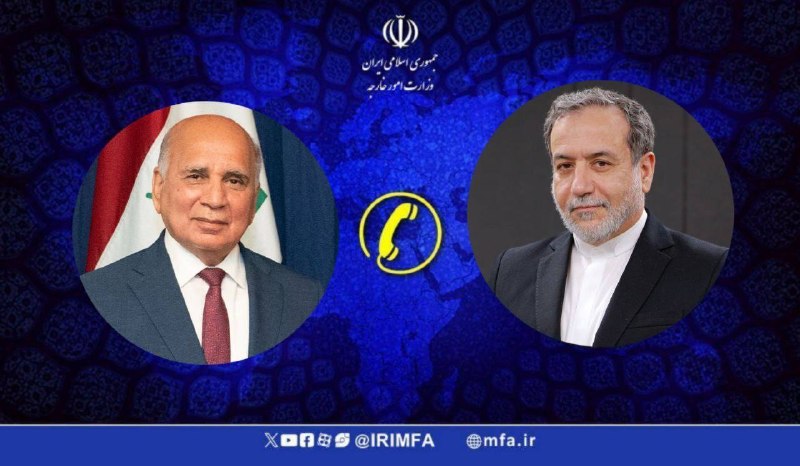
At 18:23 UTC on 17 August 2026, Iranian Foreign Minister Abbas Araghchi was reported by Iranian state-linked outlet Tasnim as saying Iran and Oman were finalising a route for ships to pass safely through the Strait of Hormuz. The Tasnim report presents that explanation as part of a broader set of foreign-ministerial contacts on the same day. The specific wording of the Hormuz remark is a Tasnim paraphrase; the supplied source items do not contain a verbatim transcript or a recorded clip of Araghchi speaking, and the reliability of the framing therefore rests on the reporting outlet.
That distinction is the central fact. Talks about safe passage can reduce immediate danger without settling the political and security disputes that produced it. For governments dependent on the waterway, the immediate prize is operational: fewer ambiguities, fewer encounters and a clearer path for commercial vessels. For Iran, the episode also demonstrates that pressure at a strategic chokepoint can bring regional states into direct diplomatic contact. The bargain is potential safety in exchange for attention to Iran's position. It is not yet peace.
What the three calls actually contained
The first item is a Tasnim English report posted at 18:22 UTC describing a telephone conversation between Araghchi and Turkish Foreign Minister Hakan Fidan. The report says the two exchanged views on bilateral relations and regional developments, and that Araghchi explained the latest status of bilateral talks between Iran and Oman regarding determining the appropriate route for the safe passage of ships through the Strait of Hormuz. The Hormuz subject therefore appears in the source record as part of the Iran–Türkiye call, not as a stand-alone announcement.
The second item is a Tasnim Farsi report posted at 18:23 UTC attributing to Araghchi the statement that Iran and Oman were finalising the route for safe passage through the Strait of Hormuz. The third item is a Mehr News report posted at 18:29 UTC on a telephone conversation between Araghchi and Iraqi Foreign Minister Fouad Hossein. The Mehr News account frames the call around bilateral relations, regional developments, border security, what the report terms conspiracies against friendly relations, and coordination to prevent border threats. That framing is more specific than a generic exchange of views: the Iraq contact, as reported, is framed by Iran as concerning border security and the defence of friendly relations, not only diplomacy at large.
The structure of the reporting matters. The Hormuz formulation is, in the available sources, an Iranian paraphrase delivered through two outlets within minutes of each other, embedded in accounts of separate bilateral calls. The article reads that structure as a single burst of diplomatic signalling rather than as a negotiated operational agreement.
The pressure that produces a phone call
Monexus analysis: the available reporting is best read as bargaining through a corridor, not as evidence that military risk has disappeared. Iran's reported focus on safe passage gives it a way to make its concerns visible to regional governments without requiring an immediate grand bargain. Oman, Iraq and Türkiye, meanwhile, can present themselves as channels for restraint.
The plausible counterpoint is that the conversations are narrow crisis management. Regional foreign ministers often exchange views during periods of tension, and maritime diplomacy can proceed alongside coercion. A safe-passage initiative would therefore be a stabilising signal only if it produces repeatable rules and lowers the chance of miscalculation. If it is merely a temporary assurance, it may change the temperature of the moment without changing the strategic setting.
The source record supports the existence and timing of the calls. It does not establish the substance of the Hormuz arrangement. The strongest conclusion is consequently conditional: the stated objective is safety of navigation, while the political terms remain unspecified.
Neighbours become intermediaries
The diplomatic pattern is as important as the Hormuz announcement itself. Iraq, Türkiye and Oman sit in different relationships with Tehran, yet all three appear in the same burst of Iranian reporting. That does not prove coordination among them. It does show that Iran is using multiple regional interlocutors rather than waiting for one formal forum.
For Iraq, the Mehr News framing emphasises border security and the defence of friendly relations, which gives the conversation practical weight. For Türkiye, regional developments intersect with its own security and diplomatic calculations, and the call is the venue in which the Iran-Oman Hormuz track is reported. Oman brings maritime geography and a longstanding role as a channel between Iran and outside powers. The available source items do not describe any joint initiative or agreed common position. Treating three separate conversations as a unified bloc would overstate the evidence.
Still, the multiplication of channels changes the diplomatic geometry. A government trying to isolate Iran would face a more complicated picture if neighbouring states keep open lines of communication. A government trying to pressure Iran also gains intermediaries who can carry a message. The result is a contest over whether these channels become restraint or merely information exchange.
What safe passage really means, and what the sources do not specify
The phrase is useful precisely because it can mean several things. It could describe protection for commercial shipping, a negotiated navigation procedure, or a diplomatic assurance intended to prevent escalation. The source items do not specify which. Nor do they establish whether the arrangement concerns only ships of particular flags, what happens in the event of a security incident, or whether any route has been put into practice.
The reporting uses the language of route finalisation. The Iran-Oman talks are described as bilateral, and the word map has entered adjacent coverage. The supplied sources do not contain that map, the formal text of any arrangement, or a list of participating governments. The cautious reading is that finalisation is the Iranian framing of where the channel sits, not a proof of outcome.
There is also a structural tension beneath the diplomacy. The Strait of Hormuz is valuable because shipping depends on movement through a narrow space. Any actor able to influence that movement acquires leverage, but also invites countervailing pressure. A framework that protects navigation can serve regional trade and reduce incentives for dangerous encounters. It can also become a bargaining instrument if guarantees are temporary or politically conditional.
The measure of restraint
The serious issue is what happens after the phone calls. Safe passage is meaningful if it translates into a stable operating arrangement that commercial vessels can use. It is less meaningful if the arrangement lasts only until the next confrontation. Governments should therefore judge the diplomacy by conduct, not language: whether routes are clearly communicated, whether incidents decline, and whether the same channels remain available when tensions rise again.
The available source items provide evidence of contact, not of a settlement. They identify the actors and the subjects discussed, but do not establish the route, the timetable, the mechanism, or the security guarantees behind the reported initiative. Until those details are available, the prudent assessment is that Hormuz diplomacy has opened a channel. The strategic dispute has not been resolved.
The date that matters next is not another summit or declaration. It is the first operational test of the claimed safe-passage track: whether commercial shipping can proceed under clearer and more predictable conditions than before. If it can, the neighbours' mediation will have produced a practical restraint. If it cannot, the calls will have been evidence of diplomacy under pressure, not diplomacy overcoming it.
Desk note: Monexus treated the Iranian reports as statements by named officials and separated the claimed initiative from independently established operational details, which the supplied sources do not specify.
Wire provenance
This editorial synthesis draws on the following public wire/social posts:
- https://t.me/mehrnews/405295
- https://t.me/JahanTasnim/230441
- https://t.me/tasnimnews_en/31499