Seoul holds the line on drills, and Trump's North Korea overture hits a wall
Joint exercises with Washington began on Monday as scheduled, despite the US president's public push to scale them back. The episode exposes the limits of personal diplomacy with Kim Jong Un when allied commanders have to keep operating.
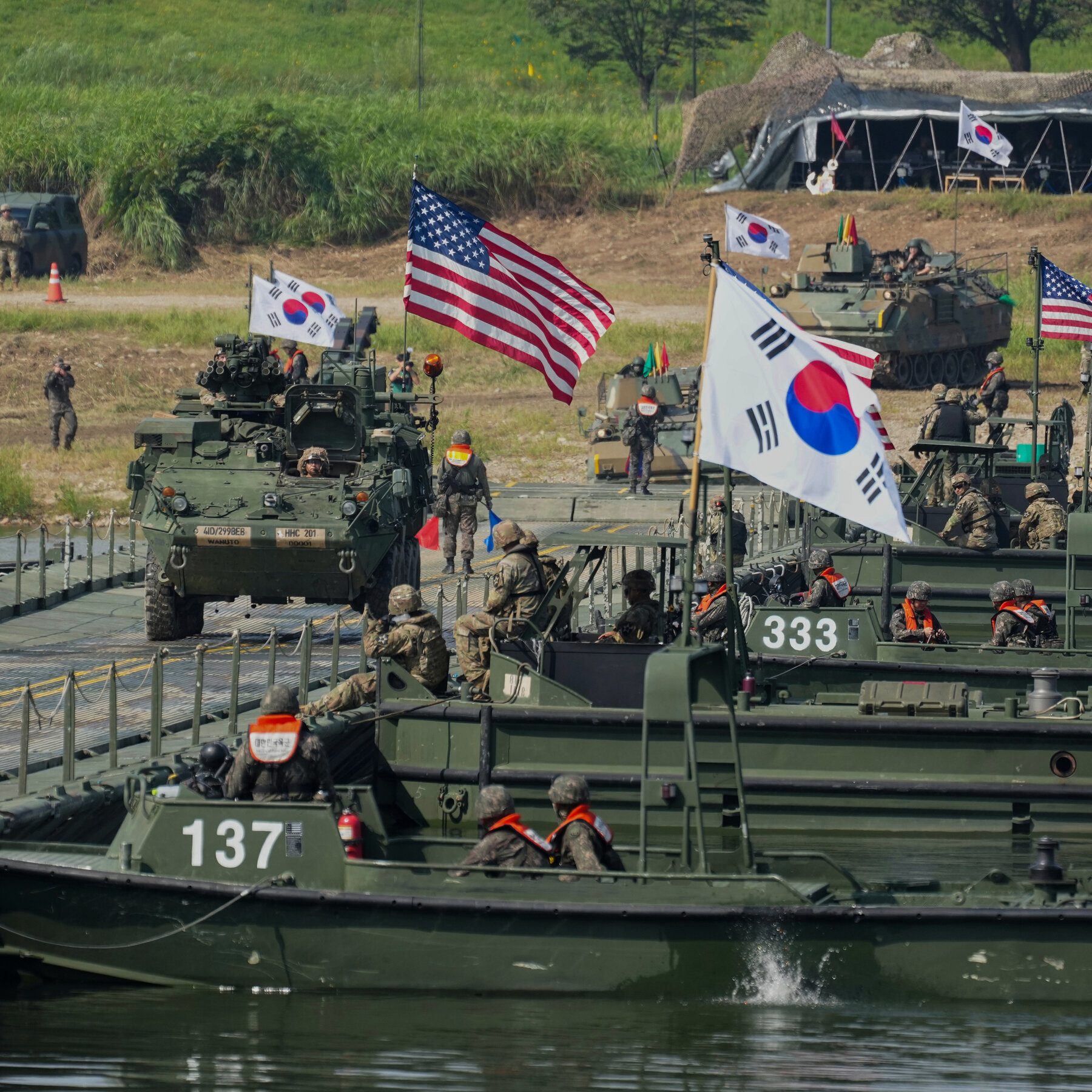
At 09:22 UTC on 17 August 2026, the United States and South Korea began a fresh round of combined military exercises as planned. The start came despite a public call from President Donald Trump to curtail the drills, which he characterised as excessively costly and unnecessarily hostile toward North Korea. South Korean officials confirmed the schedule and gave no public indication they would pull back.
This is the collision the second Trump administration appears to have misjudged. Personal diplomacy with Kim Jong Un produces headlines; combined warfighting with Seoul produces deterrence. When those two outputs point in opposite directions, somebody in the chain has to absorb the contradiction, and on 17 August it was Seoul that refused to bend.
The drills proceed anyway
France 24 reported at 09:22 UTC that US and South Korean forces had begun the exercises on Monday as planned, citing Trump's earlier public objection that the war games were "too costly and hostile." The decision to start anyway signals that operational schedules, not presidential rhetoric, now set the tempo on the peninsula. South Korea's defence ministry gave a guarded but unambiguous response: the exercises are on, and analysts quoted by Nikkei Asia framed the move as Seoul declining to absorb the political cost of a US-driven drawdown mid-cycle.
The pattern is familiar to anyone who watched the first Trump-Kim sequence between 2018 and 2019. Summits in Singapore and Hanoi produced imagery; combined exercises like Ulchi Freedom Shield continued in some form every summer. The novelty this time is the depth of the public split: a sitting US president on the record telling allies to scale back, and those allies quietly proceeding.
What Trump is buying, and what Seoul is refusing to sell
Trump's stated logic, on the record through his Truth Social posts and his public comments, is that large-scale combined exercises provoke Pyongyang and inflate the Pentagon's ledger. The New York Times reported on 17 August that the president's push to curtail drills coincides with a North Korea that, under Kim Jong Un, has grown "increasingly belligerent toward the South," including resumed missile tests and warmer ties with Moscow.
Read that against the alliance's own logic, and the gap becomes structural. Seoul's calculus is not whether exercises offend Pyongyang. It is whether the operational readiness of US Forces Korea, the integrity of the Combined Forces Command, and the political signal to Japan and to Beijing can survive a unilateral American pull-back. The South Korean public, with family members still living within artillery range of the DMZ, is not in a mood to volunteer as the gesture of good faith.
So Seoul is doing what alliance managers always do when political rhetoric outruns military planning. It is preserving the schedule, preserving the language ("guard"), and preserving deniability that anything is amiss.
The structural cost of personal diplomacy
Personal diplomacy produces short-term atmospherics. It does not, on this evidence, produce durable restraint from a nuclear-armed adversary, nor does it substitute for the institutional architecture that makes deterrence legible. When the US president tells allies their exercises are "hostile," and the ally with the most to lose from a miscalculation politely declines to comply, the message travelling to Pyongyang is not the one Trump intended.
The structural read is straightforward: an incumbent order cedes ground when the principal supplier of security asks the consumer of security to underwrite the supplier's domestic political posture. South Korea is not a charity case. It pays for the US troop presence in cash and in political exposure to Beijing. When the bill comes due in the form of a request to weaken combined readiness, Seoul returns the invoice.
That dynamic also constrains Beijing. A US-South Korea exercise programme trimmed at the political direction of the White House would be read in Beijing as evidence that Washington's commitments are negotiable under bilateral pressure. Neither Seoul nor Tokyo has an interest in that demonstration effect.
What to watch next
Three dates will tell us whether 17 August was a one-off wobble or the start of a realignment. First, the end-of-exercise after-action report from US Forces Korea, which will show whether troop rotations and combined command-post work continued at full tempo. Second, any read-out from the next Trump-Kim channel, which will tell us whether Pyongyang read the drills as a snub or as confirmation that the bilateral track is now subordinate to the alliance track. Third, the response from Tokyo, which has the most to lose if combined readiness on the peninsula thins.
The honest reading of the sources available on 17 August: the US-South Korea alliance absorbed a public disagreement at the top and kept flying. That is not nothing. It is also not a settlement. The unresolved tension between a president who wants to be photographed with Kim and a military chain of command that has to keep preparing for the next Kim test is the story to watch for the rest of this cycle.
Desk note: this piece leans on France 24 and the New York Times for the timing and framing of Trump's push, and on Nikkei Asia's Telegram relay for Seoul's guarded response. Where the cited posts paraphrase analyst reaction rather than name a specific on-the-record source, we have flagged that in the body.
Wire provenance
This editorial synthesis draws on the following public wire/social posts:
- https://www.france24.com/en/us-and-south-korea-begin-military-drills-despite-trump-call-to-scale-back
- https://www.nytimes.com/2026/08/17/world/asia/trump-korea-military-kim-jong-un.html
- https://t.me/NikkeiAsia/21351