Trump rules out Iran MOU extension as approval sinks to 33%
On 17 August 2026 the president told reporters the US is not seeking an extension of the Iran MOU, hours before a poll put his approval at 33%. The maximalist line leaves little diplomatic runway.
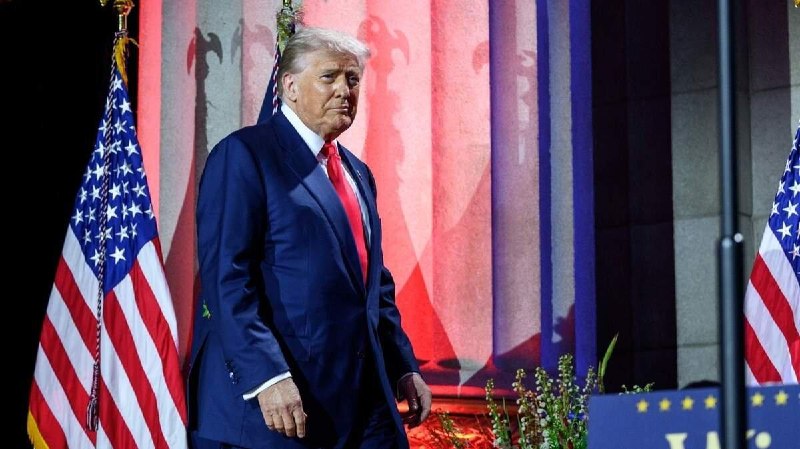
At 18:19 UTC on 17 August 2026 the United States served notice that it will not seek an extension of the memorandum of understanding with Iran. The president told reporters the US is not seeking an extension of the arrangement, according to a Telegram relay of the same-day remark. The posture arrived inside a window of roughly fifteen minutes that also contained two further posts, at 18:20 UTC and 18:06 UTC respectively, in which the president characterised Iran as being "in big trouble," its country "a mess" and its military "totally defeated," before adding that Tehran "want to make a deal, but they are not going to make the kind of a deal that I feel is necessary".
Monexus assessment: the messaging reads as a sequenced posture rather than a sequence of moods, foreclosing the diplomatic fallback even as it appears to leave a negotiating door ajar. The economic numbers coming back from domestic polling set the floor against which this rhetoric is being delivered.
The MOU question
The MOU remark was the procedural line beneath the louder rhetoric. The available posts do not specify the exact text of the memorandum, its expiry date, or the counterpart agencies entrusted to administer it. They also do not specify whether the US intends to trigger a return of pre-2015 UN sanctions under any snapback mechanism, or whether any back-channel is still live. What the source items do specify is the administration's stated intent: no extension, on the president's own account. That is a narrower lane than the routine "no deal is better than a bad deal" formulation that has preceded previous rounds of US-Iran talks, because it removes the instrument that had been managing the interval between rounds.
The "totally defeated" framing sits unusually close, in time, to the procedural line. That proximity is itself part of the signal. Previous administrations have separated the maximalist rhetoric from the procedural posture; here the same hour carries both, which makes the negotiating floor harder to walk back from without a visible political cost.
The red line, restated
The only line in the cluster that reads as a settled red line rather than a negotiating demand came earlier in the day, at 16:38 UTC on 17 August, in remarks relayed via the Unusual Whales account on X. "The number one goal is, and always will be, that Iran cannot have, in any way, shape, or form, a nuclear weapon," the president said. That formulation leaves minimal daylight. It rules out a limited enrichment programme, a civil nuclear fuel cycle that retains any indigenous capability, and any threshold capability short of a defined weapon. A demand this absolute narrows the set of agreements that count as a deal to almost nothing: either Tehran accepts a complete freeze with intrusive verification, or the talks fail on the same axis every previous round has collapsed on.
The source items do not specify the Iranian negotiating position. The framing of Tehran's posture arrives through the US president alone, which is appropriate to flag because the available posts contain no Iranian first-party statement on the MOU, the nuclear red line, or the maximalist framing.
The domestic backdrop
The same Monday produced a polling data point that the available posts summarise directly. According to a Telegram post at 18:49 UTC on 17 August, an Economist/YouGov survey put the president's approval rating at 33%, with 62% disapproving and 50% strongly disapproving. Only 22% of respondents rate the economy as good; 65% rate it as bad. The post frames the 33% figure as a new low across both his terms.
A foreign-policy posture that emphasises strength, refuses compromise, and depicts an adversary as defeated suits that polling environment. Monexus analysis: the convergence is not coincidental. Hawkish rhetoric performs for a domestic audience whose tolerance for diplomatic flexibility is eroding, while the same rhetoric narrows the room in which the Iranian counterpart would accept what is on offer. The president's approval floor and the Iranian negotiating floor are not the same constraint, but both are constraints; a posture calibrated to one will tend to look maximalist to the other.
What remains uncertain
The source items do not specify several things a serious brief on the next fortnight would usually contain: the exact text and expiry date of the MOU in question, whether the US intends to trigger a return of pre-2015 UN sanctions, which agency or official is handling the file, and whether any back-channel is still live. The Iranian side is not heard in the available items; the framing of its negotiating posture arrives through the US president alone. The available source items do not specify whether the maximalist line is the opening offer of a fresh cycle or the prelude to an action phase that does not require a deal to justify itself. The MOU clock, in any case, is now visibly ticking toward a known endpoint rather than an open horizon.
Desk note: this article reads the 17 August 2026 posts as a single posture-setting day, treating the MOU line, the maximalist rhetoric, the nuclear red line and the polling data as data on the same diplomatic lane rather than as four separate stories.
Wire provenance
This editorial synthesis draws on the following public wire/social posts:
- https://t.me/ClashReport/92823
- https://t.me/ClashReport/92824
- https://t.me/ClashReport/92816
- https://t.me/ClashReport/92827
- https://x.com/unusual_whales/status/2089391302614127010