The Bekaa clock, unwitnessed
An open-source feed logged a cascade of strikes, overflights and demolition reports across southern Lebanon in forty-five minutes. The pattern may be the story, but the record is thinner than the noise suggests.
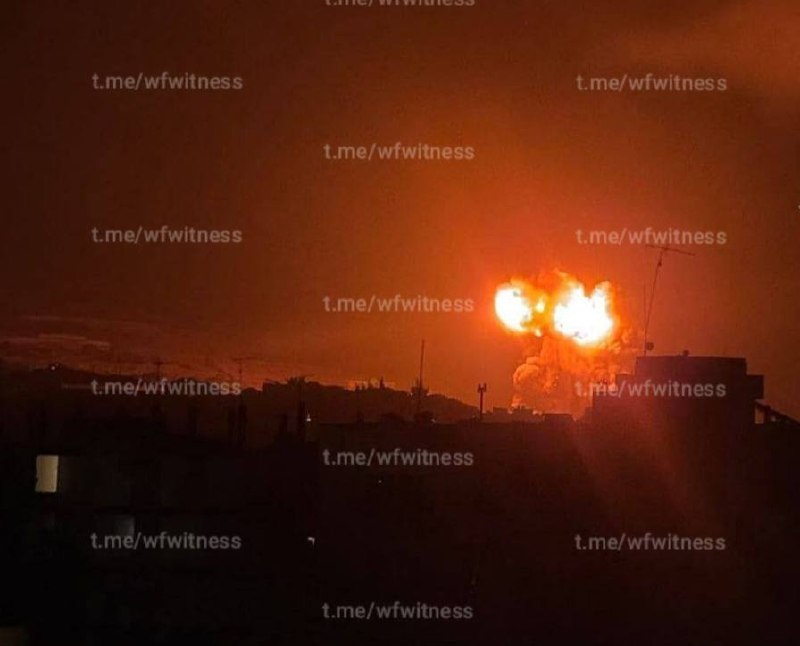
The first item on the wfwitness Telegram channel on the evening of 18 August 2026 was a claim, not a confirmation: at 21:51 UTC, the feed logged that Israeli jets had entered southern Lebanese airspace. Within the same minute, a second post logged initial reports of Israeli airstrikes across the south. By 22:36 UTC, forty-five minutes later, the same channel had published nine items covering a strike on the town of Qanatara, a strike on Ali Al Taher Hill, demolition activity at Hadatha, low-altitude overflights of the south and of western Bekaa, and, in a separate dispatch, a Russian-Kyrgyz border drill in Central Asia. Read in isolation, each post is a pin on a map. Read together, they describe an operational tempo, but only if the underlying claims hold.
That is the binding question. The open-source record from a single Telegram channel is not corroborated inside this article by wire reporting, by imagery analysts, or by official readouts. The pattern may be the story. The provenance has not yet earned that conclusion.
What the feed actually says
Working strictly from the wfwitness thread, the sequence on the evening of 18 August 2026 ran as follows. At 21:51 UTC, the channel reported Israeli jets entering southern Lebanese airspace and, separately, initial reports of Israeli airstrikes. One minute later, it reported an Israeli airstrike targeting the town of Qanatara, which the channel described as occupied. At 21:57 UTC, the channel released imagery purporting to show an Israeli airstrike on Ali Al Taher Hill, in two posts. A minute after that, it logged Israeli jets at very low altitude over southern Lebanon. At 22:18 UTC, an explosion was heard in Hadatha, attributed to Israeli demolition activity. At 22:23 UTC, the channel reported Israeli jets over western Bekaa. At 22:36 UTC, a separate dispatch described a Russian-Kyrgyz tactical drill on a border in Central Asia, the kind of post that usually passes unnoticed on a Middle East evening.
The feed's own framing is a clue. Strikes are labelled initial reports. Imagery is published with no claim that it has been independently verified. Demolition is described as producing an explosion that was heard, not as producing a confirmed demolition of a confirmed structure. The channel's epistemic register is high-tempo reporting under uncertainty, and that uncertainty is part of the story.
The Bekaa shift, conditional on the record
Western Bekaa is not where the dominant frame usually lands. Coverage typically clusters along the Litani corridor, the border villages whose names recur in flare-ups, the surveillance footage that circulates after the event. A low-altitude overflight of western Bekaa, as logged by wfwitness at 22:23 UTC, sits in a different part of the valley than the boundary-line reporting the rest of the thread describes. The available source items do not specify why, whether the flight tied to a specific event, or what was being signalled. Reading the overflight as evidence of a widened operating area is a hypothesis drawn from the geography of the thread, not a conclusion the thread itself permits.
The strike on Ali Al Taher Hill, logged at 21:57 UTC, is the harder entry in the sequence. The available source items do not specify the unit struck, the casualties, the target type, or whether the imagery released corresponds to the strike as described. They do not situate the hill inside the southern Lebanese topography, identify what access routes it might command, or describe any tactical significance of the position. What the thread does show is that a photographable event produced a circulable image, which is the unit in which modern Middle East coverage is increasingly transacted.
What the framing flattens
The dominant Western-wire frame, when southern Lebanon makes the news, compresses the story into two clauses: rockets fired, rockets answered. Hezbollah-linked channels counter that the tempo is set from the air and that southern Lebanese villages pay a steady toll in demolition and night sorties. Both readings are partial. The structural fact, on the best evidence available here, is that the south is being treated as a patrol zone by an air force that controls the airspace above it. The wfwitness thread, taken at face value, is consistent with low-altitude overflights functioning as presence operations rather than as one-off defensive responses. The qualifier matters: the thread is one channel, the night is one night, and the conclusion is a hypothesis, not a verdict.
There is a real counter-weight, and it deserves airtime. Northern Israel faces genuine security concerns that go back decades, and a campaign of low-signature fire from the south has been a recurring problem. Hostage risk and rocket risk are first-order facts. None of that licences flattening every south-Lebanese village into scenery, and none of it licences the equally flattening assumption that the strike tempo described in the wfwitness thread is necessarily accurate in every particular. Both reductions are forms of lazy reading.
Pattern, provenance, and the calendar ahead
The strategic question is not whether the night's strikes were justified; the available reporting cannot resolve that and this publication has not independently established the targets struck. The strategic question is what kind of evidence would convert the wfwitness thread from a single-source cascade into a corroborated pattern.
Three observations follow strictly from the thread and its limits. First, the operating area described across the nine posts widens as the evening progresses, from Qanatara to Ali Al Taher Hill to western Bekaa. Second, the demolition activity at Hadatha, attributed to Israeli forces by the feed, sits in the thread alongside strike reports, suggesting two distinct operational modes running in parallel. Third, the entire sequence is sourced to one channel, unverified against wire reporting inside this article. The calendar ahead is a verification calendar: imagery analysis, ground reporting, and corroboration from established wires will determine whether the pattern is the story or the noise.
What the record does and does not establish
The available source items do not specify casualty figures for any of the strikes logged on 18 August 2026. They do not specify whether Ali Al Taher Hill or Qanatara was hit by manned aircraft, drones, or artillery, or whether the demolition at Hadatha involved inhabited structures. They do not specify whether the night's activity was a response to a specific incoming fire event. The wfwitness imagery released at 21:57 UTC is published without independent confirmation, and the available source items do not specify the analytical chain behind it. Any reading of the pattern as a deliberate widening of the operating area, rather than as a routine of high-tempo reporting under uncertainty, requires sources beyond what is in front of us.
The honest position is that the pattern is visible at the level of a single Telegram cascade; the justification, the proportional response, and the strategic intent remain outside the source set. The next evening's wfwitness feed, and the wire reporting that catches up to it, will be the test of whether this is a tempo or a tempo plus a shift, and on what kind of timetable.
Desk note: Monexus treats the wfwitness thread as a primary, named open-source feed rather than as wire, marks its claims explicitly as unverified within the article, and asks readers to read the pattern as a hypothesis for verification, not as a verdict on the night's operations.
Wire provenance
This editorial synthesis draws on the following public wire/social posts:
- https://t.me/wfwitness/107521
- https://t.me/wfwitness/107522
- https://t.me/wfwitness/107525
- https://t.me/wfwitness/107530
- https://t.me/wfwitness/107531
- https://t.me/wfwitness/107532
- https://t.me/wfwitness/107537
- https://t.me/wfwitness/107538
- https://t.me/wfwitness/107539