Ottawa and Washington try to bridge the auto-tariff gap
A Reuters wire post overnight says US and Canadian officials are trying to close a gap on potential auto tariff cuts; Polymarket traders price a 40 percent chance that a Canada tariff increase lands this year.
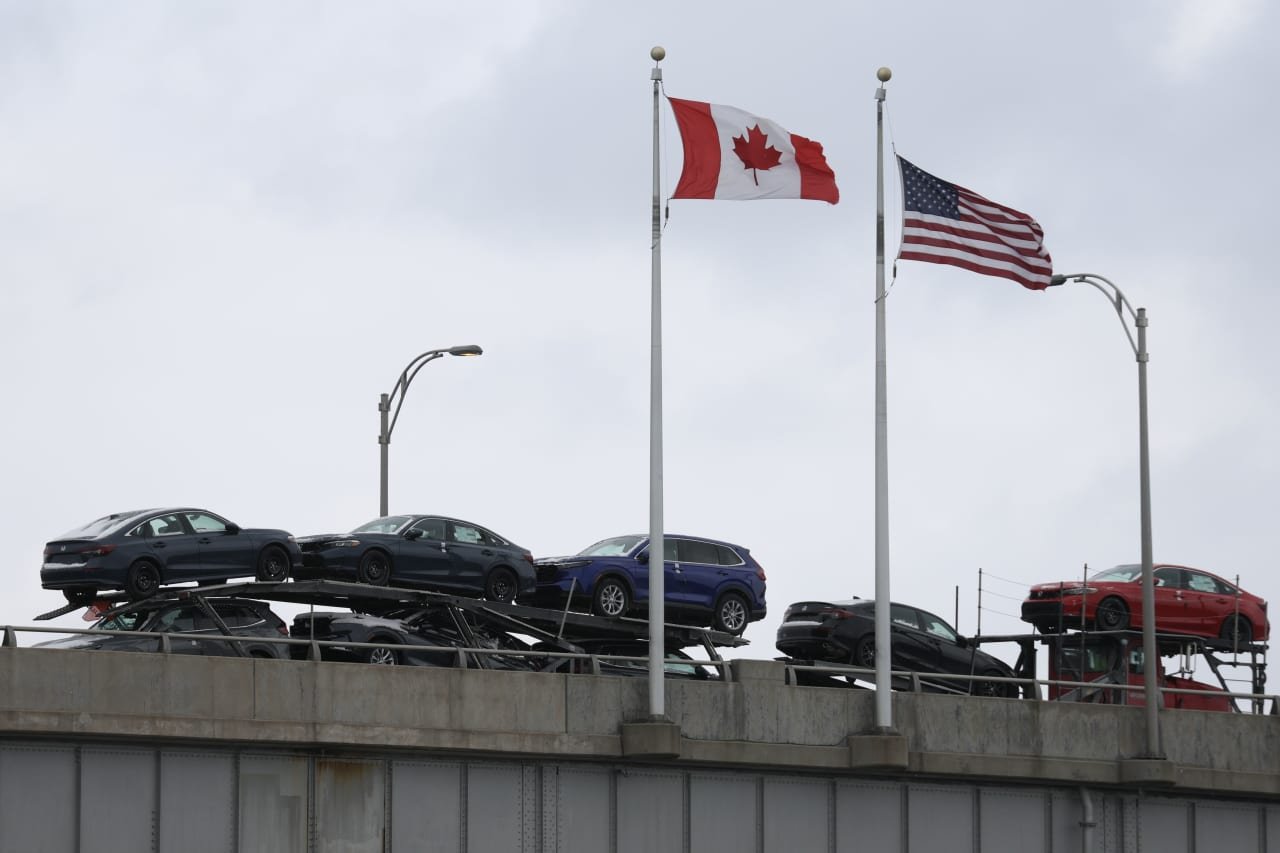
A Reuters wire post timestamped 03:20 UTC on 18 August 2026 carried a single headline: "US, Canada try to bridge gaps over potential autos tariff cuts, sources say." The wording is careful. Reuters does not say the two sides have agreed to anything, does not name the officials in the room, and does not give a deadline. It says they are trying to close a gap, on background, and leaves the reader to read the rest from the markets.
This piece reads the wire post and the prediction-market signal against the bare fact of the headline. The available sources do not specify the rates under discussion, the participants, or the timetable. What they do specify is the shape of the conversation: a relief track, not an imposition track, with traders attaching a non-trivial probability to the possibility that some form of Canada tariff increase still lands inside the current calendar year.
What the wire post actually says
The Reuters headline does two things with two words. The first is "potential," which tells the reader that no package is on the table yet. The second is "cuts," which tells the reader the framing inside the US administration is relief from an existing level, not a fresh imposition. The "sources say" caveat at the end is the standard wire disclaimer that the underlying reporting is on background. Monexus assessment: that combination of "potential" and "cuts" is consistent with a process in which each side has floated numbers internally but neither wants to commit to them publicly before a political backstop is in place.
The investing.com market wrap timestamped 17 August 2026 records the immediate reaction in Canadian equities. The S&P/TSX Composite closed down 0.17 percent on the day. That is a small move. It is the move of an index that has already partly priced in the uncertainty and is now waiting for a catalyst in either direction. Equity desks in Toronto were not panicking; they were watching.
The prediction-market signal
A Polymarket post on its X account at 20:41 UTC on 17 August 2026 listed the implied probability that a Canada tariff increase goes into effect "this year" at 40 percent. The cited Polymarket page carries that same 40 percent figure. Polymarket did not specify in the cited material what package the contract refers to, nor did it identify the jurisdiction of its corporate base; the available source items do not specify those details, and this article has not independently established them.
Two readings of the 40 percent figure are plausible. The first is that traders genuinely expect a partial outcome, in which some tariff action lands but is negotiated down from worst-case levels, and that partial outcome registers on the contract as "an increase." The second is that traders are pricing the political calendar: an administration that has used tariff threats as a regular instrument across 2026, against Canada and others, is expected to deliver at least one more headline inside the calendar year as a negotiating posture, even if the substantive number is small. The Polymarket contract is treated here as an indicator of trader expectations, not as a forecast of the substantive tariff outcome.
Monexus assessment: the second reading sits more naturally with the Reuters wire, because the Reuters framing is "potential cuts," which is the language of a relief negotiation rather than an imposition. A 40 percent implied probability is closer to a posture forecast than to a substantive policy forecast, on this reading.
What the sources do not specify
The Reuters X post does not name the officials involved in the talks, the specific rate ranges under discussion, or a deadline by which either side wants a deal. The Polymarket post names only "the Canada tariff increase" without further definition, so it is not clear from the cited material whether traders are pricing a particular package or the concept of any tariff increase. The investing.com market wrap does not break out which sectors of the TSX moved on tariff news, only that the index closed slightly lower.
The available source items do not address the current operating status of the United States-Mexico-Canada Agreement, do not specify whether the framework is in force, under renegotiation, or expired. This article has not independently established what rate ranges are on the table, who exactly is in the room, or whether the US side is willing to link an auto concession to other files such as defense spending or dairy access. Readers looking for those specifics should treat the wire reporting above as a starting point rather than a complete picture.
Stakes at the factory gate
The larger story sits at the factory gate, not at the negotiating table. The North American auto industry has historically run on cross-border intermediate flows, and Canadian parts makers in particular have spent years locating inside that pattern. A tariff regime that re-imposes duties on that flow does not just shuffle margins; it forces firms to decide whether to relocate production, accept lower margins, or pass costs through to buyers. None of those three responses is costless, and each one has different regional consequences.
If the package that ultimately lands is closer to a quota arrangement than to a tariff, the outcome looks like managed adjustment. If it lands as a flat tariff with no carve-out for content, the outcome looks like a slow decoupling of an industry that has been one of the strongest examples of cross-border integration in any developed economy. Both outcomes are bad for some set of workers; the question is only which set. The cited material does not specify which path is more likely; the Polymarket figure is consistent with either, and so is the Reuters headline.
The political timing matters too. Both governments face domestic audiences that read tariff fights as proxy fights for industrial strategy, and both have incentives to claim a win even if the underlying number is small. The next signal worth watching is whether either side publishes a joint communiqué, or whether the talks continue as a Reuters-cited back-channel. Watch for a US Trade Representative readout in the coming weeks; that is the venue at which a substantively negotiated package is most likely to surface, if one is coming at all.
Desk note: Monexus framed this around the named Reuters reporting on the auto file and the Polymarket probability signal, with the TSX close as the immediate market reaction. Where the wire describes the talks in general terms, this piece has said so rather than infer specifics. The Polymarket contract is treated as an indicator of trader expectations, not as a forecast of the substantive tariff outcome. The available source items do not address the current operating status of USMCA, and this article has not independently established it.
Wire provenance
This editorial synthesis draws on the following public wire/social posts:
- https://reut.rs/4x8rnvl
- https://x.com/Reuters/status/2089552897214226618
- https://poly.market/GBJ1eIp
- https://x.com/Polymarket/status/2089452528605823029
- https://www.investing.com/news/stock-market-news/canada-stocks-lower-at-close-of-trade-sptsx-composite-down-017-4863936