Three bulletins, one strike, and the relay problem at Al-Mukha
Two Iranian state-aligned Telegram channels posted a UKMTO advisory on a cargo-ship strike off Al-Mukha before Al-Alam's English relay appeared. The chronology, not the strike, is the story.
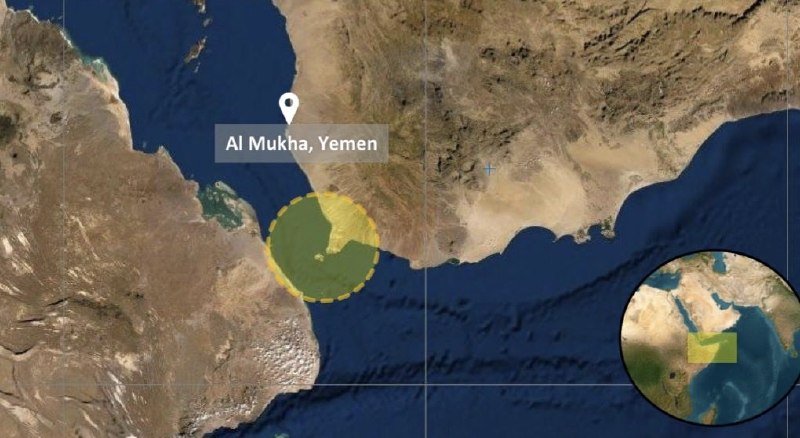
At 17:28 UTC on 18 August 2026, a Farsi-language Telegram channel affiliated with Tasnim News in Iran posted a short bulletin: a marine accident had been registered 40 nautical miles southwest of the city of Al-Mukha in Yemen, attributed by the post to the British Maritime Trade Operations office. Two minutes later, Tasnim News English carried the same wording in English. At 18:21 UTC, Al-Alam's English-language Telegram channel relayed a separate short notice from the same UKMTO source, describing a cargo ship off the coast of Al-Mukha hit by unidentified projectiles.
The choreography is the news. UKMTO advisories are fixed-format operational alerts built for mariners, not stories: location, the fact of an incident, an instruction to transit with caution. What travels with them, and what does not, is where the editorial choices begin. Read in the order the timestamps give, the bulletins do not move outward from a single source the way a wire cascade normally does. They begin on Iranian state-aligned channels, and only later surface in an English-language relay that names UKMTO as the originator.
What the three bulletins actually say
The Jahan Tasnim post at 17:28 UTC is the earliest item in the set. It places the incident 40 nautical miles southwest of Al-Mukha and attributes the report to UKMTO, without naming a vessel, flag state, damage assessment, or any actor.
Two minutes later, Tasnim News English posted a parallel bulletin in English with the same 40-nautical-mile detail and the same UKMTO attribution. Both posts use the word "accident" rather than "attack," and neither names the Houthis, Ansar Allah, or any other group.
At 18:21 UTC, the Al-Alam channel posted a separate notice, again attributed to UKMTO, reporting that a cargo ship off the coast of Al-Mukha had been hit by unidentified projectiles. This item is shorter on geography and richer on language: it uses the phrase "hit by unidentified projectiles," not "accident." The Al-Alam relay, unlike the two earlier posts, does not give a distance figure.
Read together, the three messages amount to one fact in three fonts: a ship was struck, the strike happened near Al-Mukha, and the named source is UKMTO. Everything else is silence.
What the bulletins leave out
A useful exercise is to list what an alert of this kind usually contains in a fuller UKMTO advisory, and what is missing here. UKMTO's longer-format advisories sometimes carry the vessel's name and flag, the attack type (missile, drone, small arms, waterborne IED), the extent of damage, the status of the crew, and the heading of any nearby warships. The available items do not specify any of that.
The relay channels narrow the gap further. Tasnim's English post and Jahan Tasnim's Farsi post both treat UKMTO as the sole named source and decline to identify any actor. The Al-Alam relay uses different wording for the same incident, sharper on the mechanism of the strike but equally silent on attribution. Whether that restraint is editorial caution, or simply the absence of further information at the moment of posting, is unclear from the cited items alone.
Why the relay chain matters
In an environment where shipping incidents in the southern Red Sea have become a recurring story, the question of who breaks the news is no longer incidental. UKMTO's advisories are deliberately low-content: a fixed format, a single paragraph, an instruction to merchant vessels to transit with caution. They are designed to be relayed, not to be quoted at length.
When the first English-language bulletin a global reader sees carries the word "accident" rather than "attack," and arrives via an Iranian state-aligned channel rather than via UKMTO's own channels or a Western wire, the framing has already done some work before any later coverage catches up. Monexus assessment: the same underlying fact, packaged differently, can read as a routine shipping disruption or as the latest incident in an ongoing maritime campaign, depending on which relay the reader meets first.
A separate question, which the available items do not resolve, is what the three channels each had in front of them when they posted. The two earlier posts carry a precise distance figure; the later one carries the projectile language. That pattern is consistent with each channel receiving the same underlying UKMTO notice and selecting different elements to emphasise, but the cited items do not establish that directly.
What remains genuinely unspecified
The cited posts do not contain a perpetrator identification, a claim of responsibility from any group, a casualty figure, or confirmation that the vessel sank, caught fire, or resumed transit. They do not establish the vessel's name, flag, or ownership, and they do not record any follow-up from UKMTO beyond the initial bulletin. A reader trying to verify the strike independently from these three items will find: a location (40 nautical miles southwest of Al-Mukha, on the Red Sea coast), an event (projectile strike on a cargo vessel), and a single named source (UKMTO). Everything beyond those three data points is, for the moment, unspecified by the available sources.
Watch for a UKMTO follow-up advisory with vessel and damage detail, any statement issued via Houthi official channels, and a vessel-tracking confirmation of any AIS gap in the hours after the strike before treating any single narrative as definitive.
Desk note: where wire coverage will lead with the strike and the suspected perpetrator, this piece foregrounds the relay chain and the editorial choices that shape how the incident reaches a global reader. The underlying fact is UKMTO's; the packaging is everyone else's.
Wire provenance
This editorial synthesis draws on the following public wire/social posts:
- https://t.me/alalamfa/350040
- https://t.me/tasnimnews_en/31693
- https://t.me/JahanTasnim/230619