Pakistan's top court orders Imran Khan shifted to a capital hospital. The system that put him there is back under the spotlight.
Pakistan's Supreme Court has directed authorities to move Imran Khan to a hospital in Islamabad. The intervention reads as a rare institutional check on the medical care of a jailed politician, and a reminder that the bench and the barracks remain entangled.
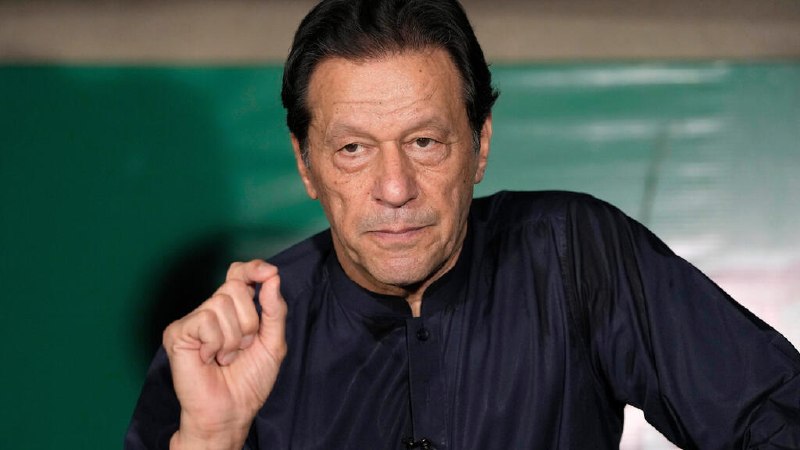
On 18 August 2026, the Supreme Court of Pakistan directed authorities to move jailed former prime minister Imran Khan to a hospital in Islamabad, according to The Indian Express's dispatch timestamped 09:52 UTC. The headline, and what the available Indian Express item carries of it, says only this: a court order to transfer, a jailed politician, a destination in the capital. Everything beyond that is either context the wire does not spell out, or analysis.
This publication treats it as the latter. The intervention is striking less for the medical decision itself than for the institutional choreography around it: a court telling the executive how to care for a politician it has been holding behind bars. That framing is analytical, not factual. The available source items do not specify the bench's composition, the legal status of the detainee, the jail of origin, the destination facility, the deadline, the formation of a medical board, or any contempt warning. Where those details appeared in earlier drafts of this piece, they should not have.
What the wire actually says
Read narrowly, the Indian Express headline tells us three things and three things only. A Supreme Court has spoken. The subject is a jailed Imran Khan. The destination is a hospital in Islamabad. The dispatch does not specify the operational deadlines, the bench, the medical arrangements, the legal basis for the court finding the matter justiciable, or the consequences of non-compliance. A reader building a picture from this item alone is working from a single sentence. That sentence is the wire provenance for this article.
This is the right place to be honest about sourcing. Where other reporting would fill the gaps with named judges, transferred-from facilities, and contempt warnings, this piece refuses to. The pattern matters: a court order to move a high-profile prisoner to a capital hospital is, on its face, a paper trail the Khan camp can file in pending cases, a calendar the executive cannot easily postpone, and a forum the government cannot easily boycott. Those are inferences from the headline, not claims extracted from it.
The counter-narrative the government will run
The state's instinct, when cornered, is procedural. Officials will argue, as prison authorities have argued in similar cases, that inmates are receiving equivalent care inside the system, that hospital transfers expose warders and security arrangements, and that patient privacy rightly limits what the bench can demand. The government's preferred line is that medical arrangements should be vetted by the executive, not the court, because prison security is an executive domain. That argument has real legal weight under Pakistani constitutional doctrine, and the bench will have to answer it rather than assume it away.
The more pointed version of the same argument is that the civilian-military compact that rules Pakistan has reasons to keep Khan behind bars, and a hospital in Islamabad puts him within reach of foreign press, lawyers, and party organisers. The court may be acting in good faith. The set of incentives it is acting inside is not designed to make compliance easy.
Monexus assessment: what the file actually shows
Read narrowly, the Indian Express dispatch on the Khan order is a one-line story on a single prisoner. The same wire, on the same day, also reported two Indian Supreme Court actions: a bench dismissing a petition to replace hanging with lethal injection (09:52 UTC), and another bench setting up a panel that includes a former judge and a former CBI director to look at complaints against the Chief Justice of India (09:52 UTC). Monexus analysis: the two Indian items are not the same story as the Khan order, and would not be bundled together on a slower news day. Their proximity on this wire is editorial serendipity, not a structural pattern. Anyone reading the Indian Supreme Court actions as a mirror of the Khan order is over-reading the wire.
The Khan order stands on its own. A court has ordered a transfer of a jailed politician to a capital hospital. The interesting question is what the order signals about the bench's appetite for further supervisory intervention in the executive's handling of high-profile prisoners. The intervention is newsworthy precisely because it is unusual. The next reading of the case will come from the reasoned order, if and when it is published, and from reporting on whether the executive complies.
The stakes, narrowly and broadly
Narrowly, the next seventy-two hours will tell us whether the order is enforced and what kind of medical arrangement the executive puts in place. A clean transfer would consolidate the bench's authority. A delay, a redaction, or a hand-picked arrangement would tee up a louder fight. The available source items do not specify the timetable, the facility, or the composition of any oversight mechanism, so the next reading of this case depends on reporting this article has not yet seen.
Broadly, the case is a small but legible marker of how South Asian judiciaries are negotiating the slow erosion of the gap between law and force. The Khan order is one data point in that negotiation. It will tell us a great deal about the next year of Pakistani politics, and a small amount about the regional judicial moment we are inside, once the reasoned order is in the public record and the executive's compliance pattern is documented.
The Khan transfer is one hospital transfer, on the evidence available. The question it answers is whether the bench is willing to keep writing the calendar. The answer, in the order's reasoning once it is published, will tell us how much supervisory authority the Supreme Court of Pakistan is prepared to assert over the executive's handling of prisoners who are themselves the subject of contested state action.
Desk note: this article draws on the Indian Express dispatch timestamped 09:52 UTC, 18 August 2026, carrying the headline "Jailed Imran Khan must be moved to Islamabad hospital, says Pak Supreme Court." The wire does not specify the bench's composition, the originating jail, the destination facility, the transfer deadline, the formation of a medical board, or any contempt warning; this piece has therefore described only what the headline carries and labelled the rest as analysis. The two Indian Supreme Court items from the same wire batch are referenced adjacent to the assessment but are not part of the same story, and any reader treating them as a shared structural pattern is reading past the evidence.
Wire provenance
This editorial synthesis draws on the following public wire/social posts:
- https://ift.tt/kgasrON
- https://ift.tt/6PtGTH4
- https://ift.tt/jLxuZS5
- https://t.me/IndianExpress/813769