Iran says US security umbrella cracked in '40-day war', pitches regional architecture
Tehran's foreign minister argues the recent 'imposed war' discredited the US security guarantee and opened space for a regional order. A deputy minister added a sharper message on the Strait of Hormuz.
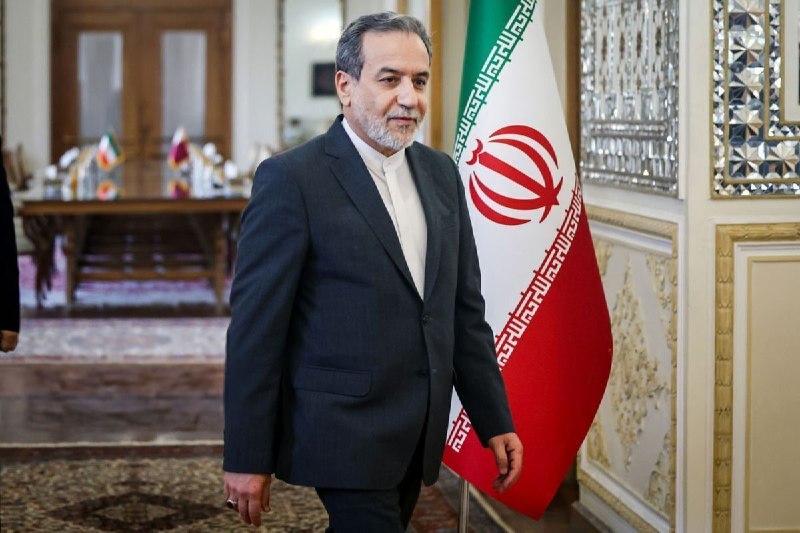
Iran's Foreign Minister Abbas Araghchi told audiences on 18 August 2026 that a recent "40-day imposed war" had done more damage to US credibility in the Gulf than to Iran's negotiating position. The framing, carried by Iranian state-aligned outlets and relayed in English on Telegram channels including PressTV, positions Tehran as the principal beneficiary of the conflict's aftermath, even as its negotiating leverage on the Strait of Hormuz appears to have tightened in parallel. The harder edge came from Iran's deputy foreign minister, who warned that "misconceptions" held by Donald Trump about the strategic waterway "will be corrected, one way or another".
The argument Tehran is making, stripped of its polemics, is structural: a regional security order underwritten by Washington is being replaced, at least in Iranian telling, by one negotiated among the region's own capitals. Whether that claim survives contact with the actual behaviour of Gulf monarchies is the question the next several weeks will test.
The diagnosis from Tehran
Araghchi's core claim, distributed by PressTV at 18:50 UTC on 18 August, is that the conflict "fundamentally altered the regional security architecture". The Iranian foreign ministry's reading, in his words, is that the war "shattered the illusion of US-provided security" and "paved the way for region-led security". In a separate post relayed by the ClashReport channel at 17:36 UTC the same day, Araghchi elaborated: "This war was very effective, in my opinion, in changing regional approaches to security and political issues and the way of coexistence with Iran. I think a more stable security order in the region is now achievable."
The argument has two pillars. The first is the credibility collapse thesis: that Gulf states which previously subcontracted their deterrence to US carrier groups and pre-positioned air wings will, after watching those guarantees tested, hedge toward indigenous arrangements. The second is the regionalisation thesis: that whatever replaces the US umbrella will be negotiated among the states of the Gulf, the Levant, and South Asia, with Tehran claiming a seat at the table it was previously excluded from.
The Hormuz signal underneath
The signal accompanying the rhetoric is sharper. Two PressTV posts published within minutes of each other on the afternoon of 18 August, at 18:23 UTC and 18:24 UTC, carry an unusually direct threat attributed jointly to the foreign minister and his deputy: that "misconceptions" held by Trump about the Strait of Hormuz "will soon be corrected, one way or another". The phrasing, that there is more than one way the correction can happen, is the diplomatic equivalent of a wink at the naval instruments Iran has spent two decades developing, from fast-attack craft to shore-based cruise missile batteries and the mining capability the IRGC Navy publicly rehearsed in exercises last decade.
The Strait of Hormuz carries roughly a fifth of global seaborne oil. The threat is therefore not symbolic. A disruption lasting days would move global crude benchmarks by single-digit percentages; one lasting weeks would force emergency SPR releases across OECD economies. Tehran has historically calibrated such warnings for diplomatic effect rather than imminent action, and the parallel message about regional security architecture suggests this iteration is meant to do the same work.
Why the claim is harder than it sounds
The Iranian argument has a surface plausibility. The Gulf states have spent two years hedging: normalising with Tehran in fits and starts, signing maritime détente understandings, expanding commercial ties even as they host US Central Command's forward headquarters. Public opinion polling in the region has, across multiple surveys, registered declining confidence in the US security guarantee.
The harder question is whether a regional security architecture can be built without one of two ingredients: a US backstop, or a dominant regional power willing to underwrite stability. Iran's offer is for a concert arrangement, in which Tehran, Riyadh, Abu Dhabi, Doha, Ankara, and possibly Cairo manage their disputes without Washington in the room. But the Gulf states have not, in any public statement visible in the cited material, signed on to that frame. Saudi Arabia and the UAE continue to host US forces. Egypt's military remains tied to US training pipelines. The architecture Araghchi describes is at this point an aspiration with one signatory.
The economic flank is also unresolved. Iran's oil exports continue to flow, but through shadow channels and under sanctions risk. Any regional security order that legitimises Iranian energy exports at scale requires a sanctions architecture carve-out that Washington has shown no willingness to make.
What to watch by mid-September
Three signals will test whether Araghchi's framing is rhetorical positioning or the early shape of an actual negotiating posture. First, the public response from Saudi Arabia and the UAE to the "region-led security" formulation: silence would be a tell, as would any joint statement with Tehran on maritime corridors. Second, whether the Trump administration names a special envoy or responds publicly to the Hormuz warning: a calibrated US naval deployment to the Strait would harden the Iranian framing rather than soften it. Third, the trajectory of Iranian oil exports and any sanctions enforcement actions through September: a quiet accommodation would signal a deal behind the scenes; a stepped-up enforcement campaign would harden positions across the board.
The structural pattern the Iranian argument fits into is older than the current war: when a hegemonic patron's credibility is tested, the states in its orbit begin building alternative cushions. Whether those cushions cohere into a stable alternative order, or remain a portfolio of bilateral hedges, is the open question of the next decade. The 18 August messaging is Tehran's most explicit public bid to shape the answer in its favour.
Desk note: this article relies exclusively on Iranian state-aligned and relay channels (PressTV, ClashReport) for direct Iranian statements; the cited posts do not contain corresponding statements from Gulf states or the US State Department, and this article has not independently established whether any such response has been issued.
Wire provenance
This editorial synthesis draws on the following public wire/social posts:
- https://t.me/presstv/203270
- https://t.me/presstv/203268
- https://t.me/presstv/203267
- https://t.me/ClashReport/92902