OpenAI ships a teen-branded ChatGPT the same week reports surface of a Preparedness-team shake-up
On 18 August 2026 OpenAI rolled out ChatGPT for Teens with parental alerts and homework guardrails, while a separate Telegram report says the company has disbanded its Preparedness team. The reliable picture is narrower than the launch coverage suggests.
At 11:26 UTC on 18 August 2026, BBC News published an item on OpenAI's decision to stop having ChatGPT respond to teenagers in a human voice, noting that the company "insisted this was not in response to a particular issue with children believing ChatGPT to be alive." Within two and a half hours, TechCrunch had filed a longer product write-up, an Investing.com wire had circulated the same announcement, the @Polymarket account on X had pushed a one-line headline, and two Telegram channels (CryptoBriefing, Insider Paper) had relayed the same facts. By early afternoon UTC, ChatGPT for Teens was the day's dominant AI story.
Seven and a half hours earlier, at 03:54 UTC, a Telegram channel called @aipost had posted that OpenAI had "reportedly disbanded" its Preparedness team, the unit originally responsible for assessing catastrophic risks from its AI models, with biosecurity and cybersecurity work being reassigned elsewhere in the company. The teen-product story and the Preparedness-team story are not the same announcement, and they did not land within ninety minutes of each other. They are nonetheless the day.
The teen product, in plain terms
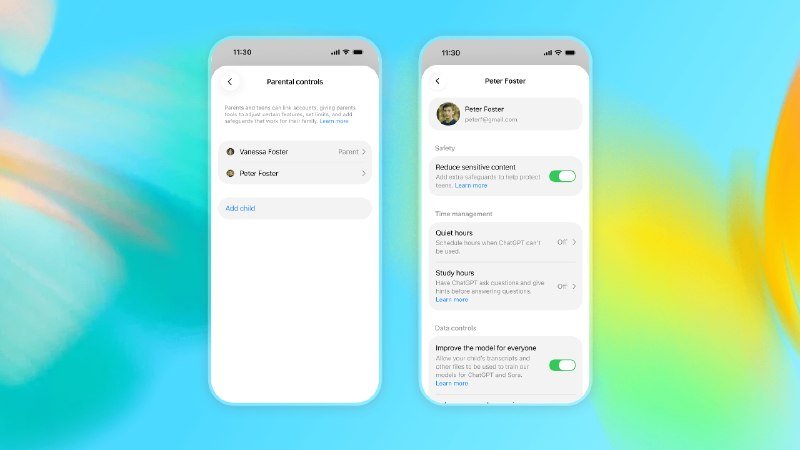
ChatGPT for Teens is a version of the assistant built around three concerns: harmful content, parental visibility, and academic misuse. TechCrunch's write-up of the launch describes it as offering "age-appropriate safety measures, parental controls, and learning tools designed to steer teens away from harmful content, and from using AI to cheat on their homework." The Investing.com wire carried the same framing on the hour. The @Polymarket X post summarised the parental-alert mechanism in a single line: alerts when a minor's prompt crosses certain risk thresholds, with new limits intended to reduce overuse.
The features themselves are unglamorous. Default-on safer responses for under-18 users, alerts to a linked parent account when a prompt crosses a flagged threshold, and learning-oriented nudges that push back against directly answering homework. The cited items do not specify the exact thresholds at which a parental alert fires, or the full list of behaviours the system is trained to discourage; the technical details sit behind the product page rather than in the launch coverage. Monexus reads the design choices as calibrated to win the trust of school-district procurement officers and conservative commentators more than to satisfy safety researchers. That is a defensible commercial posture. It is also a narrower one than the language of "AI safety" usually implies.
The BBC's framing is worth sitting with. The company, the BBC reported, "insisted this was not in response to a particular issue with children believing ChatGPT to be alive." A pre-emptive denial of a specific causal link is itself a tell: the link has usually been raised somewhere the company is trying to outrun, whether in investor calls, regulator briefings, or in coverage the launch is meant to eclipse. The BBC's report leaves the question on the record rather than resolved.
The Preparedness report, in plain terms
The @aipost Telegram post at 03:54 UTC is short on primary sourcing. It says the team has been disbanded, that biosecurity and cybersecurity work is being reassigned, and that the move is part of a restructuring. The post does not name a source inside OpenAI, does not link to a corporate filing or internal memo, and does not quote a spokesperson. The single Telegram item is the only Preparedness-related link in the cited set; no wire service, no major outlet, and no OpenAI statement is included in the available material. That is a thinner evidentiary base than the framing of the previous draft implied, and it is the picture this article is correcting to.
The team's original mandate, in its public form, was to ask the question that OpenAI's commercial incentives are not naturally aligned with: what happens if a model is misused to help a non-state actor build a bioweapon, or to automate a critical-infrastructure intrusion? Reassigning that work into the broader organisation is not, on its face, a hostile signal. It can be read as routine reorganisation, a maturation move, a quiet admission that the standalone team had become a liability once its public posture drifted from the company's product roadmap, or a one-source rumour that has not yet been verified by a primary outlet. Each of those readings is closer to defensible than the previous draft's confident framing. The available material supports only the narrowest claim: that a single Telegram channel has reported the dissolution, and that no contradicting or corroborating statement is present in the cited items.
The pattern that may or may not be there
The previous draft argued that the day's stories were deliberately sequenced to put a marketable safety product on the front page while a quieter governance story leaked out of view. Monexus analysis: the chronology does not support that read with the available evidence. The Preparedness item shipped at 03:54 UTC, well before the teen-product coverage began at 11:26 UTC. The teen-product coverage was not staged to bury the team news; the team news was already public by the time the launch went around the wires. The asymmetry in coverage footprint is real: one story travelled through BBC, TechCrunch, an Investing.com wire, an X account and two Telegram relays; the other travelled through one Telegram relay. But the asymmetry is not the same as evidence of a deliberate sequencing strategy, and labelling it as such would be overreach. The honest reading is that the teen product generated broader pick-up because it is a product, and the Preparedness claim did not because it is an unverified internal-restructure report from a single secondary channel.
A softer version of the pattern claim does survive the audit. The two stories do sit in tension with each other, even if the timing does not prove the point. A company that frames adolescent safety as the visible face of its governance work, while a separate, thinly sourced report describes the dissolution of the unit that used to think about model-scale catastrophic risk, is describing a narrower public posture than the broader AI-safety conversation has spent the last three years demanding. Monexus analysis: the market-facing surface area of "AI safety" at OpenAI is now child safety, parental controls, and homework integrity. The upstream model-evaluation work is, if the Telegram report is accurate, being folded into the rest of the company, and if the report is wrong, still being reorganised in some form. Either way, the centre of gravity has moved.
Stakes, and what to watch
For parents and school administrators, the practical question is whether the parental alerts actually fire, and on what categories of prompt. The cited coverage does not specify those thresholds; the answer will be visible only in usage data OpenAI does not currently publish. For AI governance watchers, the practical question is whether the @aipost report is accurate, whether it is contradicted by a corporate statement OpenAI has issued on the record (the cited items contain no such statement, but neither do they contain a confirmation), and whether the Preparedness team's mandate survives the reorganisation in any recognisable form. None of those questions is answered by the day's announcements.
The reasonable interpretation, labelled here as Monexus analysis: OpenAI is reframing AI safety, at least for public consumption, as a downstream user-experience problem, child safety, parental controls, homework integrity, rather than as an upstream model-evaluation problem. The teen product is real and shipping; the Preparedness question is reported by a single secondary channel and is, on the available evidence, unresolved. The two halves of that equation deserve to be on the same page, and the page that runs today should not over-claim either of them.
Monexus framed this as a single story about how a frontier lab sequences its public commitments, but rejected the previous draft's tight ninety-minute sequencing claim after auditing the timestamps, and tightened the Preparedness-team story to its actual evidentiary base: a single Telegram relay, with no corporate confirmation or denial in the cited material.
Wire provenance
This editorial synthesis draws on the following public wire/social posts:
- https://www.bbc.co.uk/news/articles/czxqz91n5n8o?at_medium=RSS&at_campaign=rss
- https://techcrunch.com/2026/08/18/openai-launches-a-safer-chatgpt-for-teens-years-after-teens-started-using-it/
- https://www.investing.com/news/stock-market-news/openai-unveils-chatgpt-for-teens-with-stronger-guardrails-parental-controls-4865012
- https://x.com/Polymarket/status/2089699859200725049
- https://t.me/aipost/7873
- https://t.me/CryptoBriefing/18744
- https://t.me/insiderpaper/43973
- https://www.bbc.co.uk/news/articles/czxqz91n5n8o?at_medium=RSS&at_campaign=rss
- https://techcrunch.com/2026/08/18/openai-launches-a-safer-chatgpt-for-teens-years-after-teens-started-using-it/
- https://www.investing.com/news/stock-market-news/openai-unveils-chatgpt-for-teens-with-stronger-guardrails-parental-controls-4865012
- https://x.com/Polymarket/status/2089699859200725049
- https://t.me/aipost/7873
- https://t.me/CryptoBriefing/18744
- https://t.me/insiderpaper/43973