OpenAI's teen ChatGPT arrives years late and asks parents to finish the job
OpenAI is rolling out a restricted ChatGPT for under-18s with parental alerts and anti-cheating tools. The product lands long after millions of teenagers were already using the general version.
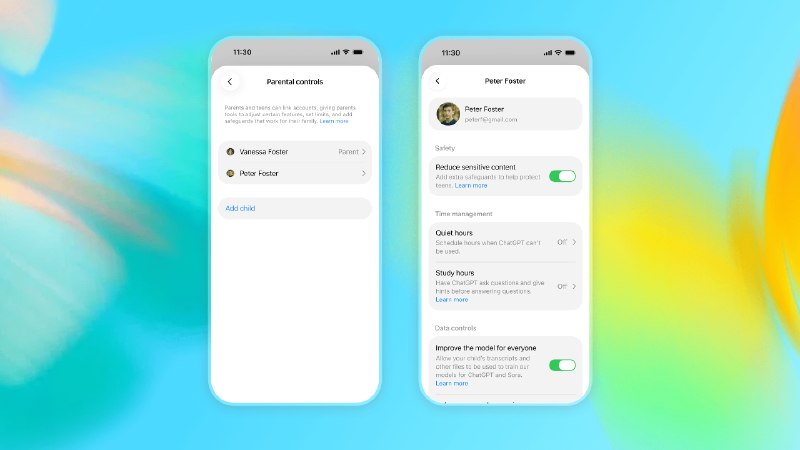
OpenAI on 18 August 2026 confirmed the launch of a dedicated, age-restricted version of ChatGPT aimed at under-18 users, adding parental alerts for harmful prompts and tools designed to discourage homework cheating. The Financial Times first reported the planned restrictions, and the company followed within hours with a public product announcement covered by TechCrunch and Investing.com.
The release lands long after the fact. Teenagers have been using the general-purpose model for years, and the harms that prompted the redesign have already been catalogued in lawsuits, regulator filings, and a steady drumbeat of parent forums. A product launched in 2026 to fix a problem that crystallised in 2023 is, by definition, retrospective.
What's actually new
The teen-facing product bundles several features into a single surface. TechCrunch describes age-appropriate safety measures, parental controls, and learning tools meant to steer younger users away from harmful content and away from using the model to cheat. According to a summary posted by Investing.com, the package includes stronger guardrails and parental controls. Polymarket's news desk, citing the announcement, highlighted parental alerts triggered when minors enter prompts the system flags as potentially harmful, and new limits designed to reduce overuse.
A separate report carried by CryptoBriefing's Telegram channel frames the move as a stricter-safeguards product. Unusual Whales' X account relays the FT report that the teen version will sit alongside a separate adult product, with restrictions calibrated to age. The headline feature across all five readings is the same: a walled garden for minors, with parents given a partial view over the wall.
The framing problem
The dominant read is that OpenAI has finally accepted responsibility for a population that was using its general model in conditions the company did not design for. That framing is generous. OpenAI did not build an age-gated product; it built a chat product that minors could access with an email address, and then, after sustained public pressure, partitioned off a safer sub-product. The new release reads less like a safety initiative than like a perimeter adjustment.
There is a counter-narrative worth airing. OpenAI argues, implicitly, that a single one-size-fits-all model cannot serve both an adult writing a cover letter and a fifteen-year-old in distress. Splitting the user base by age is the cleanest engineering response to that asymmetry, and the parental-alert mechanism is the lightest-touch oversight product compatible with adolescent privacy law in the company's biggest markets. On that read, the launch is a deliberate trade-off, not a confession.
Neither framing fully accounts for the timing. The same safety architecture could have shipped in 2024. The holdup looks less technical than political: a company that had built growth on general availability now has to retrofit age-assurance onto a product with hundreds of millions of accounts, and to do so without triggering a regulatory cascade in California, the EU, or the UK.
Monexus assessment: who this is really for
Read against the available reporting, the teen product is best understood as a regulatory hedge dressed as a safety feature. The parental-alert system is the part of the announcement most likely to survive contact with privacy regulators, because it is opt-in, narrow, and explicit. The anti-cheating layer is the part least likely to matter, because the structural incentive for teens to circumvent a homework-restriction tool is high and the enforcement surface is shallow.
The deeper pattern is familiar from social platforms a decade earlier: ship a permissive product, absorb the reputational cost, then ship a constrained one and claim credit for the constraint. The constrained product is genuinely safer than the permissive one. It is also, by design, less useful, which means the share of teen usage that migrates to it depends less on the controls than on how aggressively the company walls off the original.
What to watch
The interesting question is not whether ChatGPT for Teens is safer. It is. The interesting question is whether OpenAI will use age-verification at the door of the general product, or whether the general product will continue to admit under-18 users with a self-declared birth year. If the latter, the new release becomes a marketing surface for concerned parents rather than a structural fix, and the lawsuit docket that has been building against the company will continue to cite the unrestricted version, not the new one.
Second-order watch: how competing chatbots respond. If Anthropic, Google, and Meta ship comparable age-tiered products within the next quarter, the OpenAI launch looks like category-shaping. If they do not, it looks like a company buying regulatory cover in three jurisdictions at once. The next data point that resolves the question will come from the next major teen-safety deposition, not from the next press release.
Desk note: Monexus reads the launch as a regulatory hedge rather than a safety pivot, and frames the parental-alert mechanism as the durable piece of the announcement while treating the anti-cheating layer as the most likely to be circumvented. Coverage leans on TechCrunch and Investing.com for product detail and on the FT reporting relayed via Unusual Whales for the corporate intent.
Wire provenance
This editorial synthesis draws on the following public wire/social posts:
- https://x.com/unusual_whales/status/2089769041464639581
- https://techcrunch.com/2026/08/18/openai-launches-a-safer-chatgpt-for-teens-years-after-teens-started-using-it/
- https://x.com/Polymarket/status/2089699859200725049
- https://t.me/CryptoBriefing/18744
- https://www.investing.com/news/stock-market-news/openai-unveils-chatgpt-for-teens-with-stronger-guardrails-parental-controls-4865012
- https://x.com/unusual_whales/status/2089769041464639581
- https://techcrunch.com/2026/08/18/openai-launches-a-safer-chatgpt-for-teens-years-after-teens-started-using-it/
- https://x.com/Polymarket/status/2089699859200725049
- https://t.me/CryptoBriefing/18744
- https://www.investing.com/news/stock-market-news/openai-unveils-chatgpt-for-teens-with-stronger-guardrails-parental-controls-4865012