Pentagon weighs smaller Gulf presence as US reviews 'vulnerabilities' exposed by Iran war
A Pentagon review is evaluating whether to shrink the US footprint in the Persian Gulf once the war with Iran ends. Jordan, Israel and Saudi Arabia are floated as alternative hosts.
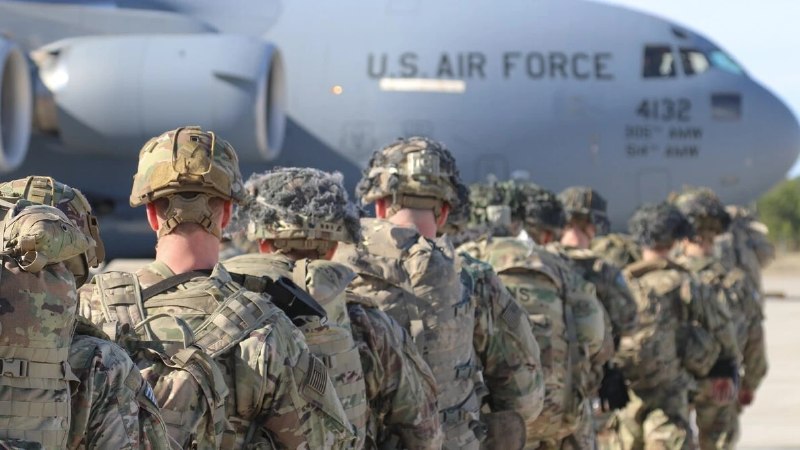
The Pentagon is evaluating whether to reduce its military footprint in the Persian Gulf once the war with Iran ends, with Jordan, Israel and Saudi Arabia floated as candidate hosts for relocated assets, according to reporting relayed on 18 August 2026. The review, attributed to internal US defense assessments, treats large, fixed American bases in the Gulf as a vulnerability that Iran's expanding missile and drone reach has made untenable to concentrate in one place.
What makes the debate worth watching is not the headline but the two parallel frames now running through it. One frame is operational: the architecture of US presence, the kind of dispersal that buys resilience against strike. The other is diplomatic: Iran's stated negotiating demands have included a US troop withdrawal from the Gulf, and the Pentagon review sits alongside that track, not detached from it. The available source items do not establish a single causal chain between the two; they are separate posts that Monexus is reading in parallel.
What the review actually says
The reporting, first aggregated by The Cradle's Telegram channel at 17:02 UTC on 18 August 2026, frames the review as still internal and unresolved. The headline attached to the report conditions the drawdown on the war ending. Jordan, Israel and Saudi Arabia are described as candidate hosts for relocated assets, with the explicit rationale that bases there sit outside Iran's most mature strike envelope. The same thread reaches a wider audience via OSINT-focused Telegram accounts, which characterise the review as a reconsideration of the "architecture" of US presence in the Gulf rather than a routine force-management decision.
The Iranian angle is not absent from the picture. A separate OSINT channel post notes that troop withdrawal from the Gulf has featured among Iran's stated demands in talks with the United States, framing the review as something the Iranian side had explicitly asked for. That detail matters because it places the Pentagon's posture debate inside a continuing diplomatic channel, not purely a unilateral military planning exercise. The two threads share a date but not a causal connector; reading them as one continuous story would be an inference, not a sourced fact.
The threat picture the Pentagon is reading
The cited reporting hinges on a single word: "vulnerabilities." Large, fixed US bases in the Gulf have become a concentrated target set that Iran's missile and drone reach can credibly threaten. The structural read, offered here as Monexus analysis rather than as a sourced fact, is that the Pentagon is hedging rather than abandoning. Dispersal across candidate hosts in Jordan, Israel and Saudi Arabia trades concentration for resilience, at the cost of logistics, money and tighter political entanglement with each host.
Monexus assessment: the most natural reading is that the department is opening a planning conversation conditional on the war ending, not announcing a decision. A dispersed posture still depends on host-government consent, on overflight rights, and on the diplomatic price each candidate will extract. Until those variables are on the page, the move is closer to option-paper than to orders.
The regional politics that will shape the outcome
Moving forces is never purely a military decision. The cited threads do not specify which combination of Jordan, Israel and Saudi Arabia is under active study, how many personnel are involved, or whether the review is aimed at a partial thinning or a near-full withdrawal. Each of those variables would change the political reading.
The reporting itself flags only one political variable: geography. Jordan, Israel and Saudi Arabia are named because, in the Pentagon's reading, they sit outside Iran's most mature strike envelope. The host-government side of that ledger, consent, basing rights, domestic political cost, is not addressed in the available source items. Gulf host governments have themselves built US basing into their national-security strategies; how they would read a thinning is a separate question the threads do not answer.
What this leaves unsettled
Three questions remain open. First, whether the review survives the political transition out of the war with Iran or is folded into a wider settlement. Second, whether Iran's negotiating team treats a drawdown as a deliverable they can bank, or as a tactical concession to extract deeper concessions on sanctions or the nuclear file. Third, whether Gulf host governments would accept a thinning as anything other than a vote of no confidence in their own security frameworks. The available source items do not address these questions.
The available source items do not specify the timeline, the troop numbers, the funding, or which facilities have been put on the table. They are consistent on direction and on the candidate alternative hosts. The reporting chain runs through intermediary Telegram relays of a Washington Post piece; until a primary US wire report or an official Pentagon release lands, the trail is best read as a posture debate inside the department, with political consequences waiting on the other side.
Desk note: Wire reporting on US force posture in the Gulf has historically led with Pentagon readouts and allied government statements; Monexus here is sourcing the emergence of the debate through The Cradle and OSINT channels, with explicit caveats that the trail runs through intermediary relays of a Washington Post report rather than the primary document itself.
Wire provenance
This editorial synthesis draws on the following public wire/social posts:
- https://t.me/TheCradleMedia/66394
- https://t.me/thecradlemedia/66394
- https://t.me/osintlive/565104
- https://t.me/osintlive/565097