Compute derivatives and yuan bond futures: the new front line in financial plumbing
On the same August afternoon, Washington invited the public to define AI compute derivatives and Beijing opened offshore trading in its own government debt. Two plumbing jobs, one contest.
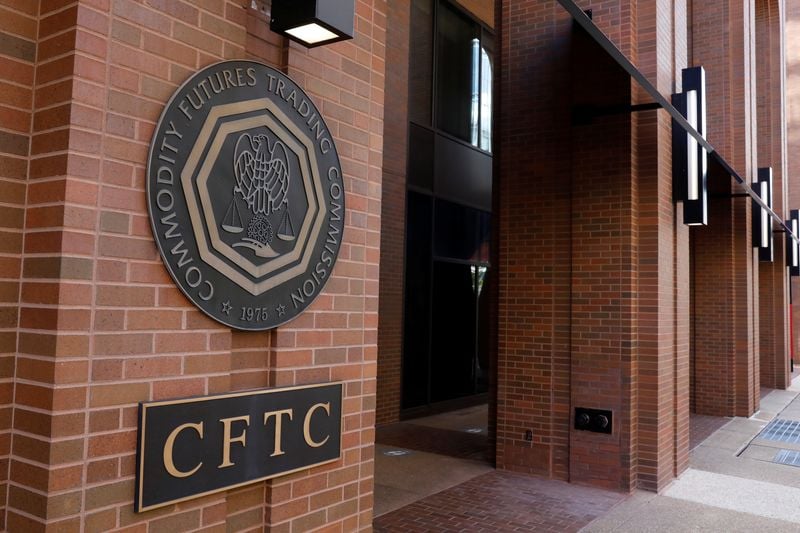
On the afternoon of 19 August 2026 in Washington, the Commodity Futures Trading Commission put out a call for public comment on whether the United States should build derivatives markets around AI compute, according to Investing.com and a Telegram relay from Crypto Briefing. The same trading day, in a separate dispatch from Nikkei Asia, China opened up offshore trading in its own government bond futures, framed by Beijing as a step to encourage international use of the yuan. Two unrelated agencies, two unrelated announcements. Read together, they sketch the outlines of the next contest in financial architecture: who gets to define the contracts that price the next decade.
The story underneath both moves, as Monexus reads it, is the same. Compute is being treated as something that needs standardised contracts. Sovereign debt instruments are increasingly settled in currencies other than the dollar. Both questions are being asked at the same moment, by regulators operating at very different speeds. The plumbing decisions being made in 2026 will shape whose banks, whose exchanges, and whose legal architecture gets first-mover advantage when trillions of new notional flows need a home.
Compute as the new risk to price
The CFTC's request for comment, dated 19 August 2026 and reported in the available wire coverage, lands in a market where AI compute demand is growing fast. The Investing.com headline frames the move explicitly as a response to rising AI demand, which is the public predicate the agency offered for asking the question at all. The agency is now asking the market to define what a compute derivative looks like before any private actor commits to a template.
The political reading, on our assessment, is straightforward. Whoever sets the contract template sets the reference price. If the CFTC moves first, the US dollar remains the default settlement currency, US exchanges capture the order flow, and US clearinghouses hold the margin. If the move stalls, the work migrates. That is the standard contest logic of derivatives venue selection, applied to a product class that did not exist five years ago.
What we cannot establish from the available sources is the precise procedural character of this specific CFTC action, or whether it mirrors prior agency practice. The Investing.com wire describes the move but does not, in the material available to this publication, characterise it as a binding or non-binding step, nor does it specify a comment-window length. That procedural detail is consequential for the timeline argument below; we flag it here so readers can weigh it themselves.
Yuan, offshore, on purpose
Beijing's parallel move, also dated 19 August 2026 in Nikkei Asia's coverage, is the more telling one. Opening offshore trading in Chinese government bond futures gives foreign investors a clean way to take duration risk in renminbi without juggling the onshore market's quota system. It is a polite instrument with an impolite message: the People's Bank of China wants a deeper pool of yuan-denominated safe assets outside the mainland, because that is what a reserve currency actually requires.
The Chinese framing, worth taking seriously on its own terms, is that international monetary systems benefit from genuine choice rather than monopoly. The Western framing is that Beijing is engineering a slow-motion substitution away from dollar clearing for its own trade partners. Both readings point in the same direction. Either way, a larger offshore yuan bond complex means more contracts priced in a currency that is not the dollar, more collateral that can be pledged in that currency, and more reasons for mid-sized economies to hold working balances offshore in renminbi rather than US Treasuries.
The Nikkei dispatch does not specify the size of foreign participation expected in the new futures complex, nor the eligibility rules for offshore investors. Those details will determine whether this becomes a real alternative venue or a marginal addition to the existing offshore yuan toolkit. The thread evidence does not resolve the question, and we note it as an open one.
What a public-comment process usually does
In the US regulatory pattern that the CFTC has historically followed, requests for comment are how an agency tests the water before writing a rule. Industry responses typically arrive within sixty to ninety days on similar consultations, though we cannot confirm that the specific 19 August 2026 request carries that timeline without seeing the underlying Federal Register notice. The agency's habit is to ask whether existing categories can absorb a new product, or whether a fresh framework is needed.
That timeline matters relative to a separate data point. The Polymarket contract referenced on 19 August 2026 puts the odds of China fielding a top-tier AI model by year-end at roughly 10 percent. The contract page itself sets the number; the implied probability is the market's read on the question, not a forecast this publication endorses. Whatever one thinks of that number, the underlying point is that the compute market is being priced in real time by participants who do not need to wait for Washington. If the CFTC's comment period stretches into 2027 and the first cleared product does not launch until late that year or later, the de facto reference price for compute risk will have been set somewhere else. The plumbing will already be in the ground.
The structural frame, in plain language
Hegemonic transitions do not announce themselves. They arrive as a thousand small decisions about which clearinghouse settles which contract, which jurisdiction's bankruptcy law governs which default, which central bank stands ready to lend which currency against which collateral in a crisis. The dollar's dominance is not a fact of nature. It is the cumulative result of choices made in the 1940s and reinforced in every decade since, from Eurodollar creation to oil pricing to swap-line architecture.
What we are watching now is the same kind of choice, scaled to a new set of assets. Compute is the input that AI runs on. Sovereign bond futures are the input that reserve status runs on. Both are being formalised into tradeable instruments in the same week. The interesting question is not whether either market will be large. It is who captures the legal template, the clearing margin, and the default venue when things go wrong.
Stakes and the honest unknowns
The obvious winners, if the US moves cleanly, are US exchanges, US clearinghouses, and the handful of large US dealers who already dominate swap intermediation. The obvious losers are everyone whose pricing power depended on the absence of a liquid benchmark. The same calculus applies in reverse for the offshore yuan complex: Chinese banks and the Shanghai Clearing House gain if offshore yuan bond futures scale; everyone holding dollar reserves as a safe-asset substitute loses a sliver of optionality.
What remains genuinely uncertain is the pace. The CFTC's comment process is open-ended, and the thread material does not specify a timeline for the agency's next step. On the Chinese side, offshore bond futures are a known instrument class in many markets, but the scale of foreign participation is a separate question that the available reporting does not yet resolve. And on the AI side, the Polymarket-implied 10 percent probability of a Chinese top-tier model by year-end is a market sentiment read, not a forecast. The compute derivatives market may price scarcity for years before it prices anything else.
Monexus framing: the wire covered these as two separate technology and finance stories. We read them as one story about who writes the rules for the next decade's risk.
Wire provenance
This editorial synthesis draws on the following public wire/social posts:
- https://www.investing.com/news/stock-market-news/us-cftc-seeks-comment-on-compute-derivatives-as-ai-demand-grows-4867996
- https://t.me/CryptoBriefing/18784
- https://t.me/nikkeiasia/21391
- https://t.me/NikkeiAsia/21391
- https://poly.market/yVmfoAK
- https://x.com/Polymarket/status/2090077313635324109