103 home: what one swap actually measures
Kyiv reports 103 of its servicemen back from Russian captivity in a one-for-one swap with Moscow, even as the broader war grinds on with no negotiated end in sight.
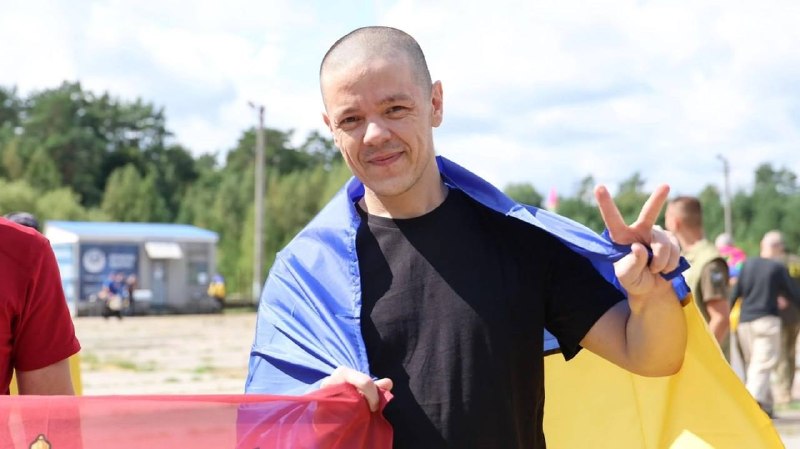
One hundred and three Ukrainian servicemen walked out of Russian captivity on 19 August 2026, in a one-for-one exchange that returned an equal number of Russian prisoners to Moscow's side. The returns were carried by Ukrainska Pravda at 10:29 UTC, then by Kyiv Post at 10:54 UTC and again at 11:31 UTC, with journalist Nick Noel confirming the figure at 11:08 UTC. Each post names the same total and the same service breakdown. The arithmetic on the wire today is clean: 103 for 103.
The swap is small in military terms and large in human ones. Each name recovered is one less family staring at an unanswered phone. It is also the kind of news that wire desks know how to cover: a clean number, a familiar choreography of buses and embraces, a photograph from the reception point. What the format tends to obscure is what the parity on a single day actually adds up to across the full ledger. The 19 August exchange is a heartbeat, not the rhythm.
The hum of the exchange track
Exchanges have been one of the few reliably moving parts of the war. They run through intermediaries, produce releases in the dozens or low hundreds at a time, and require continuous negotiation between two sides that refuse to talk about anything else. Zelensky's office treats them as both a humanitarian obligation and a political instrument: a demonstration that the state still extracts something concrete from an adversary that holds the strategic initiative. The 103 returned on 19 August sit inside that rhythm.
The published source material does not specify which units the released servicemen served with, how long they had been held, or how many Ukrainians remain in Russian captivity overall. That detail typically follows in Coordination Headquarters for the Treatment of Prisoners of War updates, which were not included in the Telegram thread available to this article. Read narrowly, what is on the wire today is a number, a service breakdown, and the date.
What parity on one day actually means
A counter-reading worth holding: prisoner exchanges are the one active channel between Kyiv and Moscow that functions without preconditions. They run while political talks do not. For families, the existence of the track is itself the only ceasefire that touches them. For the political class, the track is also a way to project state capacity in a war where state capacity is otherwise under constant strain. Both readings are accurate. Neither cancels the other.
The parity framing on a single day, however, does not extend cleanly to the aggregate. Our assessment: a one-for-one formula for any given batch is a negotiation outcome, not a population statistic. The released posts do not specify the cumulative count of Ukrainians still held, nor the ratio of Ukrainians to Russians detained across the full arc of the war since 2022. That is the number that would tell readers whether a single balanced swap is the norm or the exception. Until that lands, every clean headline is real and partial at the same time.
What the ledger really measures, and what it does not
The 103 returned belong to a longer sequence of exchanges that has pulled smaller batches home in some weeks and larger ones in others. The cumulative total is not in the source items available to this piece, and the available posts do not specify it. What they do specify is the structural point: as long as both sides hold prisoners the other side wants back, the exchange track is a pressure valve. It relieves a subset of cases on each side. It does not, by itself, change the underlying balance of captives or the trajectory of the fighting.
Monexus analysis: the deeper question, also outside today's sources, is how durable the track is across shifts in political weather, a battlefield reversal, or a change in posture from any of the intermediaries. None of those are signalled by the 19 August items. They are the kind of risk that sits beneath every batch of returns, and that the wire coverage tends to skip past in favour of the count.
The next name on the list
Watch for the Coordination Headquarters follow-up, which will identify the units, the capture dates and the conditions of detention for the 103 named today. Watch for the reciprocal Russian read-out that frames the same event in the language of reciprocal release. And watch the front. The exchange track runs in parallel with the fighting; it does not replace it. The 103 families who hear a voice on the other end of the line tonight know the difference between relief and resolution, and so should the rest of the news cycle.
Desk note: Monexus treated the 19 August returns as a Ukrainian-led story, anchored to Zelensky's office and the Ukrainska Pravda and Kyiv Post reports. Telegram-channel relays were used for confirmation, not as primary attribution. Wider questions, including the aggregate count of captives on each side and the cumulative exchange tally since 2022, are outside the source items available to this article and have been flagged rather than filled in.
Wire provenance
This editorial synthesis draws on the following public wire/social posts:
- https://t.me/Kyivpost_official/38770
- https://t.me/Kyivpost_official/38765
- https://t.me/noel_reports/51334
- https://t.me/ukrpravda_news/82645