The strike on Gaza City municipal park and the question of who counts as a combatant
An Israeli airstrike near the municipal park in Gaza City on 19 August 2026 killed at least six and wounded roughly fifteen, including emergency responders. The strike lands on a soft target and raises the same old question about what counts as a legitimate objective.
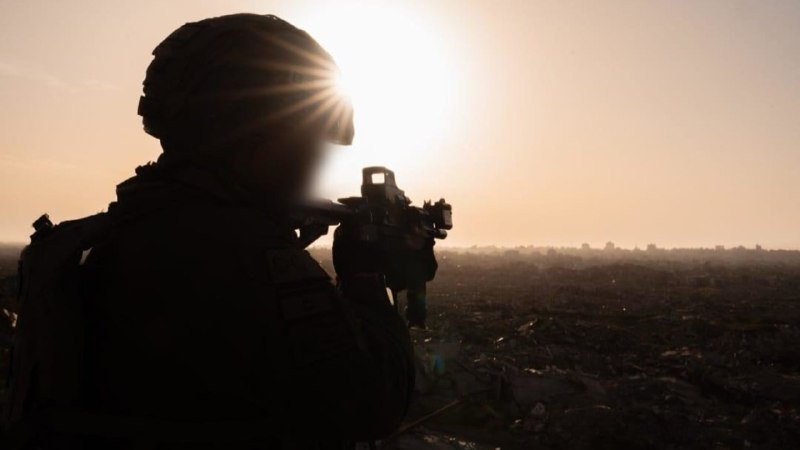
At 11:30 UTC on 19 August 2026, an Israeli strike hit the municipal park in Gaza City. By 12:06 UTC, two outlets monitoring the Strip were reporting at least six killed and several injured, including emergency responders. By 12:13 UTC, a third account put the toll at seven martyrs and fifteen wounded, with the target described as the municipal police headquarters. By 12:30 UTC, the Gaza Interior Ministry, run by the Hamas administration, was appealing to mediators and the international community to stop what it called massacres against the police force. None of the source items specify the Israeli justification for the strike; the available reporting does not independently establish whether the police headquarters and the park strike are the same event, or whether two related strikes occurred within an hour. Monexus analysis: the convergence on a single morning, in a single neighbourhood, with emergency responders among the casualties, is the sort of incident that becomes a test case for the language the wire eventually settles on.
What we have so far is a narrow factual ledger and a much wider contest about what that ledger means. The Israeli military has not, in the cited posts, stated a rationale for the strike. The Gaza Interior Ministry has framed the dead as police, a category that international humanitarian law treats in a specific way, and has called the strikes a "massacre." PressTV, the Iranian state English channel, and The Cradle, a Beirut-based outlet often sympathetic to the Iran-aligned axis, led their coverage with civilian and first-responder harm. The Telegram accounts that aggregate Palestinian reporting, Gaza Alan Pa and Abu Ali Express, pushed the same line within minutes. The casualty figures across the cited threads differ by a single dead and a handful of wounded, which is the ordinary range for early, unfolding reporting from a place where the IDF does not allow independent press access and the local health authorities are the only available counter.
The category problem hiding inside the word "police"
The strike is being reported as a hit on the municipal police headquarters and the park that fronts it. The Gaza Interior Ministry frames the dead as police; the wire translation coming out of Iran-aligned outlets uses the same framing. The international legal question is older than this morning and sharper than the casualties. Under the laws of armed conflict, members of a police force can be civilians, combatants, or something in between, depending on whether they are integrated into the armed wing of a party to the conflict, whether they are bearing arms openly, and whether they are directly participating in hostilities. A municipal traffic officer walking to a shift is not a lawful target. A police intelligence officer running counter-terror operations on behalf of an armed group is a different case. The cited posts do not specify which of those the dead were, and the available reporting does not state that the IDF has named the target category. The framing fight, accordingly, starts before the bullets do.
The press problem that compounds the legal problem
Three classes of source are doing the work in this thread. The first is the Hamas-run Gaza Interior Ministry, which has a clear institutional interest in describing its security force as a civilian police service. The second is the cluster of Telegram accounts that aggregate Palestinian reporting, Gaza Alan Pa, Abu Ali Express, Gaza English Updates, which are fast and granular but inherit the framing of whoever is speaking to them on the ground. The third is the Iran-aligned English-language outlets, PressTV and The Cradle, which sit closer to the Iranian, Hezbollah, and Hamas information space. The IDF Spokesperson's English channels are not present in the cited posts. The major Western wires, Reuters, AP, AFP, BBC, are not present in the cited posts. Until at least one of those Western outlets and the IDF itself publish on the strike, the reader is being asked to evaluate a claim made almost entirely by one side of the conflict, filtered through the second side's amplifier. Monexus analysis: that is a structural feature of how Gaza is reported, not a failure of any individual story, and it is worth naming when the stakes are this high.
What the Israeli frame would need to establish, if it is published
If the IDF publishes a statement on this strike, three things would need to be in it for the framing to hold. First, a specific target designation: was this a police compound used as a command node for an armed faction, or a patrol, or a building that was both a police station and a militia office? Second, a proportionality argument: was the expected civilian harm in the surrounding park weighed against the military advantage anticipated, and what was that calculus? Third, a precaution narrative: what was done to minimise risk to the bystanders and the emergency responders who arrived after the strike. The mainstream Israeli press, Times of Israel, Ynet, Haaretz, would carry that argument in full. Haaretz's commentary page would, in parallel, run the counter-argument. None of those are in the cited thread. The available source items do not include an Israeli government statement on this strike.
What the international frame looks like when the cameras are not there
The risk in this kind of morning is that the Western wire does not pick up the story at all, because there is no access, no Israeli statement, and no Western reporter on the ground. The story then circulates in the form the cited Telegram posts have given it: a Hamas-administration casualty count, carried by Iran-aligned English outlets, repeated by social aggregators, and visible to readers who already distrust the mainstream frame. That is not a conspiracy, it is a structural feature of the information environment around Gaza in 2026. Monexus analysis: the right response for a reader is not to pick the most credible side of the framing war, it is to wait for a primary-source confirmation of the basic facts, target, casualties, and rationale, before deciding what the incident means. The wait is the analysis.
The strike happened on the morning of 19 August 2026. The cited posts report between six and seven dead and roughly fifteen wounded, and at least some of the dead were police and at least some of the wounded were emergency responders. The cited posts do not name the Israeli unit responsible, do not state an Israeli rationale, and do not provide independent corroboration of the casualty figures. The next few hours will tell whether the IDF publishes a target designation, whether a major Western wire gets onto the ground or phones in, and whether the casualty count moves materially in either direction. Until then, the strike sits at the centre of a framing dispute that started before the bombs did.
Desk note: Monexus reports the cited accounts in the form they were made, flags the absence of an Israeli government statement and of Western-wire confirmation, and resists the temptation to declare a verdict on a strike whose cause and target have not yet been independently established. Where the cited sources disagree on the casualty count, the article reports the range rather than picking a number.
Wire provenance
This editorial synthesis draws on the following public wire/social posts:
- https://t.me/gazaalanpa/24792
- https://t.me/presstv/203367
- https://t.me/gazaenglishupdates/58205
- https://t.me/thecradlemedia/66438
- https://t.me/englishabuali/77991
- https://t.me/abualiexpress/128802