Three same-day reports put India’s imported-energy bill back in focus
A Bank of America survey ranked Indian stocks last in Asia on 19 August 2026, while Reuters reported traders expected the RBI to defend the rupee and an Investing.com piece said fuel exporters were profiting from supply uncertainty.
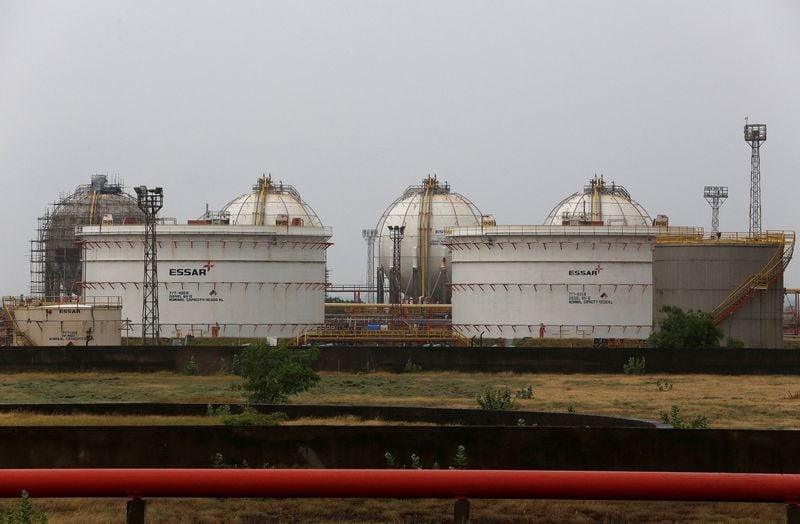
Three reports circulated on 19 August 2026 about Indian markets, the rupee and the global fuel trade. Scroll reported that a Bank of America survey had ranked Indian equities as the least-preferred market in Asia. A Reuters dispatch carried on X said traders believed the Reserve Bank of India was likely to intervene to shield the rupee from oil-related strain. Investing.com reported that US and Indian fuel exporters were profiting from supply uncertainty during wars. Each item is narrow on its own. Read together, they cluster around one input: imported energy.
The available evidence supports a modest claim and resists a stronger one. The modest claim: on 19 August 2026, three independent reporting streams recorded that India’s financial mood, currency defence expectations and the exporter side of the fuel market were all being discussed in oil-related terms. The stronger claim, that the three reports describe a single causal transmission from oil prices to Indian equities, currency and exporter margins, is not established by the sources themselves. Monexus analysis: the appropriate posture is to report the cluster, flag what is and is not in the underlying items, and leave the linkage as a reading rather than a finding.
The equity warning is a survey rank, not a fund-flow figure
Scroll’s 19 August 2026 report identified Indian shares as the least-preferred Asian equity market in a Bank of America survey. The item does not publish the underlying responses, the country-by-country rankings, the sample size or the wording of the question. It also does not record any flow data: foreign portfolio inflows, equity mutual fund subscriptions or ETF holdings over the period in question are not specified in the cited report.
That distinction matters. A survey rank records professional allocation preference at a moment in time. Recorded flows would show how preference translated into buying and selling. The available item supports only the former. Monexus analysis: a least-preferred ranking is an opinion signal, not a capital-flow measurement, and the draft cannot bridge that gap without first-party fund-flow data that the sources do not contain.
The Scroll item also does not state what respondents cited as their reason. It does not attribute the ranking to oil, to valuations, to earnings, to the rupee or to any other driver. The defensible reading is narrower: investors surveyed by Bank of America placed India last in Asia on a preference measure, on or around 19 August 2026. The reason for that ranking is not in the source.
The rupee report describes expectations, not an RBI decision
The Reuters item circulated on 19 August 2026 said traders expected the RBI to intervene to protect the rupee from oil-related strain. The wording is the report’s, and it characterises the intervention as expected, not as confirmed. The same item, as relayed through Reuters’ X account, does not announce an intervention, a level, a quantity or an instrument.
The distinction between expected and confirmed is the report’s main evidentiary boundary. An RBI intervention would be a central-bank action: sale or purchase of foreign-exchange reserves, a liquidity adjustment, or a verbal signal through a spokesperson. None of those is documented in the cited source. What the source documents is a market expectation. Monexus analysis: the strongest claim the Reuters item supports is that traders, on 19 August 2026, viewed RBI intervention as a likely defence against oil-linked rupee pressure; the item does not convert that expectation into an event.
The Reuters item also does not specify the oil benchmark used, the rupee level discussed, the intervention window or the size traders expected. It does not name the traders. Each of those would normally be required to convert a market expectation into a forecast, and the absence is part of why the report reads as commentary rather than as a verified policy signal.
The exporter report is a directional claim, not a measured profit figure
The Investing.com item of 19 August 2026 said US and Indian fuel exporters were profiting from supply uncertainty during wars. The claim is directional: it states that exporters are benefitting from a condition of the market. It does not name the exporters, list a revenue figure, publish a margin comparison or specify a trade volume. It does not break out US versus Indian gains, nor does it identify which conflicts or supply routes are driving the premium.
Without those details, the report supports a structural observation rather than a measured transfer. Monexus analysis: that exporters with access to cargoes and reliable delivery can capture part of the premium attached to physical-supply uncertainty is consistent with how commodity markets price geopolitical risk, but the cited Investing.com item does not, on its own, demonstrate a quantifiable transfer from Indian importers to US or Indian exporters.
The item’s framing also matters. It attributes exporter gains to "supply uncertainty during wars," a phrase that links the profits to a condition rather than to a single event. The report does not specify which wars, which shipping routes, or which cargoes. It also does not address the cost side: how much of any premium is absorbed by freight, insurance, taxes or exchange-rate moves.
What we verified / what we could not
What we verified. Scroll reported on 19 August 2026 that a Bank of America survey ranked Indian equities as the least-preferred Asian equity market. Reuters reported on 19 August 2026 that traders expected the Reserve Bank of India to intervene to protect the rupee from oil-related strain. Investing.com reported on 19 August 2026 that US and Indian fuel exporters were profiting from supply uncertainty during wars. All three items were circulated on the same day.
What we could not independently establish from the available items. The Bank of America survey’s methodology, sample size, full rankings and any underlying reasons respondents gave; whether the Scroll report reproduced an official BofA release, a press summary or a third-party account; the size, timing or instrument of any RBI intervention; the oil benchmark or rupee level referenced in the Reuters item; the identities of the traders cited; the names of the US or Indian fuel exporters referred to by Investing.com; any revenue, margin or volume figure for those exporters; and whether the Reuters and Investing.com items drew on overlapping data. This article has not independently established those details.
The ledger matters because the strongest version of the story, a clean transmission from oil prices through the rupee to equities and exporter margins, is the version the sources do not support. What the sources do support is a clustering: three same-day reports, three different publication channels, each linking India to oil in a different part of the financial system. Whether the cluster is coincidence, narrative spillover, or the early surface of a real shock is a question the cited items do not answer.
Reading the cluster without overreading it
Read in parallel, the three items describe India’s exposure to imported energy in three registers: investor preference, currency expectations and exporter returns. None of the items establishes a causal chain from oil prices through the Indian economy. Monexus analysis: the cluster is best treated as a coincident set of discussions that share a topic, not as evidence of a unified transmission. The next step, if a reader wants one, would be the original Bank of America survey, RBI press releases and weekly reserve data, and a disaggregated set of fuel-export earnings reports from named Indian and US companies.
For Indian policymakers, the practical watchpoint is whether the traders’ expectation of intervention becomes an announced one. For investors, the practical watchpoint is whether the survey preference translates into fund flows. Until either of those moves from expectation to record, the cited reporting supports a single statement: on 19 August 2026, three independent items placed India at the intersection of an equity-preference ranking, a rupee-defence expectation and an exporter-profit claim, each tied by its authors to oil-related supply uncertainty.
Desk note: Monexus published the three same-day items as a clustered set rather than as a single transmission story. The headline and excerpt describe what the items report, not what they imply. Where the available items did not specify methodology, magnitudes, named actors or first-party data, this article says so directly.
Wire provenance
This editorial synthesis draws on the following public wire/social posts:
- https://scroll.in/latest/1095145/indian-stock-market-least-preferred-in-asia-shows-bank-of-america-survey
- https://scroll.in/latest/1095145/indian-stock-market-least-preferred-in-asia-shows-
- https://reut.rs/4hDmrJS
- https://x.com/Reuters/status/2090063762174677259
- https://www.investing.com/news/economic-indicators/us-indian-fuel-exporters-profiting-from-supply-uncertainty-during-wars-4866851
- https://t.me/scroll_in/147046
- https://scroll.in/latest/1095145/indian-stock-market-least-preferred-in-asia-shows-bank-of-america-survey
- https://scroll.in/latest/1095145/indian-stock-market-least-preferred-in-asia-shows-
- https://reut.rs/4hDmrJS
- https://x.com/Reuters/status/2090063762174677259
- https://www.investing.com/news/economic-indicators/us-indian-fuel-exporters-profiting-from-supply-uncertainty-during-wars-4866851
- https://t.me/scroll_in/147046