Tehran demands 'end to the war' as Trump insists no talks are scheduled
Iranian Foreign Minister Abbas Araghchi told mediators on 18 August 2026 that Tehran would accept an 'end to the war', not a ceasefire. President Donald Trump, writing earlier the same day, said no talks were under way or scheduled and that a US naval blockade remained in force.
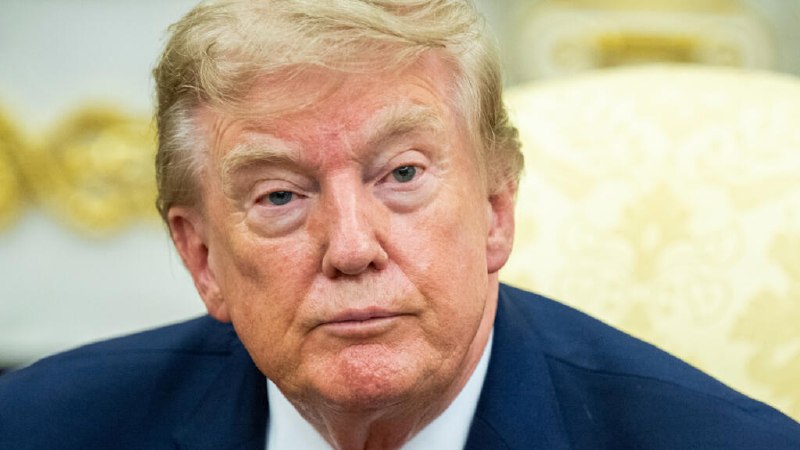
Iranian Foreign Minister Abbas Araghchi said on Tuesday, 18 August 2026, that Tehran had told mediators it did not accept a ceasefire but sought an "end to the war." Hours earlier, US President Donald Trump wrote that no talks or conversations with Iran were taking place or scheduled, that a US naval blockade remained in force, and that the Strait of Hormuz was open and operating.
The two statements, made on the same day in different registers, are not a flat contradiction. Trump addressed the calendar: whether a process existed. Araghchi addressed the ceiling: what an acceptable outcome would have to deliver. A Gulf state has meanwhile moved from rhetoric to commercial action. The available source material does not specify the mediators Araghchi addressed, what they proposed, or whether the accounts concern a distinct diplomatic channel.
Two accounts from the same Tuesday
The CGTN-sourced X post was published at 02:09 UTC on 19 August 2026 and reported both Araghchi's remarks and Trump's earlier Tuesday statement. Trump's post, as relayed by that thread, contained three distinct claims in a single message: that "no talks or conversations [were] going on, or scheduled," that the naval blockade remained in force, and that the Strait of Hormuz was "open and operating." Araghchi's reported remarks, by contrast, were framed as a condition Iran had communicated to mediators.
That sequencing matters. The cited post places Trump's statement earlier on Tuesday and Araghchi's remarks after it. It would therefore be inaccurate to read Araghchi as contradicting Trump on the existence of talks, or as speaking first. Monexus assessment: the more defensible reading is that the competing messages concern different subjects. Trump addressed whether negotiations had a timetable and what the military posture around the strait looked like; Araghchi addressed what an acceptable endpoint would require.
The blockade and strait references belong to the same sentence as the denial of talks. They make the post a statement about the state of the military and commercial environment, not only about diplomacy. Reading the denial of talks without the blockade and strait references would strip the post of the material that connects its diplomatic and military halves.
Tehran sets the ceiling, not the floor
Araghchi's reported phrase is politically exacting. A ceasefire is normally a pause in hostilities whose terms and duration can be negotiated. An "end to the war" asks for a political resolution rather than merely a suspension of attacks. Iran can therefore demand that objective while simultaneously accusing the United States of seeking negotiations.
Al Jazeera English's live coverage for 19 August 2026 carried exactly that framing in its headline: "Iran war live: Trump denies Iran talks, Tehran claims US 'begging'." The thread excerpt states directly that "Iranian Foreign Minister Abbas Araghchi claims US 'begging' for negotiations." That phrasing, attributed to Araghchi, is supported by the cited headline. The Al Jazeera excerpt does not give the longer quote behind the accusation, but it does establish both that the claim was made and that Al Jazeera chose to headline it.
Monexus analysis: Araghchi's wording is best read as an effort to set a ceiling for any diplomacy. Saying that Iran will not accept a ceasefire narrows the space for an interim arrangement. Describing the desired result as an "end to the war" directs attention away from Iran's conduct during the conflict and toward the political outcome Washington might eventually accept. The "begging" framing inverts the usual initiative narrative: a weaker party begging for talks, in this telling, becomes the stronger power demanding an end to the war. The arithmetic is rhetorical, but the diplomatic effect is concrete.
That reading remains an interpretation, not a documented negotiating position. The cited material does not disclose what concessions, security guarantees, or sequencing Tehran would require before dropping its demand. Nor does it show whether Araghchi was describing a proposal already on the table or a principle communicated to unidentified mediators. The 60-day US-Iran Memorandum of Understanding window referenced in the CGTN-sourced thread did not produce a permanent peace agreement before expiring; that absence is part of why Araghchi can frame the dispute as one over the destination rather than the timetable.
A Gulf state turns to economic suspension
France 24 Arabic's report, posted to its Telegram channel at 22:50 UTC on 18 August 2026, changes the scale of the story. The UAE did not merely call for negotiations or express concern. It suspended all trade and financial transactions with Tehran after accusing Iran of firing two ballistic missiles. This is an institutional action with an identified trigger, even though the supplied material does not give further technical detail such as the missiles' intended target, the exact time of the suspension, or the legal instrument used.
The distinction matters because it separates the diplomatic contest from the UAE's response. Trump's words concerned the status of US-Iran discussions and the state of the naval blockade and the Strait of Hormuz. The UAE action concerned an alleged Iranian military action and a resulting change in bilateral commercial and financial relations. Conflating the two would overstate what the sources establish.
The suspension can be read as a deliberate act of distancing, but the available material does not quantify the trade affected or establish whether other governments are considering similar measures. The cited France 24 Arabic message says only that the UAE announced the suspension; it does not state the duration, the categories of transaction covered, or whether other Gulf states have followed. It is therefore not possible to conclude from these sources that a wider Gulf-wide suspension is under way. The narrow fact is that France 24 Arabic reported the UAE had stopped all trade and financial transactions with Iran after the missile accusation.
Monexus assessment: the action is likely to matter as a signal of how Gulf governments may manage relations with Tehran while US-Iran diplomacy remains publicly unsettled and the Strait of Hormuz stays commercially live. That is a forward-looking interpretation. The cited material does not specify the UAE's strategic calculation, the duration of the suspension, or whether the move has the support of Washington or other Gulf capitals.
What the public record leaves open
The strongest evidence in the source set concerns statements, not the substance of diplomacy. The CGTN-sourced post supports Araghchi's reported words, Trump's denial of active or scheduled talks, his statement that the naval blockade remains in force, and his claim that the Strait of Hormuz is open and operating. The Al Jazeera headline supports a public dispute in which Araghchi has accused the United States of "begging" for negotiations; it does not give the full quote behind the accusation. France 24 Arabic supports the UAE suspension and its stated connection to an accusation that Iran fired two ballistic missiles.
The central contradiction is therefore narrower than a breakdown of all contact. Trump says no talks are taking place or scheduled, with a blockade in force and the strait open. Araghchi presents Iran as engaging with mediators about an end to the war. Those claims can coexist if one concerns current activity and the other concerns Iran's desired terms.
The next evidentiary test is concrete: an official statement identifying the mediators, a disclosed agenda for negotiations, an official UAE notice setting out the scope and duration of the suspension, or a US confirmation of the blockade's legal basis and intended endpoint. Until then, the public record establishes a same-day exchange of incompatible messages, a continuing naval blockade with the Strait of Hormuz described as open, Araghchi's demand for an end rather than a ceasefire and his accusation that the United States is "begging," and the UAE's reported suspension of trade and financial transactions with Tehran. It does not establish the full diplomatic process behind them.
Desk note: Monexus reported Trump's blockade and Strait of Hormuz statements from the same post as his denial of talks, treated Al Jazeera's headline as evidence of the 'begging' framing rather than as unsupported, and labelled its own narrower reading as analysis.
Wire provenance
This editorial synthesis draws on the following public wire/social posts:
- https://x.com/CGTNOfficial/status/2089897440518496700
- https://www.aljazeera.com/news/liveblog/2026/8/19/iran-war-live-trump-denies-iran-talks-tehran-claims-us-begging?traffic_source=rss
- https://t.me/france24_fr/22682
- https://f24.my/C6zF.g