Kyiv’s minute-by-minute record should end the habit of abstracting bombardment
Between 20:59 and 21:16 UTC on 19 August 2026, AMK_Mapping posted seven times about impacts, missiles approaching northern Kyiv, and a Kn-23 strike, while Andriy Tsaplienko reported up to 20 rockets overhead. The narrow lesson is not that Telegram has replaced wider coverage, but that first-hand granularity should not be flattened into abstraction.
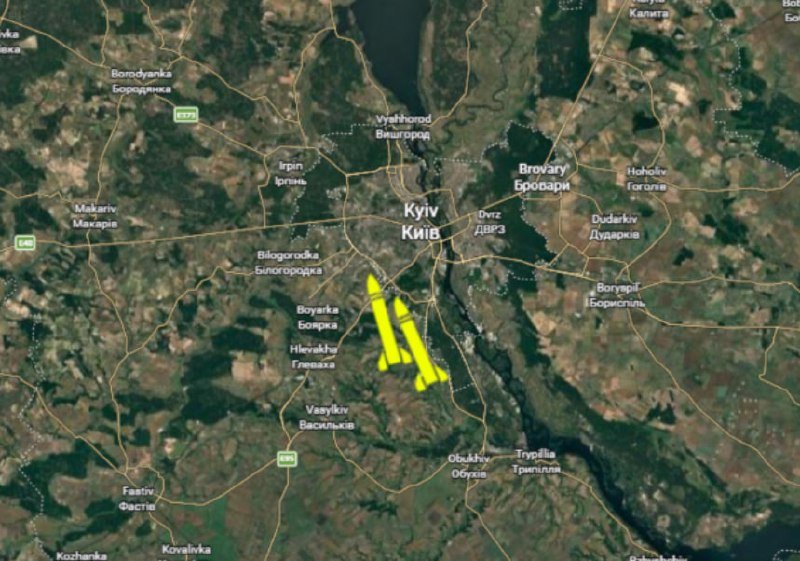
At 20:59 UTC on 19 August 2026, the open-source mapper AMK_Mapping reported two impacts in Kyiv. Three minutes later, it reported two more in eastern Kyiv. The sequence continued through further impact reports, two missiles flying toward northern Kyiv, a Kn-23 strike, and smoke from previous impacts still visible at 21:16 UTC.
That chronology is the point. A barrage becomes clearer when it is recorded as separate events rather than compressed into a familiar headline. The available reports document seven AMK_Mapping posts between 20:59 and 21:16 UTC: six posts describing impacts and one describing two missiles flying toward northern Kyiv. The same period includes Andriy Tsaplienko’s report that up to 20 rockets had flown over Kyiv and its surroundings within a few minutes, followed by his warning that strikes on the city and its suburbs were continuing.
The useful discipline of the timestamp
The impulse to turn several posts into a single total is understandable, but it is also where precision can slip. Adding the numbers in the impact posts produces a reported figure of 10 impacts, but that arithmetic should not be mistaken for a consolidated official tally. The six impact posts may describe separate strikes, repeated observations, or events that overlap; the available items do not establish which interpretation is correct. The two missiles reported flying toward northern Kyiv are not described as impacts. They belong in the sequence, but not in an impact count.
The geographical labels require equal care. The supplied posts mention Kyiv generally, eastern Kyiv, and western Kyiv. They do not justify identifying a central district. At 21:12 UTC, AMK_Mapping did report an impact in western Kyiv, after the 21:08 UTC report by Tsaplienko. By 21:08, therefore, the record supports the eastern Kyiv label and several general Kyiv entries, not the draft’s earlier claim of impacts “across eastern, central and western districts.”
The same restraint applies to Tsaplienko’s estimate. His 21:08 UTC post provides a useful account of the pace of the attack, saying that up to 20 rockets flew over Kyiv and its surroundings within a few minutes. It does not independently confirm each AMK_Mapping impact. Treating the two accounts as mutually corroborating would overstate what the sources establish. Read together, they show that multiple observers were describing a sustained sequence of missile activity within the same short window.
Why granularity resists abstraction
Bombardment reporting often has to perform two jobs at once. It must establish that an attack happened and make its human scale intelligible. A general account can do the first. It can also, without deliberate effort, make the second harder.
The minute-by-minute record interrupts that flattening. “Two impacts in Kyiv” is not a grand claim about the war. It is a narrow, time-stamped observation. “Two impacts in eastern Kyiv” adds a little more geographic context. The report of a Kn-23 strike, with smoke from previous impacts visible, places the new event in a continuing visual sequence. None of these posts, on its own, establishes casualties, interception details, or the full mix of weapons used. Together, they resist the lazy idea that repetition has no documentary value.
This is not an argument that every strike deserves identical treatment or that raw posts should outrank verification. It is an argument against allowing scale to become a substitute for accuracy. The larger the number, the easier it is to lose the location, sequence, and uncertainty contained in the smaller observations.
The first draft overreached
The original version of this article made two mistakes. It counted seven AMK_Mapping posts as eight “impact reports,” even though one post described missiles flying toward northern Kyiv rather than impacts. It also converted the available location labels into a claim about central districts, and placed a western Kyiv impact before the source post that actually carried that label.
More seriously, the first draft claimed that the wider wire cycle had not caught up with the salvo. The available source items supplied for this article do not establish the content or timing of wider wire coverage. They cannot support that claim. The corrected position is narrower: these Telegram posts provide a detailed Ukrainian account of the sequence, but they do not establish how other outlets subsequently framed it.
That correction matters because an opinion piece should be more disciplined with facts, not less. A dramatic claim about a media system is not improved by an inaccurate tally. If the argument is that granular reporting deserves to survive aggregation, the ledger should be exact.
What remains unverified
The available items do not specify casualty figures, the precise districts affected, the number of missiles that were intercepted, the number that struck, or the full range of missile types involved. They do not provide a consolidated official count. They also do not, by themselves, identify the party responsible for the reported strikes.
The Kn-23 description is an attribution within AMK_Mapping’s post, not an independent weapons assessment supplied in this source set. Tsaplienko’s “up to 20” wording is itself an estimate. The honest conclusion is therefore modest: the posts document a dense and continuing sequence of reported missile activity over Kyiv and its surroundings on the evening of 19 August 2026, while leaving several operational questions open.
That uncertainty does not make the record useless. It identifies what the evidence can bear. The next useful record would be an official Ukrainian account, followed, if available, by independent reporting that distinguishes missiles launched, missiles observed, missiles intercepted, and missiles that caused impacts. Until then, the strongest editorial move is not to fill the gaps with confidence, but to keep the timestamps visible.
The measure of responsible war reporting is not how completely one sentence can summarise a barrage. It is whether the public can still see, in the final account, what was actually reported, where, when, and with what degree of certainty.
Monexus framed this as a critique of over-compression, not as a claim that Telegram reporting had supplanted wider coverage; the factual reconstruction was narrowed to what the supplied posts establish.
Wire provenance
This editorial synthesis draws on the following public wire/social posts:
- https://t.me/AMK_Mapping/36132
- https://t.me/AMK_Mapping/36128
- https://t.me/Tsaplienko/97594
- https://t.me/AMK_Mapping/36125
- https://t.me/Tsaplienko/97593
- https://t.me/AMK_Mapping/36122
- https://t.me/AMK_Mapping/36119
- https://t.me/AMK_Mapping/36110
- https://t.me/AMK_Mapping/36103