Two Telegrams, no stringers: an hour in southern Lebanon
On 19 August 2026, two Telegram channels posted the only open-source record of homes burning in Mansouri and detonations at a cemetery in Zawtar Al-Sharqiyeh. The open-source record of this hour is thinner than it should be.
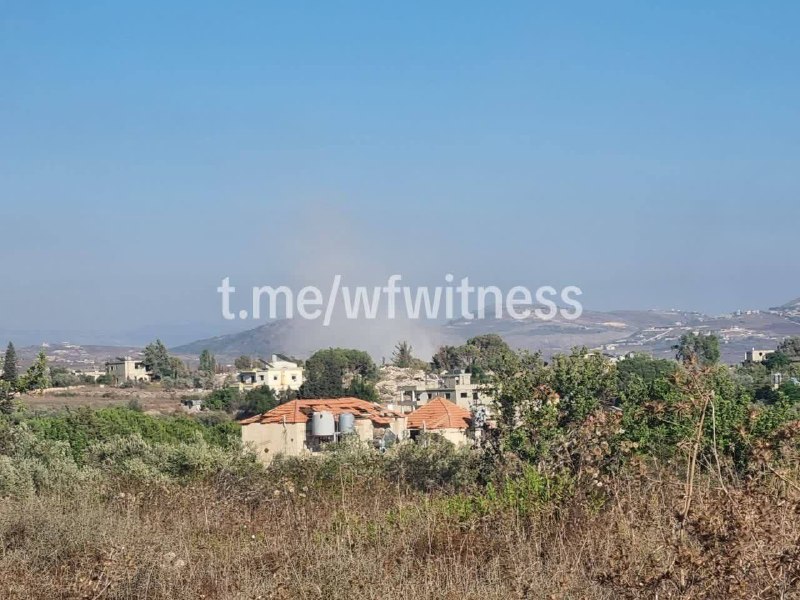
At 14:29 UTC on 19 August 2026, two Telegram posts landed within the same minute. The first, from The Cradle Media's channel, reported that Israeli occupation forces had set fire to residential homes on the outskirts of Mansouri in southern Lebanon, with several explosions near the local cemetery in Zawtar Al-Sharqiyeh reported concurrently. Three minutes later, at 14:32 UTC, the wfwitness channel added a parallel item: an Israeli detonation had targeted the vicinity of the cemetery in the occupied town of Zawtar Al-Sharqiyeh. That is the entire open-source record of this hour contained in the materials available to this publication. Two unsigned field dispatches, one minute apart, two southern Lebanese place names, and no other named source.
The point of an opinion column is not to multiply facts the wires have already gathered. It is to read what is actually in front of us. What is in front of us is a gap. Two channels posted essentially the same bulletin about the same stretch of southern Lebanese territory inside three minutes. The dispatches describe actions that, in any other reporting environment, would generate a stringer call, a satellite check, and at minimum a one-line Reuters or AFP ticker by the close of the European afternoon. On this evidence, the thread of verification that would normally follow such posts has not appeared. That gap is the story, and it is narrower than it looks but more honest than the version that pretends the wire silence is total.
What the two posts actually say
Read together, the 14:29 UTC and 14:32 UTC items describe two events in the same general area of southern Lebanon. The first names Mansouri as the location of residential homes set on fire by Israeli occupation forces; the second names Zawtar Al-Sharqiyeh's cemetery as the target of an Israeli detonation. The Cradle Media's own post also flags concurrent explosions near the cemetery at Zawtar Al-Sharqiyeh. Neither dispatch names a unit, cites a spokesperson, or carries the attribution language a wire editor would accept on a slow day. Both are field reports, in the genre sense, and both are open to the standard field-report caveat: they assert, they do not prove.
The two channels themselves are also worth naming carefully. The Cradle Media describes its editorial project in terms that a reader can look up; wfwitness presents itself as an open-source live-event channel. For the purposes of this column, the relevant fact is narrower than their editorial politics. They are the two channels that posted at 14:29 and 14:32 UTC, in that order, on these two place names. What they are not is a substitute for a wire stringer in Tyre governorate, and they do not claim to be. The gap between a Telegram timestamp and a Reuters confirmation is the gap this article is naming.
Where the dominant framing bends
Monexus analysis: the most natural reading of these two dispatches, treated in isolation, is that they describe Israeli ground activity against civilian structures in southern Lebanon on the afternoon of 19 August 2026, that this activity has not yet been corroborated by an external source in the materials available to us, and that the open-source record of the hour is therefore unusually thin. The assessment is limited to what these two posts entail. It does not extend to claims about the scale of similar episodes, the editorial behaviour of IDF spokespeople, the operating model of either Telegram channel, or the historical coverage record of southern Lebanese villages. Those claims would each require their own sourcing, and this article does not have it.
The alternative reading is the one a careful wire editor would default to. Two channels posting the same bulletin within a minute of each other is exactly the pattern a coordinated or amplified information operation would produce. The pattern alone does not prove amplification, but it does mean the dispatches should be treated as a single signal rather than as two independent confirmations. A serious correction would look for one of three things: an Israeli military statement naming the village or the operation; a UNIFIL, LAF, or Lebanese official readout; or independent footage with verifiable metadata. None of these is present in the source items for this article. The two Telegram posts therefore stand as the entire open-source record this publication can verify at this hour.
What an honest gap looks like
The temptation, in a piece like this, is to overclaim the silence. To argue that the wires never report this kind of event, that the channels are all the world now has, that the international reader is structurally blind to southern Lebanon. The source items do not support that argument. They support a narrower one, which is the one worth making: at 14:29 and 14:32 UTC on 19 August 2026, two Telegram channels posted essentially the same field report about Israeli operations in Mansouri and at the cemetery in Zawtar Al-Sharqiyeh, and no other named source in the materials available to this publication has yet added a confirmation, a denial, or a contradicting account. That is the gap. It is real. It is also smaller than the version of the story that turns the gap into a system.
The honest version matters because southern Lebanon is, in fact, reported on. Major outlets do send stringers. UNIFIL does issue readouts. Israeli and Lebanese spokespeople do, eventually, talk. The lesson of this hour is not that the international press has stopped watching. The lesson is that the watching is uneven, that field reports from Telegram channels sit at the bottom of the verification ladder, and that the distance between a Telegram timestamp and a wire confirmation is the distance this column is naming rather than pretending does not exist.
What to watch in the next forty-eight hours
The dispatches at 14:29 and 14:32 UTC are bulletins, not conclusions. The next two days will determine whether they harden into a corroborated event or soften into an unverified one. The signals worth watching are specific. An IDF Spokesperson post naming Mansouri or Zawtar Al-Sharqiyeh. A UNIFIL press line on the Tyre governorate. A Reuters, AFP, or AP stringer file from south Lebanon with a dateline later than 19 August. A denial from any official Lebanese source, or a casualty count from a hospital that can be independently reached. The presence of any one of those would close the gap this article has named. The absence of all of them by Friday would leave the two Telegrams as the open-source record of the hour, which is what they currently are.
The cost of that record is not the fire, and it is not the detonation. Those happened, or did not, on the ground, with their own consequences that no column can measure from a Telegram post. The cost is epistemic. A reader scanning the open-source record of this hour, with access only to what is in the materials for this article, cannot tell which of the two readings is correct. They cannot tell whether the events occurred as described, occurred at a smaller scale, or did not occur at all. The honest gap is the gap between the two Telegram timestamps and the next layer of verification. The rest is commentary, and this column has tried to keep it that way.
This article drew only on two Telegram dispatches timestamped 14:29 and 14:32 UTC on 19 August 2026. The Cradle Media is a regionally embedded outlet with editorial positions of its own; wfwitness operates as an open-source live-event channel. Neither is treated here as a substitute for wire verification, and no claim about the underlying events has been made beyond what the two posts themselves entail.
Wire provenance
This editorial synthesis draws on the following public wire/social posts:
- https://t.me/thecradlemedia/66463
- https://t.me/TheCradleMedia/66463
- https://t.me/wfwitness/107596