Trump halts Iran talks, UAE intercepts Iranian missiles, and a Kim summit resurfaces: three signals, one administration
Three dispatches from the OSINTdefender feed on 19 August 2026, a US halt on Iran talks, a UAE interception of two Iranian ballistic missiles, and revived talk of a Trump–Kim meeting. Read together, they sketch a doctrine of pressure without consent.
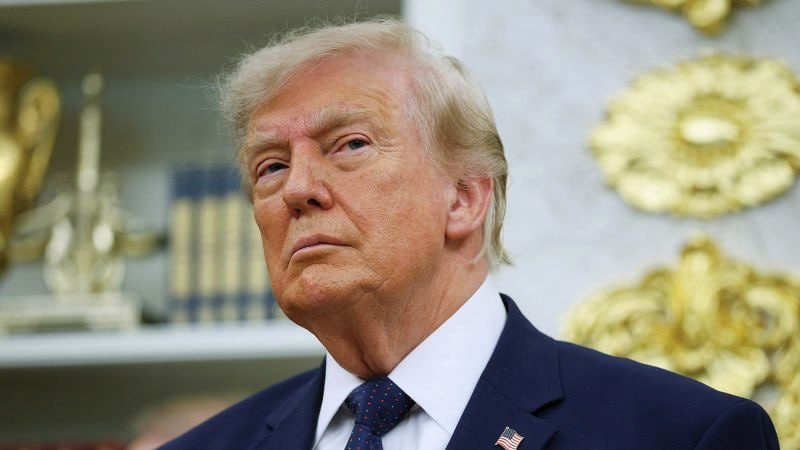
Three dispatches from a single open-source feed landed within an eighty-minute window on 19 August 2026, and each is worth reading on its own terms before they are read together. At 03:08 UTC, the OSINTdefender channel reported that Donald Trump had expressed interest in meeting Kim Jong Un again, with discussions of a possible sit-down as early as autumn. At 03:27 UTC, the same channel carried a separate item noting that Emirati air defences had detected and intercepted two ballistic missiles launched from Iran. At 04:27 UTC, the channel logged that Trump had ordered a halt to negotiations with Iran. Read individually, these are three unrelated data points. Read together, they sketch a doctrine of pressure without consent: kinetic action over the Gulf, a walkout from the Iranian file, and a third Trump–Kim meeting kept warm in case the first two go badly.
The through-line is not who fired what, but what the choreography reveals about how this White House sequences its foreign policy when multiple crises compete for the same calendar week. Pull any one of the three threads and the rope slackens; read all three and a deliberate tempo emerges, one in which diplomacy is treated as a renewable resource that can be paused, restarted, or weaponised depending on which file most needs movement.
The pause that isn't a posture
The halt on Iran talks is the headline, but the substance is the ambiguity. The cited posts do not specify what triggered the suspension, which counterpart was being walked away from, or which channel of communication was severed. Previous rounds of US-Iran diplomacy under this administration have been conducted through intermediaries in Oman and Qatar, with public readouts alternating between "constructive" and "non-starter" depending on the day. A suspension framed as unilateral is, in practice, a tightening of the bid-ask spread: Washington signalling what it will no longer accept, Tehran calculating whether to wait or to escalate.
The risk of that posture is asymmetry. Iran's negotiating tempo and its missile tempo are not the same instrument. Reopening talks after a pause is a low-cost move for a great power; for a sanctioned regional actor whose leverage is kinetic, the menu of responses narrows quickly. The halt landed after the UAE intercept, not before: the diplomatic walkout followed a kinetic event, rather than preceded it, on the timeline the cited posts establish.
When the air defence goes live
The UAE interception, reported at 03:27 UTC, came an hour before the halt on Iran talks was logged at 04:27 UTC. Two ballistic missiles fired from Iranian territory, engaged by Emirati air defences, residents reassured by authorities that the situation was contained. The post does not specify whether the launches were deliberate strikes, failed tests, or a militant proxy diversion; the available source items do not distinguish between those possibilities. What is established is that Gulf airspace absorbed a kinetic event on the same calendar day that Washington logged the halt on the channel most likely to de-escalate it.
For Abu Dhabi, this is the second-order consequence of an absent negotiating track. Halt the diplomacy, and the deterrence burden shifts to the UAE's own interceptors, which performed as advertised but which are a finite resource over a finite number of crises. The structural reading Monexus offers: when the great-power off-ramp closes, regional states pay in interceptors, in insurance premiums, and in the political cost of reassuring populations that the sky is still safe. The temporal point matters for the frame: the kinetic event came first on the cited timeline, and the diplomatic exit came after, which reads less as provocation and more as a refusal to re-engage on the day a missile flew.
Why a Kim meeting now
The North Korea item is the easiest to misread as a distraction. It is more useful as a hedge. A third Trump-Kim summit, mooted for autumn, is the low-cost reserve option in a portfolio where the two higher-cost files are both in difficult territory. Restoring a personal-diplomacy channel with Pyongyang does not solve the nuclear question; it does, however, keep a stadium-sized deliverable available in case the autumn news cycle requires one.
This reads as transactional in a way that previous administrations would have dressed up in thicker language. The available reporting indicates only that discussions are taking place about a potential meeting; the source items do not specify the venue, the agenda, or whether reciprocal steps have been tabled. The honest reading: the file is being warmed, not stewed.
What the three signals add up to
Monexus analysis: the three items taken together describe a foreign policy that runs on optionality rather than doctrine. Talks with Iran can be paused because talks with North Korea can be rekindled. The Gulf can absorb a missile launch because American air defence cooperation is real. Each crisis is being managed against the others. The bet is that no single theatre will be allowed to collapse while two others are available as competing headlines.
The structural risk is sequencing error. Diplomatic pauses invite kinetic answers; kinetic answers accelerate air-defence expenditure; rising defence costs compress the budget available for the sanctions architecture that disciplines the very behaviour the diplomacy was meant to address. None of this is hidden from the actors involved, which is what makes the tempo, not the content, the story.
What remains unresolved is the connective tissue. The cited posts do not specify whether the missile launch preceded, followed, or was unrelated to the halt on talks; on the timestamps available, the intercept came first and the halt came second. They do not specify whether the Kim meeting is being used as leverage, reward, or distraction in the Iran file. The evidence supports the choreography reading; it does not yet support a motive reading. Watch for the next Iranian readout, the next Emirati intercept announcement, and any State Department or White House confirmation of venue for an autumn Kim meeting. One of those three will move first, and the order will tell us which file the administration has decided to treat as the binding constraint.
Desk note: Monexus reports from OSINTdefender relays, flagged as such. Where independent confirmation from a tier-1 wire is unavailable, claims are kept narrow and source-scoped. The reading of "three signals, one tempo" is Monexus analysis, not a relay of any single cited post.
Wire provenance
This editorial synthesis draws on the following public wire/social posts:
- https://t.me/osintdefender/19899
- https://t.me/osintdefender/19898
- https://t.me/osintdefender/19895