Trump halts Iran talks and shifts to 'maximum pressure,' per CNN report relayed by five channels
Five Telegram channels relayed a single CNN report on the evening of 18 August 2026 (UTC) and into the early hours of 19 August, citing an unnamed American official that President Trump had instructed his senior envoys to stop talks with Iran in favour of a 'maximum pressure' campaign. The wire chain supports the narrow halt; the wider pivot framing is contested in independent reporting this article does not cite.
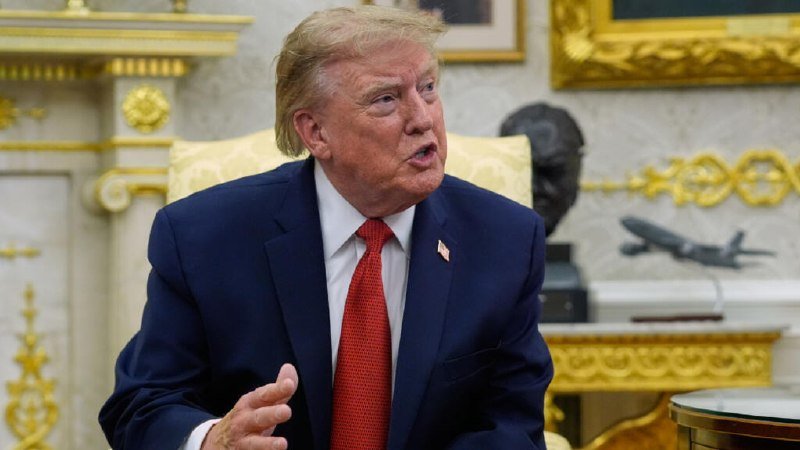
At 21:44 UTC on 18 August 2026, Al-Alam Arabic and BRICS News both flashed the same item: CNN, citing an unnamed American official, reported that President Donald Trump had asked his senior envoys to stop their talks with Iran. Geopolitical Watch carried the same line ten minutes later at 21:54 UTC, and the Middle East Spectator republished it twice in the early hours of 19 August, at 00:51 UTC and 00:53 UTC, sharpening the wording to a "maximum economic pressure campaign to convince Iran to capitulate." [Sources 1-5]
The verifiable core of the story is small. Trump has asked his senior envoys to halt talks with Iran, per a US official cited by CNN. The cited relay channels then attach a frame, "maximum pressure," that is a known policy descriptor, the brand used for the first-term sanctions track that followed the 2018 US withdrawal from the 2015 Joint Comprehensive Plan of Action, not a description of a new mechanism. Whether the move is best read as a pivot to that defined pressure track, as the Middle East Spectator framing has it, or as a walk-away from a discrete negotiating round, is a question the cited chain does not, on its own, settle.
What the wire chain actually supports
Strip the relays back to the original layer and the claim is two sentences. Trump has instructed his top envoys to halt talks with Iran, according to a US official cited by CNN. The administration is now redirecting effort toward a "maximum pressure" campaign to push Iran to capitulate, per the same source. The instruction, as relayed, applies to the senior envoys in the file; the available source items do not specify whether the directive extends to back-channel contacts, IAEA-adjacent technical communications, or third-party intermediaries.
The relay chain is thin in a specific way. Five Telegram channels are republishing a single CNN report that itself rests on one unnamed American official. The primary CNN text is not in the wire chain, and this article has not independently confirmed the directive from a second outlet. That is the credibility perimeter of the claim, and the analysis that follows sits inside it.
How the framing splits across the cited channels
The five cited channels read the same fact set differently. The Middle East Spectator's two follow-up posts at 00:51 UTC and 00:53 UTC on 19 August frame the file as a deliberate re-routing from negotiators to the Treasury and the sanctions architecture, with the working assumption that the Islamic Republic responds only to the language of cost. Geopolitical Watch, posting at 21:54 UTC on 18 August, treats the move as a unilateral White House signal. Al-Alam Arabic, which runs closer to the Iranian-state information environment, frames the suspension as a turn away from a track that had not produced results. BRICS News runs the headline neutrally.
Each reading takes the same fact set and points the arrow in a different direction. The strongest counter-reading, surfacing in regional commentary channels outside the cited chain, is that the halt is tactical theatre: a signal to Gulf partners and domestic constituencies that the pressure track is active, without actually closing the door, and that envoys will return once Tehran makes a face-saving concession. The available source items do not adjudicate between these readings, and the brief from this desk is to stay inside the wire they support.
Contradictions the cited chain does not resolve
Two material contexts complicate the clean "maximum pressure" frame. The first is a framing gap. Independent reporting on 18 August 2026, not in the cited chain, frames the move in walk-away language, Trump "disengaging" or "calling off" the talks, rather than as a pivot to a defined alternative campaign. The cited Telegram chain does not address that framing directly, and "disengage" carries a different policy implication than "pivot to pressure." The narrow claim of the wire chain is that envoys have been told to halt; the wider interpretive frame, that the halt is in service of a defined sanctions campaign, is read into the chain by the relay channels, not confirmed by them.
The second is a baseline gap. Independent reporting in the days before 18 August 2026 describes active or imminent US-Iran discussions, including contacts framed around the Strait of Hormuz. That is not consistent with the implicit reading in some of the cited channels that a fully matured negotiating track is being closed down. The available source items do not specify how many rounds of any indirect meetings have taken place in 2026, what their substance was, or which intermediaries were involved. This article has not independently established those details.
The honest summary is that the cited wire chain, five Telegram relays of one CNN report, supports a narrow halt and a wider reframe. The narrow halt is the verifiable one. The wider reframe, the pivot to a defined alternative campaign, is a reading the relay channels attach to the halt and is not, on the cited evidence, an entailed finding.
Stakes and what to watch
The immediate stakes sit in three places, all of which the cited source items do not specify. On the oil market, the first independent confirmation of how traders are pricing the regime change will be the price move on the next London open; the cited chain contains no price reference. In the Gulf, the response from Saudi Arabia, the UAE, and Qatar will reveal whether the pressure campaign is regionally coordinated or a unilateral US signal; the cited chain does not address Gulf reaction. In Washington, the open question is whether Treasury escalates designations within days or whether the envoys' suspension is allowed to sit unadorned; the cited chain contains no Treasury scheduling detail.
The IAEA file is the lagging indicator. The cited source items do not specify whether the suspension alters the technical-track reporting cadence on Iran's nuclear facilities or whether upcoming quarterlies will be issued on schedule. That technical layer is the one place where a political halt converts, almost mechanically, into an inspection gap.
The held detail across all five source items is the same: Trump has asked envoys to halt talks with Iran and to lean on the pressure track. Everything past that is interpretation, and the wider pivot framing is contested in independent reporting this article has not cited. The next verifiable move is a second wire confirming the directive, or a Treasury scheduling note, or its absence. Until then, the file is, in the working sense of the word, on ice.
Monexus sourced this strictly to five Telegram relays of a single CNN report citing one unnamed US official. The narrow halt is supported by the chain; the wider "pivot to maximum pressure" framing is a reading the relay channels attach to it, and is contested in independent reporting outside the cited chain that frames the move as a walk-away rather than a pivot. Primary CNN text is not in the wire chain and has not been independently confirmed in this article.
Wire provenance
This editorial synthesis draws on the following public wire/social posts:
- https://t.me/Middle_East_Spectator/35988
- https://t.me/Middle_East_Spectator/35987
- https://t.me/GeoPWatch/38600
- https://t.me/alalamarabic/495716
- https://t.me/bricsnews/17754