Trump wants to see Kim again. The announcement is most of the news.
The Wall Street Journal reports the White House is pushing for another Trump-Kim meeting before the year ends. The throughline of what the wires actually say is that the push and the disarmament track have never travelled in the same direction.
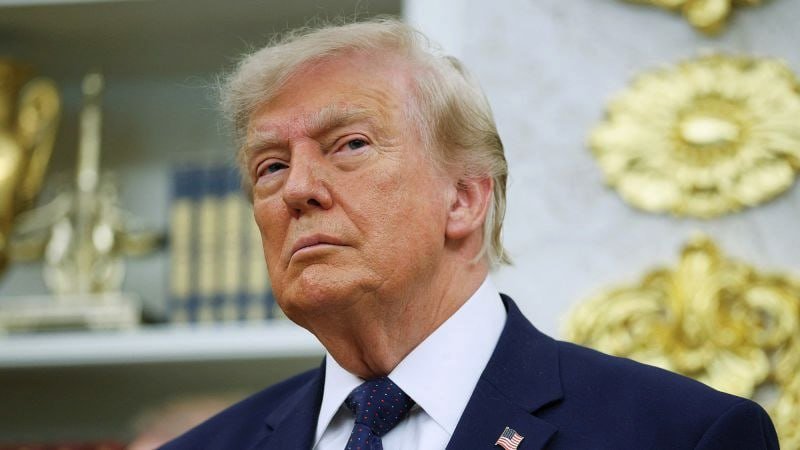
The Wall Street Journal reported on 18 August 2026 that the White House is actively working toward a new meeting between Donald Trump and Kim Jong Un, with a target window inside 2026. Reuters carried the WSJ item in a short post at 03:40 UTC on 19 August, and the open-source channel OSINTdefender relayed the same account at 03:08 UTC, flagging discussions pitched as early as this autumn. Investing.com ran the WSJ headline under its stock-market news desk at 23:33 UTC on 18 August. None of the four items specifies a venue, a confirmed date, or a North Korean counter-party response.
That gap is the story. A White House push, an autumn window, and a counterpart whose posture the available items leave unspecified: the wires describe an intention, not an agenda.
The shape of the announcement
The framing is consistent across the four items. Each describes interest on the US side, a window in 2026, and a willingness to talk. None, on the available evidence, attaches a negotiating track with deliverable items. The reporting describes an intention, not an agenda.
That matters because announcements of this kind have a long half-life in the US–North Korea file. They fill the news cycle, reset the optics, and do not, by themselves, move a single centrifuge or verifiably dismantle a warhead. The thread evidence does not let this publication say whether the WSJ account includes a draft agenda. It does let Monexus say that none of the four source items references one.
What the White House might actually want
Monexus analysis: the most natural reading of the timing, given only what the thread sources contain, is that a meeting serves an optics and crisis-management purpose before any practical work of disarmament is on the table. A Trump-Kim sit-down produces a broadcast image, freezes a file that has been simmering, and resets the news cycle at low diplomatic cost. The structural trade-off is that Pyongyang gains recognition and a tacit legitimacy dividend. Monexus flags this as analysis: the thread evidence establishes US interest and a window; the motive reading is an inference from the shape of the announcement, not a fact in the wires.
The harder question is what Pyongyang wants. The WSJ, Reuters, OSINTdefender and Investing.com items together specify only the US intention. The available sources do not specify whether Kim Jong Un has publicly responded, agreed in principle, or declined to engage. That asymmetry is the load-bearing uncertainty in this story, and it is one the wires have not yet closed.
Why the non-proliferation file does not move on optics
The non-proliferation file is not diplomatic weather. It moves on inventories, on centrifuges, on fissile-material production rates, on the verifiable absence of warheads. None of that is a presidential-summit deliverable. Summits can authorise talks, de-escalate, release detainees, or sign cosmetic communiqués. They cannot, by themselves, dismantle a programme.
This is the structural constraint the wire headlines tend to underweight. The thread evidence gives this publication no reason to predict whether a third round would authorise a real technical track or whether it would produce an image and nothing else. The honest framing is the inverse: the wires confirm a US push; they do not confirm a substantive agenda; the most consequential variable is Pyongyang's response, which the four items leave unspecified.
What to watch before any date is fixed
Three concrete signals will tell readers whether the rhetoric is converting into a real track. First, a public acknowledgement from a North Korean state outlet that a meeting has been proposed at a level Kim Jong Un would consider authoritative. Second, a confirmed venue, which usually requires bilateral channel work and months of logistics. Third, the composition of any pre-summit working group, which would indicate whether denuclearisation is on the agenda or whether the meeting is, on the evidence, a stand-alone event.
Until at least two of those three land, the most accurate framing of this story is the one the WSJ actually used: the White House wants a meeting. Whether it gets one on terms that move the nuclear file depends on Pyongyang, and the thread evidence does not yet let Monexus say more than that.
Monexus framed this as a question about what kind of meeting a third round would actually be, rather than as a story about whether talks are happening. The wire led on the White House push; we led on the asymmetry between a stated intention and an agenda the wires do not describe. Where the available items leave Pyongyang's posture unspecified, we have said so in those terms.
Wire provenance
This editorial synthesis draws on the following public wire/social posts:
- https://reut.rs/4xQdFNv
- https://x.com/Reuters/status/2089920314343858189
- https://t.me/osintdefender/19895
- https://www.investing.com/news/stock-market-news/trump-seeks-meeting-with-kim-jong-un-by-this-fall-wsj-93CH-4866238