Trump wants a Kim summit. Pyongyang has the calendar
A reported push for a fall Trump-Kim meeting lands while Trump says Pyongyang has already replied, and Beijing is reading the room.
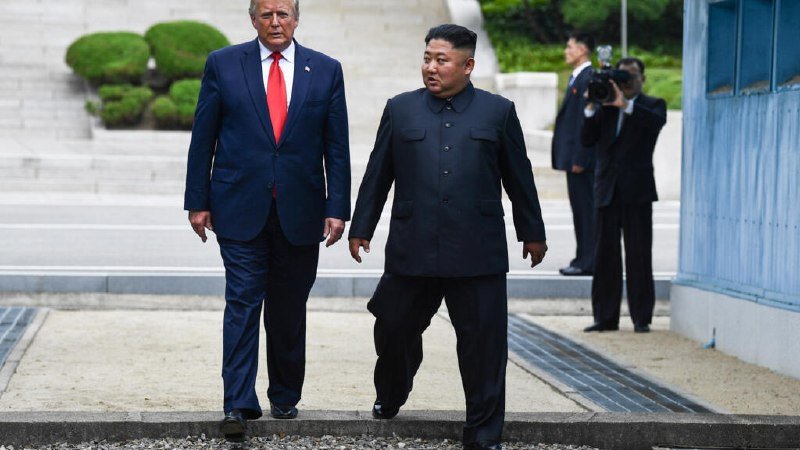
A Wall Street Journal scoop, relayed by Reuters at 23:35 UTC on 18 August 2026, says Donald Trump wants a sit-down with Kim Jong Un before the end of the year. The OSINTdefender Telegram channel re-circuited the same item at 03:08 UTC on 19 August. Investing.com ran the headline earlier the same evening. Three relays, one story: the White House is shopping for a third Trump-Kim summit.
The interesting question is not whether the call gets made. It is who shows up to take it. Pyongyang does not schedule around American campaign calendars; it schedules around its own. Read the reporting against that clock and the picture changes.
The headline, and what is in it
What is on the table, on the available sourcing, is interest and a response. Trump has "expressed interest" in meeting Kim again, with "discussions about a potential meeting taking place as early as this fall," per the OSINTdefender feed quoting the WSJ line. Reuters' headline is narrower still: Trump "pushes for" a meeting. Investing.com's frame is "seeks," with "by this fall" attached to the WSJ attribution. The available source items do not specify whether a venue has been proposed, what preconditions either side has tabled, or what Kim's reply actually contained. None of the relays quote a Korean Central News Agency dispatch; none carry a verbatim Kim statement. What the WSJ scoop and its relays do establish is that, on the American side, interest has been registered and, on Trump's own characterisation to reporters, a response has come back.
That is not a small qualifier. A response is not a summit. It is a willingness to talk about talking, and Pyongyang's public posture has historically been to confirm meetings only after they have been agreed, not before. The available source items do not specify whether Kim's reply goes beyond that floor.
Why this is being floated now
Two pressures make the timing legible from Washington's side. The first is the optics of high-profile foreign-policy theatre: a sit-down with a leader the sitting president has already met twice would consume a news cycle. The second is the slow exhaustion of the previous Korea file, in the sense that denuclearisation talks have produced no public dismantlements in recent years and inter-Korean channels have gone cold since the previous round of engagement collapsed. Floating a meeting is the lowest-cost way for the administration to signal that the file is alive without committing to anything Pyongyang could pocket. These are structural readings of the situation, not sourced claims about specific dismantlements, channel closures or test counts. The available source items do not specify the current state of any of these threads.
Beijing is reading the room. Monexus assessment: Chinese commentary on any US-DPRK opening typically frames it through the lens of regional stability and the cost of a renewed cycle of sanctions-flavoured diplomacy to Chinese commercial interests along the Yalu. The available source items do not specify a Chinese response to this particular round of reporting, and this article has not independently established whether Beijing has issued a statement on the WSJ scoop. The structural pattern is consistent: a third Trump-Kim episode would resume without resolving the deeper question of whether Washington accepts a nuclear-armed North Korea as a permanent feature of the regional order, or continues to demand denuclearisation as the price of engagement.
The structural read
This is what a hegemonic transition looks like in micro. A declining-but-still-dominant order treats bilateral photo-ops as instruments. A rising and consolidating power treats them as data points about the incumbent's bandwidth and attention. The US-Korea file in 2026 is being conducted on Washington's preferred broadcast medium: the summit announcement. Pyongyang's preferred medium is the test stand. The two clocks do not synchronise, and the meeting, if it happens, will land on the date the slower clock allows.
There is a counter-read worth taking seriously: that this round is genuinely different, that Trump's personal channel to Kim is operative in a way a formal inter-agency process is not, and that Trump's own claim of a Kim response, however thin, is the opening bid of a process that has historically moved by bilateral wink rather than multilateral text. State media in the DPRK tends to confirm meetings after they have been agreed, not before. The available source items do not let us adjudicate between these reads. Both are live.
Stakes, and what to watch next
If a meeting is agreed, the verifiable deliverables are narrow on the available sourcing. A joint statement would be the ceiling; a freeze-for-relief partial deal is plausible but not signalled in the current sourcing. Anything larger than that requires Pyongyang to accept monitoring it has spent years refusing. That is a high bar.
Two markers are worth watching. First, whether Korean Central News Agency publishes anything at all: KCNA's silence-or-statement will be the first real Pyongyang tell. Second, whether the response Trump has publicly described is echoed in Pyongyang's own media in the days ahead, which would confirm that the channel is operating and not just a US readout of silence. Until then, the story is one American headline plus one American claim of a reply, which is half a sentence long.
Desk note: Monexus framed this as an American-initiative story first, because that is what the wire provenance supports. The structural analysis above is labelled in place. The WSJ scoop and its relays establish US interest and Trump's own claim of a Kim response; the available sourcing does not include a KCNA dispatch, a venue, a date, or a Chinese statement.
Wire provenance
This editorial synthesis draws on the following public wire/social posts:
- https://reut.rs/4xIZrOk
- https://x.com/Reuters/status/2089858657139786238
- https://www.investing.com/news/stock-market-news/trump-seeks-meeting-with-kim-jong-un-by-this-fall-wsj-93CH-4866238
- https://t.me/osintdefender/19895