Geologist turns the full moon into a recording instrument
Geologist's new album, The Sirens, was made with visual artist Kyle Simon from a single composition manipulated by the light of the full moon. Its conceit treats an ordinary celestial event as a collaborator rather than a backdrop.
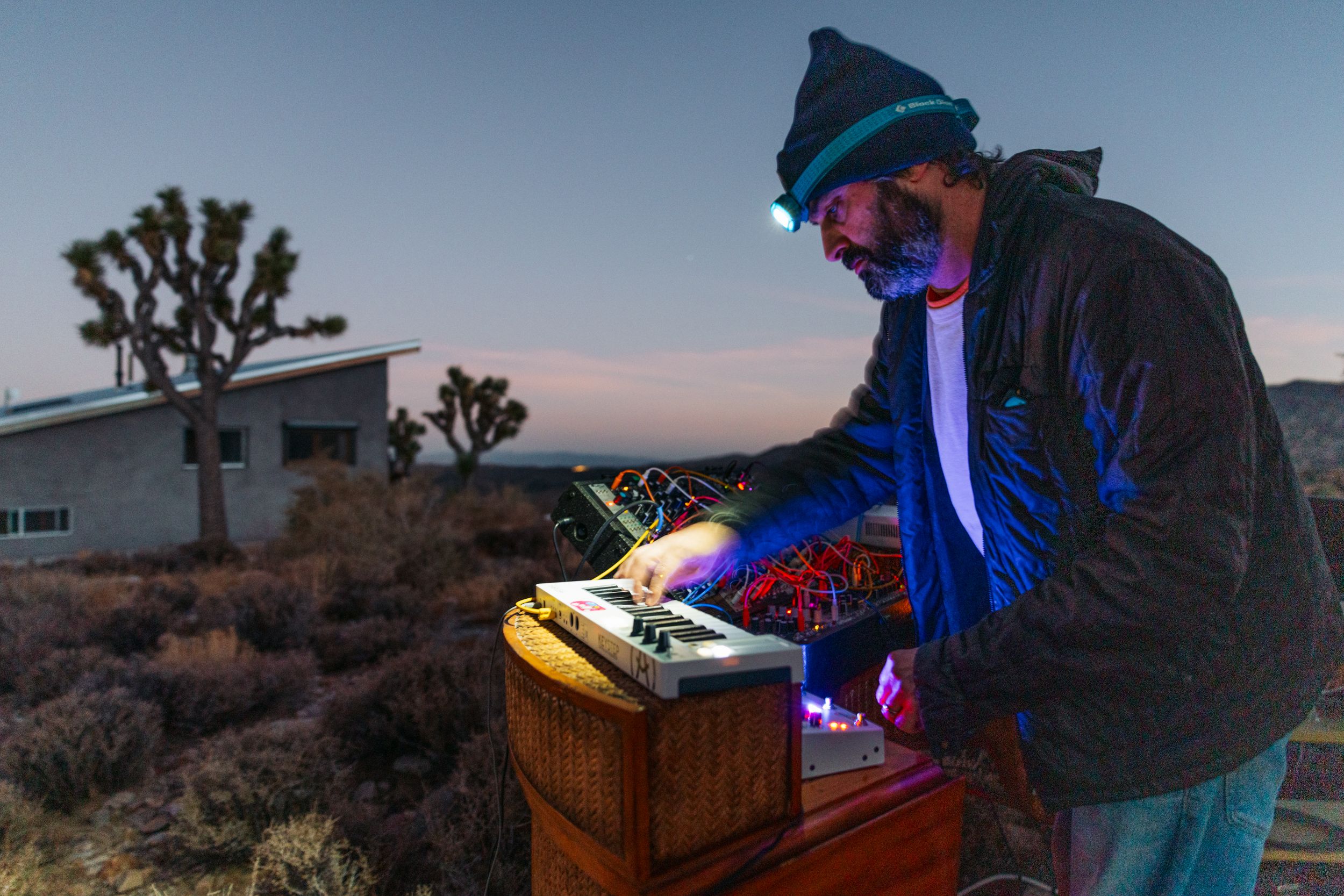
On 19 August 2026, Pitchfork announced that Geologist would release an album called The Sirens, made with visual artist Kyle Simon. The record comprises a single composition altered by the “light of the full moon,” according to the publication’s account. That premise matters because it does more than lend the music a nocturnal mood. It makes a predictable astronomical cycle part of the production process.
Geologist’s project arrives as a compact test of how contemporary musicians describe process. The artist is asking listeners to hear the full moon not as scenery, but as a condition imposed on the work. The claim is more interesting when it is kept narrow: the available reporting identifies the lunar light as the record’s central manipulation device, not as a substitute for composition, performance or artistic judgement.
One composition, one recurring signal
The basic proposition is unusually economical. The Sirens contains one composition, and the album’s defining process is the manipulation of that material by the light of the full moon. Visual artist Kyle Simon collaborated with Geologist on the LP, placing the project at the intersection of sound and image rather than presenting the moon as decorative subject matter.
The distinction is important. Many records use a visual concept after the music has been made, through artwork, film or stage design. Here, the visual artist is attached to an album whose sound is framed as responsive to a recurring light cycle. The available source does not specify the recording equipment, the number of lunar cycles used, the release date or the label. It does establish the collaboration and the singular composition.
That limited account encourages precision. The moon did not, on this evidence, write the music or perform the piece. Geologist supplied the composition, Simon supplied the visual collaboration, and the record’s premise says that full-moon light was used to manipulate the work. The artistic idea is not technological mysticism. It is controlled variation with a natural cycle standing in for a recurring input.
A stronger reading than a literal one
There is a plausible counter-narrative: the lunar reference may be a conceptual wrapper for a record built through sampling or another form of transformation. If so, the moon supplies a narrative frame rather than a technically documented cause-and-effect system. Pitchfork’s description does not explain the mechanism, so a literal account would go beyond the available evidence.
Monexus analysis: the more convincing reading is neither pure gimmick nor documented experiment. The album’s lunar cycle gives the manipulation process a timetable, while leaving enough mystery for the listener to imagine the intervention. In that sense, the full moon functions less like an instrument with a measurable output than like an editorial rule: change the work when the specified condition returns.
The collaboration with Simon supports that interpretation because it gives the idea a physical counterpart. A changing light source is ordinarily associated with performance, installation or time-based media. Translating that condition into an LP makes the album itself a record of elapsed time, even though the cited report does not say how many separate versions or phases were produced.
Process as the product
The Sirens sits inside a broader willingness to let methods of production carry the meaning of a work. When audiences know that a composition has been changed by a particular process, details that would otherwise be technical become part of the aesthetic. Here, the factual statement is simple enough to survive scrutiny: the LP is one composition manipulated by full-moon light. Everything beyond that is an invitation, not proof.
Simon’s role should not be reduced to artwork. The album was made with the visual artist, and the source identifies the partnership rather than a separate commission. That arrangement matters because the visual idea is built into the origin of the project. The available item does not specify the form of Simon’s contribution, but it does not need to for the basic point: the visual artist is part of the record’s stated authorship.
The record also benefits from being misunderstood in two directions. Sceptics may dismiss the moon as packaging. Admirers may treat it as a supernatural collaborator. The evidence supports neither conclusion. The restrained account is better: a single piece of music subjected to a process tied to the full moon, presented as a collaboration between Geologist and Simon.
The stakes are artistic, not cosmic
For Geologist, the album extends a practice in which the listener’s attention is directed as much toward how a work was made as toward what it contains. For Simon, the collaboration offers a way to connect visual sensitivity to sound without assigning image a secondary role. The available reporting does not establish a release date, label, track list, visual format or performance schedule, so those questions remain open rather than ready for speculation.
The useful question is therefore not whether the moon can be said to have made the album. It cannot, on the evidence presented. The better question is whether attaching a visible natural cycle to the manipulation of one composition changes how repetition is heard. The project’s answer appears to be yes, but the decisive test will be the music itself when listeners can assess how the claimed process is audible.
Wire provenance
This editorial synthesis draws on the following public wire/social posts:
- https://pitchfork.com/story/geologist-reveals-new-album-the-sirens/
- https://t.me/pitchfork/29348
- https://ift.tt/kc2fl5R