South Korea's nuclear arithmetic: 80 to 120 warheads, and a widening gap with Washington
Seoul's defence minister told reporters Pyongyang holds between 80 and 120 nuclear warheads, a range materially wider than the figure attributed to President Trump. The gap is now policy, not just numbers.
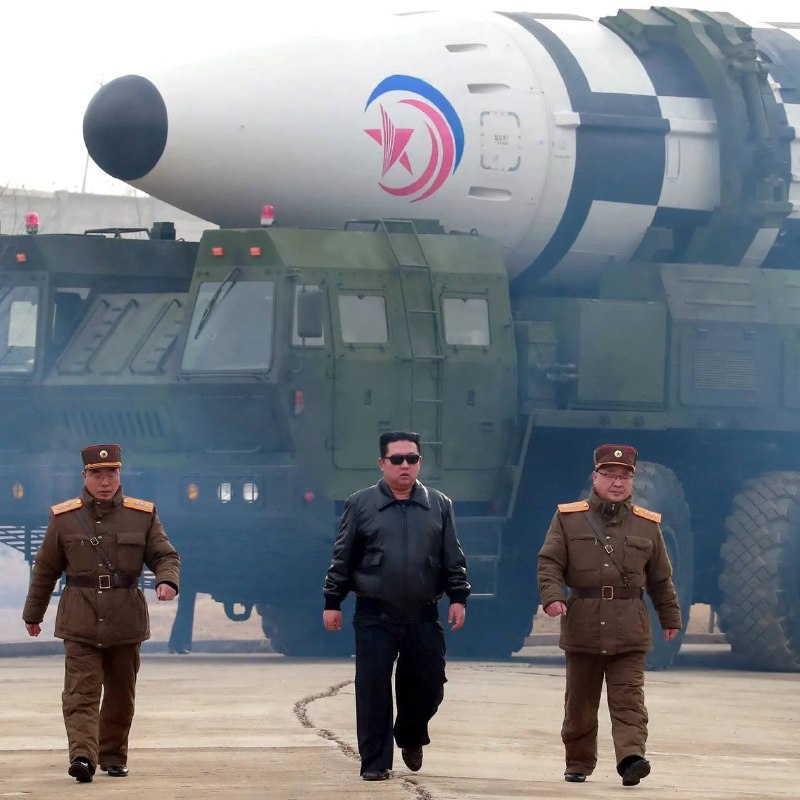
South Korea's defence minister said on 20 August 2026 that his government estimates North Korea holds between 80 and 120 nuclear warheads, a range materially wider than the figure the White House has been citing in public. The Reuters wire carried the minister's remarks on X at 05:55 UTC the same morning. Within minutes, two Telegram channels (ClashReport at 06:22 UTC, Insider Paper at 06:43 UTC) added sourcing caveats and context. And at 05:22 UTC, the X account of Polymarket had logged a separate, sharper exchange: North Korea's official channels had just dismissed President Volodymyr Zelensky's claim that Pyongyang was deploying an additional 50,000 troops to Russia as "groundless." Two stories, two registers, one underlying question: how much of the public picture of North Korea is actually public, and how much is the gap between Seoul's estimate, Washington's rhetoric, and Pyongyang's script.
The headline number does more work than it looks. Seoul's 80 to 120 range, sourced by Reuters to the defence minister himself and relayed by ClashReport and Insider Paper, sits roughly two to four times higher than the figure Trump publicly cited in recent weeks, which ClashReport places at 57 warheads. If the lower bound of Seoul's range holds, North Korea has now crossed thresholds that change the arithmetic of any future negotiation: enough second-strike capacity to deter a disarming first strike, and a doctrinal pretext, in Pyongyang's own framing, to argue that further production is defensive rather than offensive. Monexus analysis: the policy gap between the United States and South Korea on what North Korea already has is wider than at any point the cited materials allow us to confirm.
The numbers in dispute
Reuters reported on 20 August 2026 at 05:55 UTC that the South Korean defence minister, citing Seoul's own intelligence community, placed the North Korean stockpile at 80 to 120 warheads. ClashReport's Telegram account, posting at 06:22 UTC the same day, summarised the same remarks and added context: the figure is drawn from private South Korean research and is not officially confirmed by South Korea's military. Polymarket's X account, at 05:22 UTC, carried a separate but adjacent datapoint: Pyongyang's official line that Zelensky's 50,000-troop claim is "groundless," a denial delivered through state media.
The asymmetry is the story. Trump's recent public estimate, 57 warheads, has been the anchor number in American policy commentary for weeks, per ClashReport's relay. Seoul's range begins at 80 and runs to 120. The lower bound alone is roughly 40 percent higher than the American figure; the upper bound is more than double. Yet neither estimate is a hard inventory. Both are inferences, drawn from limited signals intelligence, open-source imagery, weapons tests, and assumed yield-to-warhead conversion ratios. Monexus assessment: the fact that two close allies are now publicly disagreeing on a range that wide is itself the news, regardless of where the true number sits.
Why Seoul says more than Washington
The simplest read of the divergence, and the one that fits the timing best, is that South Korean intelligence has been willing to update its estimate upward at a pace the White House has not. Monexus analysis: Washington has institutional reasons to understate a problem it is also negotiating over, since publicly placing an adversary's arsenal at more than double its real size strengthens the hand of those in Pyongyang who argue that talks are a trap. That framing is not in the cited materials; it is the desk's reading of why two allies, briefing two different audiences, would land on two different numbers.
The audience gap is the other structural factor. Monexus assessment: South Korea's defence minister is briefing a domestic constituency that lives within artillery range of the North's forward-deployed forces, and that has spent the last decade watching missile tests shorten warning time. The White House is briefing a global audience, and a global audience is more receptive to a smaller number, because a smaller number implies that pressure can still work. Both audiences are real. Neither is wrong in its own terms. The danger, on this reading, is that two allies end up with two different pictures of the same adversary.
The troop-deployment line, and what it does to the nuclear picture
The Polymarket-flagged denial from Pyongyang, that the 50,000-troop deployment to Russia is "groundless," sits awkwardly with prior reporting. Western intelligence services have spent 2024 and 2025 documenting North Korean artillery and infantry units operating in Russia's Far East and inside occupied Ukrainian territory, with public estimates running into the low tens of thousands. A figure of 50,000 would represent a step-change in the depth of Pyongyang's involvement in the Ukraine war, not just a continuation of the existing deployment. Monexus assessment: Pyongyang's denial, sourced through state media and relayed by Polymarket, is therefore not a credible contradiction of the underlying pattern; it is a face-saving line for a deployment that is harder to deny in operational detail than in aggregate.
The nuclear and the troop questions are linked. Every additional North Korean soldier deployed to a third theatre is a soldier not available for conventional defence of the homeland, which in turn raises the relative weight of the nuclear deterrent in Pyongyang's force posture. Monexus analysis: a larger nuclear stockpile, which is what Seoul is now asserting, would also make it easier for the regime to argue that conventional cuts are sustainable and that the alliance with Moscow is a normal great-power tie rather than a dependency. The 80 to 120 figure, on this reading, is not just a count of weapons. It is a count of how much strategic slack the North believes it now has.
What the gap changes, and what it does not
If Seoul's range is anywhere close to right, three policy assumptions currently held in Washington need revision. Monexus assessment: first, the timeline to a survivable North Korean second strike has already passed; the relevant question is now arsenal size, not arsenal existence. Second, sanctions-and-pressure maximalism, which depends on the implicit threat that the programme can still be rolled back, is operating against a stockpile that is already past the rollback threshold. Third, the negotiation frame, in which disarmament is the prize, is in tension with a North Korean position that frames continued production as defensive.
What the gap does not change is the basic structure of the problem. Two allies still prefer a non-nuclear North Korea. The North still prefers to keep its deterrent and the prestige it confers. Monexus analysis: Russia and China, in their public commentary, continue to argue for restraint and against what they characterise as US-led pressure campaigns, a framing that aligns with their interest in a multi-polar Asia-Pacific in which they are not the targets of extended deterrence. That structural read is the desk's, not a quotation from the cited materials. None of those positions has shifted because the warhead estimate moved. The estimate shift just makes the gap between positions more visible to the publics that fund them.
What remains genuinely uncertain
Two things are unsettled, and the source items are honest about it. First, the warhead count: ClashReport notes that the 80 to 120 range comes from private research and is not officially confirmed by the South Korean military. That is a meaningful caveat. The actual operational stockpile could sit anywhere in the range, or below it. Second, the troop deployment to Russia: Polymarket carried Pyongyang's denial, but the cited posts do not contain an independent count of North Korean personnel inside Russian-held territory, and this article has not independently established whether Zelensky's 50,000 figure has corroboration beyond his own statement. The denial is on the record. The underlying figure is not, in the materials available to this piece.
What is on the record is enough to say this: when an ally places the threat at twice the size the White House is describing in public, the diplomatic weather has changed. The next round of US-ROK defence consultations, and the next round of any four-party denuclearisation talks, will take place against a backdrop in which Seoul's number is in the room even if Washington's is the one on the podium.
Desk note: the energy/geopolitics register holds because the nuclear stockpile question is, at root, a question about what powers hold what leverage in the next round of Asian security diplomacy. The wire led with Reuters; the Telegram channels (ClashReport, Insider Paper) added sourcing caveats and relay speed; the Polymarket X account carried the separate Pyongyang denial. The article foregrounds the Western wire and treats the Telegram channels as relay material with caveats, consistent with Monexus's standing sourcing policy for non-mainstream feeds.
Wire provenance
This editorial synthesis draws on the following public wire/social posts:
- https://x.com/Reuters/status/2090316660804616392
- https://reut.rs/4xVCIim
- https://t.me/ClashReport/93044
- https://t.me/insiderpaper/44033
- https://x.com/Polymarket/status/2090308345404199017