Trump's 'economic warfare' pivot on Iran: pressure tactic or admission of limits?
Tehran has publicly rejected Trump's 'Economic D-Day' ultimatum. The move from bombs to balance sheets is worth reading as both threat and tell.
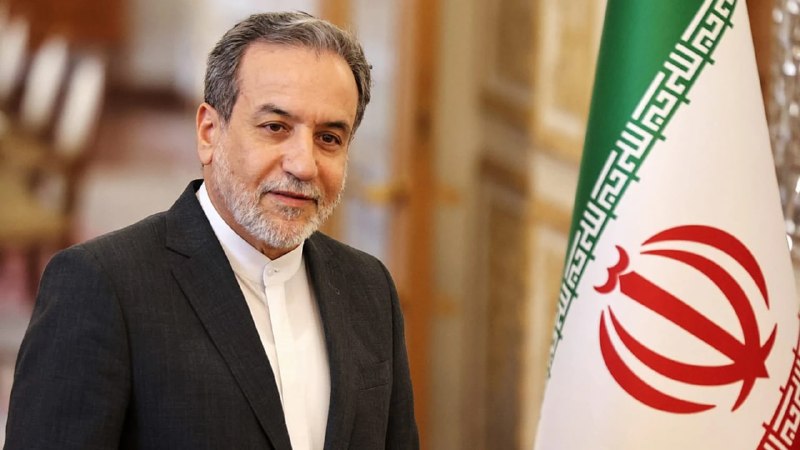
At 07:30 UTC on 20 August 2026, Moneyweb carried a single sentence that reframed the US posture on Iran: Donald Trump had announced the United States was "starting 'economic warfare' operation against Iran", language that, on the outlet's own reading, signals "rising frustration" with Tehran's refusal to "capitulate" despite weeks of military strikes and a US blockade that has "crimped" Iranian oil exports. Within five hours, the response had arrived. At 12:25 UTC, The Cradle reported that Tehran had rejected Trump's "Economic D-Day" framing and warned that further sanctions would bring the US "further defeat," against a backdrop of "domestic economic and political problems" in the United States, including a national debt that The Cradle's relay puts at $40 trillion. By 12:33 UTC, a Telegram channel self-labelled in its handle as IR Iran Military was circulating Trump's post, in which he pledged "the most crushing economic sanctions ever" against Iran, and characterising the announcement as evidence of Trump's "desperation." The pivot, in other words, had already happened, and the Iranian counter-frame was already on the page.
This is the part of the cycle that deserves a harder read. The move from kinetic to financial pressure can be sold as escalation. It can also be sold as leverage. The honest reading of the available reporting is that both characterisations are partially right, and that which one dominates in coming weeks will say more about Washington's constraints than about Tehran's.
The instruments named in the reporting
The blockade and the air campaign, taken together, are the two prior instruments the reporting names. Moneyweb's framing is deliberate. The word "frustration" is doing work. So is the explicit acknowledgement that a blockade has already "crimped" Iranian oil exports, past tense, partial effect, not a knockout blow. If the financial instrument of last resort is being brandished now, the implication carried by the reporting is that the prior instruments have produced diminishing returns.
Monexus analysis: the sequencing is the story. "Economic warfare" is being announced as a new phase rather than as a substitute for the existing campaign, and the implication carried by the reporting is that the prior instruments remain in play alongside the sanctions. The reporting does not specify tonnage, strike tally, or daily-barrel volume lost since the operation began.
What the Iranian reply actually says, and what it leaves out
The Iranian response, as relayed by The Cradle, is a single sentence of rejection plus a list of US vulnerabilities. The Cradle relays that Trump is "facing domestic economic and political problems as a result of the war he launched on Iran, including a spiraling US national debt that reached $40 trillion this week." The combined message is calibrated to do two things at once: deny the political conclusion Washington is drawing from the blockade and the strikes, and reframe the new sanctions threat as a confession of limits. The Cradle excerpt does not break those moves out separately, and it does not split the line between domestic and international audiences. We are reading that structure in, and the reader should treat it as our reading, not as the relay's.
Read alongside the IRIran_Military channel's characterisation of Trump's announcement as proof of "desperation," the Iranian messaging stack as it appears across the two sources is consistent on one point: the premise that further US sanctions will be decisive is what is being contested, not the existence of the sanctions themselves. Whether that posture is built for endurance or breakthrough is a separate question the sources do not answer.
The structural frame, in plain language, with the caveats attached
Sanctions are the most legible tool in the US policy kit because they cost Washington less than a ground campaign and more than a press release, and because they are reversible in a way that bombed infrastructure is not. That is our read, not a claim drawn from the thread evidence, and it is offered as analysis rather than as reportage. The Cradle's relay of the $40 trillion debt figure is the concrete hook for the underlying point: a sanctions package announced against a backdrop of US fiscal strain invites a specific counter-narrative, namely that the weapon is being deployed because the cheaper alternative is no longer available.
The dollar's centrality is not decorative here. The threat of "the most crushing economic sanctions ever" lands harder than other sanctions threats because it invokes the centrality of US-domiciled clearing, correspondent banking, and secondary-sanction enforcement. The Cradle relay does not itself argue that this centrality has become a liability. That is an analytical addition we are making on this page, and the reader should treat it as our assessment, not as the source's claim. The structural argument travels beyond the present crisis: every use of the dollar lever, on this reading, reduces the leverage available for the next one. The thread evidence supports the first half of that argument (the centrality of dollar-based sanctions) and is silent on the second half (the rate at which counterparties accelerate workarounds). We are flagging the second half as an open question, not as a finding.
Stakes, and what to watch
If the new sanctions package is principally a signalling move, a deadline-without-a-deadline designed to drag Tehran back to a negotiating table that the air campaign emptied, then the operative variable is whether the political coalition inside the Islamic Republic fractures under the new pressure. If the package is principally a substitute for continued strikes, a face-saving off-ramp that allows Washington to declare that pressure is being maintained, then the operative variable is whether domestic US appetite for escalation is in fact exhausted. The available reporting does not let us choose between these readings; it lets us see that Washington has decided to keep both options open. That, too, is our read.
Three dates worth marking, with the caveat that the sources do not specify which of them, if any, will actually arrive. The next tranche of secondary-sanction designations, if they land, will test whether the "most crushing" framing is matched by the roster. The next publication of US fiscal data, given the $40 trillion figure The Cradle relays, will test whether the domestic-economic-pressure frame inside Iran retains its purchase. And the next round of indirect talks, if any convenes, will test whether the economic threat was a prelude to diplomacy or a replacement for it.
What the sources on hand do not specify is whether any new sanctions designations have actually been signed, what their legal architecture is, or how Iran's regional partners intend to position themselves. The thread evidence does not speak to whether the $40 trillion national debt figure is independently confirmed; we are carrying it as The Cradle's relay, not as our finding. This publication will watch those details as they emerge, and revise the read accordingly.
How Monexus framed this: the wire has tended to treat "economic warfare" as a rhetorical escalation. We read it as both escalation and signal, and we let the Iranian counter-frame sit in the same paragraph rather than relegating it to a sidebar. Structural claims about the dollar lever and sanctions reversibility are flagged as analysis rather than reportage.
Wire provenance
This editorial synthesis draws on the following public wire/social posts:
- https://www.moneyweb.co.za/news/international/trump-says-us-starting-economic-warfare-operation-against-iran/
- https://t.me/thecradlemedia/66514
- https://t.me/IRIran_Military/9724