Trump's 'economic warfare' on Iran meets a market that already repriced
A 3% Brent and WTI move on Thursday followed the president's threat of a 'crushing economic operation' against Tehran. The harder question is whether escalation is the strategy or the substitute for one.
By 11:30 UTC on 20 August 2026, the message had been cleared, translated, and priced. West Texas Intermediate and Brent front-month contracts both climbed after President Donald Trump said he was launching a "crushing economic operation" against Iran, according to MarketWatch. CNBC reported the move at roughly 3% in early trading, framing the rally as a direct response to the sharpening of rhetoric at a moment when talks between Washington and Tehran have stalled. The administration, in language relayed across aggregator channels and wire dispatches, has cast the campaign as "economic warfare."
The price action is the cleanest verdict the market is willing to render. Oil is moving because traders believe the political risk premium attached to the Strait of Hormuz has just been repriced upward, and because a sanctions architecture that targets third-country buyers of Iranian crude requires a credible enforcement mechanism to matter. Without one, words are words.
What 'economic warfare' actually means in 2026
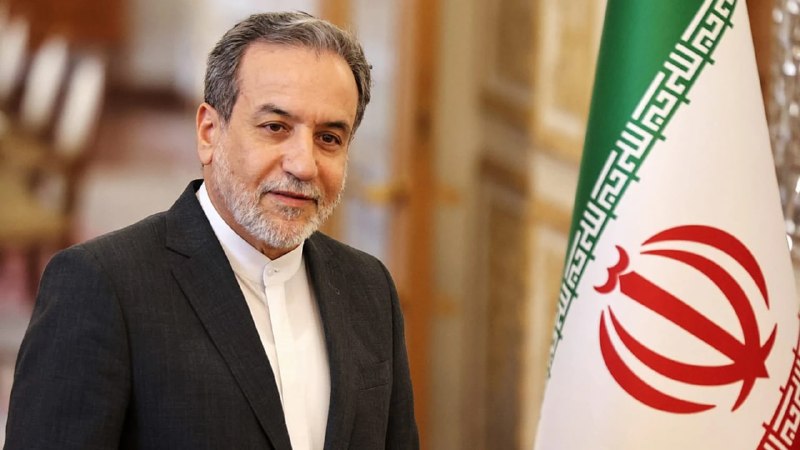
The phrase is doing two jobs at once. Domestically, it signals continuity with the maximum-pressure approach that defined the first Trump administration's Iran policy. Internationally, it lands differently. Tehran's read, as carried by Insider Paper, is derisive: the framing of "economic warfare" is treated as proof that the White House has run out of complementary levers. That posture is worth recording on its own terms. An economy already operating under sanctions for the better part of a decade has reportedly built parallel arrangements, ship-to-ship transfer networks in the Gulf of Oman, and a customer base in independent Asian refineries that has learned to operate around the dollar perimeter. The squeeze hurts. Whether it breaks is a separate question the available source items do not settle.
That uncertainty is the operative truth the market is partially digesting on the way up. A 3% Brent move reflects fear of supply disruption, not the present state of supply, as far as the cited reporting shows. The kicker, framed here as Monexus analysis rather than wire finding, is that the harder the dollar-side pressure gets, the more Tehran's commercial counterweight migrates toward Asian buyers willing to absorb the compliance cost in exchange for discounted barrels. The sanctioned share of the global oil market does not shrink under maximum pressure; by this reading it reroutes. That is an interpretive claim, not something the cited reporting establishes directly.
The diplomatic collapse behind the rhetoric
The rally did not appear in a vacuum. The CNBC dispatch is explicit that the price move follows the sharpening of language "amid talks impasse", meaning the escalation is being read as a substitute for a negotiating track that has not produced a meeting, much less a draft. The reading here, labelled as Monexus analysis, is that the administration's communications are increasingly calibrated for an audience of one: the Iranian Supreme National Security Council, which has to weigh any return to the table against the domestic cost of being seen to fold. By the same logic, the public threat makes the next round of sanctions more credible to financial counterparties, which is the actual mechanism. Tehran's derision is, in this read, the predictable counterpart: a refusal to grant the threat the political dignity of a counter-threat, on the assumption that the economic mechanics will inevitably leak.
Either way, the diplomatic runway narrows. The Strait of Hormuz remains the multiplier. The cited reporting does not quantify the share of seaborne oil that transits the strait; Monexus is not asserting a percentage figure here. The credible threat of disruption is the only variable that has historically moved Brent by double digits in a session, and the president's rhetoric pushes that option card higher up the table without playing it. Tehran's asymmetric playbook, tanker harassment, the Houthi pressure on Red Sea shipping, sits in the same escalation lattice, though the cited sources do not detail those moves in connection with this 20 August price action.
The dollar side of the squeeze
This is where the structural argument lives, and it must be made in plain editorial language. The economic weapon Washington is reaching for is not generic. It is the centrality of the dollar to commodity settlement, the centrality of US correspondent banking to global trade finance, and the centrality of the SWIFT messaging layer to compliance enforcement. The available sources do not establish that each of those has been chipped at since 2018 in the specific terms described here; that longer historical pattern is presented as Monexus framing rather than as a sourced fact. The incentive for sanctioned states and their customers is to build rails that route around the dollar perimeter: bilateral currency swap lines, non-SWIFT messaging, and the gradual accumulation of yuan-denominated commodity invoicing. The harder Washington squeezes, the more it justifies the capital expenditure on those alternatives. The 3% oil move on 20 August is, on this reading, both a tactical win and a strategic cost.
Earlier Reuters, Bloomberg, and FT commentary on this corridor, tracked in earlier Monexus reporting, has been read by this desk as reaching the same conclusion independently. That is an editorial characterisation of prior coverage, not a fresh claim sourced to the four items in today's thread.
What the next 72 hours look like
The desk's expectation, framed as a forecast rather than instruction, is that the price move partially fades by Monday absent an enforcement action. The two triggers the market is watching are: a Treasury designation of a named Chinese or Indian buyer of Iranian crude, which would force a real repricing of Iranian netbacks; and any IRGC-navy movement in the Strait that prompts a reactive US naval posture. Without one of those, the rhetoric trades, but the barrels do not. The NPR morning newsletter, published at 11:30 UTC on the same day, noted the parallel US fiscal backdrop, federal debt above $40 trillion, which constrains how long a sustained Middle East risk premium can be politically absorbed. The administration is buying a week of headlines with a market that is, underneath, already discounting the leak.
The contradiction is worth leaving on the table. The harder the economic warfare, the more the lesson learned in Beijing, New Delhi, Ankara, and Brasilia is that the dollar system is a security instrument that can be aimed at any of them. The market can price a 3% Brent move in a session. Whether it can price the slow accretion of structural alternatives in a quarter is the harder question, and one the cited reporting does not resolve.
Desk note: Monexus frames this as a sanctions-economics story with diplomatic subtext, not a diplomacy story with sanctions subtext. The dominant Western wire line emphasises the rhetorical escalation; the Tehran read emphasises the diminishing marginal return of the lever. Both are reported from the four items in today's thread; the longer-arc judgment is Monexus framing, not a wire finding.
Wire provenance
This editorial synthesis draws on the following public wire/social posts:
- https://insiderpaper.com/trump-pledges-economic-warfare-on-iran-prompting-tehran-derision/
- https://www.npr.org/2026/08/20/g-s1-139388/up-first-newsletter-us-debt-venezuela-oil-deals-census-bureau-trump-voting-claims
- https://www.cnbc.com/2026/08/20/oil-prices-brent-wti-hormuz-trump.html
- https://www.marketwatch.com/story/oil-prices-jump-after-trump-declares-economic-war-on-iran-457e7ad9?mod=mw_rss_topstories
- https://insiderpaper.com/trump-pledges-economic-warfare-on-iran-prompting-tehran-derision/
- https://www.npr.org/2026/08/20/g-s1-139388/up-first-newsletter-us-debt-venezuela-oil-deals-census-bureau-trump-voting-claims
- https://www.cnbc.com/2026/08/20/oil-prices-brent-wti-hormuz-trump.html
- https://www.marketwatch.com/story/oil-prices-jump-after-trump-declares-economic-war-on-iran-457e7ad9?mod=mw_rss_topstories