Four Iranian state outlets, one message, and what the parallel tuning tells you
IRNA, Tasnim, PressTV and Al-Alam carried Major General Amir Hatami's Defense Industry Day message within seventy minutes on 21 August 2026. Each tuned the same text to its own register, and the tuning is the point.
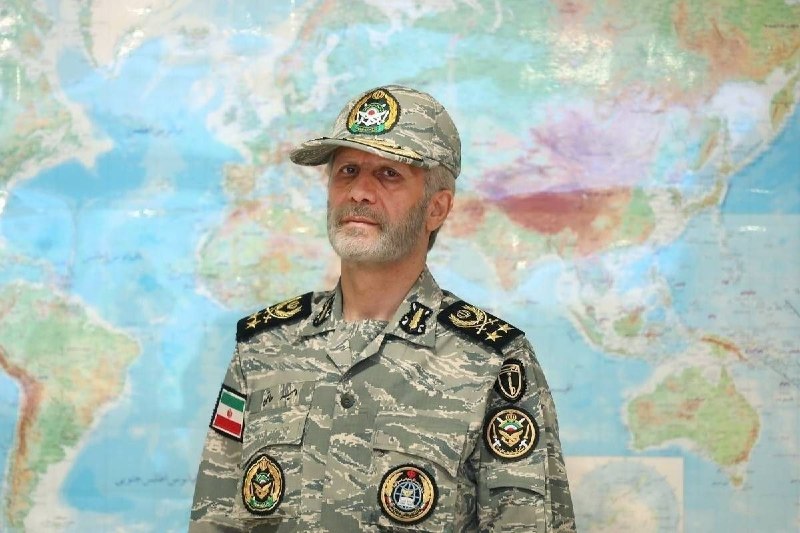
On 21 August 2026, the public Telegram channels of four Iranian state outlets carried Major General Amir Hatami's National Defense Industry Day message within roughly seventy minutes. Tasnim News English posted first, at 15:25 UTC, attributing to Hatami the claim that "Iran's defense power has changed the equations of the enemies." Al-Alam followed at 15:28 UTC, leading with the line that "the Iranian nation will not surrender." PressTV published at 15:59 UTC, and the post included Hatami's own quotation: "A nation that builds its defensive shield with the capable hands of its own children will not only not surrender, but will undoubtedly emerge victorious" (PressTV, 21 August 2026, 15:59 UTC). IRNA English closed the sequence at 16:37 UTC, attributing to Hatami the proposition that Iran's defence capability had "changed the enemies' calculations." Same sender. Same hour. Four transmitters, each tuned to a different register.
The repetition is the substance, and so is the variation across it. Tehran has learned to use the national-day calendar as a launchpad for outward-facing messaging, and the staggered release, with each post tuned to the editorial register of its host outlet, is itself part of the signal.
What each outlet actually carried
The wording is consistent in shape but not identical, and the differences are not cosmetic. IRNA English carries the longest post and ties Hatami's claim to a backward-looking cost-benefit: Iran's defence capability, the post attributes to him, "forced the enemy to rethink its position and eventually agree to a ceasefire and a political solution" (IRNA English, 21 August 2026, 16:37 UTC). Tasnim English frames the proposition in the past tense, with the equation already redrawn, and credits the Defence Ministry with work done "during the past years" (Tasnim English, 21 August 2026, 15:25 UTC). Al-Alam carries the political line, "the Iranian nation will not surrender" (Al-Alam, 21 August 2026, 15:28 UTC). PressTV carries both the congratulatory envelope and a substantive surrender-resistance line from Hatami himself: a nation that builds its defensive shield with the capable hands of its own children, the quoted message reads, "will not only not surrender, but will undoubtedly emerge victorious" (PressTV, 21 August 2026, 15:59 UTC).
Monexus assessment: the four registers are analytical, past-tense, political, and patriotic-indigenous respectively. The earlier draft drew the editorial lines incorrectly by assigning PressTV only the protocol envelope. PressTV in fact carries the same surrender-resistance register as Al-Alam, plus an explicit indigenous-capability frame that Al-Alam does not foreground. The four outlets are not partitioned by whether they carry the political line; they are partitioned by which political line each chooses to lead with.
Why the recipient list matters
A message addressed to a domestic audience would have been posted once, on one channel. A message addressed outward is posted in parallel, with the timing structured to be visible to anyone monitoring the feed. The seventy-minute window across four platforms is the standard broadcast pattern for an Iranian state release intended to clear the embassy cable desks in Washington, the foreign ministries in the Gulf, and the regional press in Beirut and Baghdad in the same news cycle.
The platform choice and the staggered timing are doing more rhetorical work than the prose. A deterrence statement whose audience is foreign planners is not actually trying to convince those planners. It is trying to make the cost line visible in advance of the next incident, so that the planners have to acknowledge the line publicly when the incident occurs. The indigenous-capability framing in PressTV's quoted line, the analytical ceasefire linkage in IRNA, the past-tense finality in Tasnim, and the resistance register in Al-Alam are each calibrated for a different segment of that external readership.
Where the dominant framing gets thin
Coverage of Iranian defence statements in Western outlets tends to read them as either internal theatre or as escalation. Both readings are partly right. The four posts are choreographed. They are also aimed outward. Where the dominant Western line falters is in conflating a deterrent signal with a provocation: the two are not the same thing. A price quote is not a threat. Hatami's wording, as carried by IRNA, ties the deterrent capability directly to a ceasefire that the post claims closed a prior round, which is a backward-looking claim about a settled cost-benefit rather than a forward-looking threat.
The other side of the ledger deserves equal weight. Iranian defence industrial output has grown over the past decade, and that growth has underwritten an assertive regional posture that has imposed real costs on Iran's neighbours and on Western forces operating in the region. The deterrence reading and the threat reading are not mutually exclusive, and the four posts do not let a reader collapse them into one.
What the four posts do not specify
The available Telegram items do not identify which "enemies" Hatami is referring to. They do not name the systems whose capability has, in Hatami's framing, changed the calculations. They do not specify whether the Army's reading aligns with the Islamic Revolutionary Guard Corps's, an important question because the two chains of command in Iran have historically diverged on how publicly to telegraph deterrent capability. The IRNA and Al-Alam posts identify the recipient of Hatami's congratulatory message as Brigadier General Majid Ibn al-Reza, the acting Defence Minister (IRNA English, 21 August 2026, 16:37 UTC; Al-Alam, 21 August 2026, 15:28 UTC).
Our read is that the four posts constitute a calibrated restatement of an existing posture, dressed in the protocol of a national commemorative day and aimed at a foreign planning audience, rather than an announcement of a new operational posture. The first real test of whether the equations have genuinely changed will not appear on Telegram. It will appear in whatever incident happens next in the corridor, and in how the foreign ministries that read these posts choose to respond to it.
Desk note: Monexus reads the four Telegram posts as a single coordinated release, attributing the substantive wording to Major General Amir Hatami and the editorial tuning to each outlet respectively. Where the Western wire line tends to file this as either internal propaganda or rhetorical escalation, we read it as a deterrent signal addressed to foreign planning staffs, with the domestic commemorative calendar as the launchpad. The available source items do not specify the operational substance behind the wording, which "enemies" Hatami is referencing, or how the Army's reading aligns with the IRGC's.
Wire provenance
This editorial synthesis draws on the following public wire/social posts:
- https://t.me/Irna_en/38303
- https://t.me/presstv/203677
- https://t.me/alalamfa/350289
- https://t.me/tasnimnews_en/32390