Fourteen dead in Kryvyi Rih, a children's cartoon sanctioned in Kyiv: two fronts of one war on 21 August 2026
Russian drones hit a Kryvyi Rih shopping centre in a deliberate two-wave pattern on 21 August 2026, killing fourteen and wounding more than a hundred. Earlier the same day, Kyiv moved to sanction the producers of a Russian children's cartoon, a smaller front in the same war.
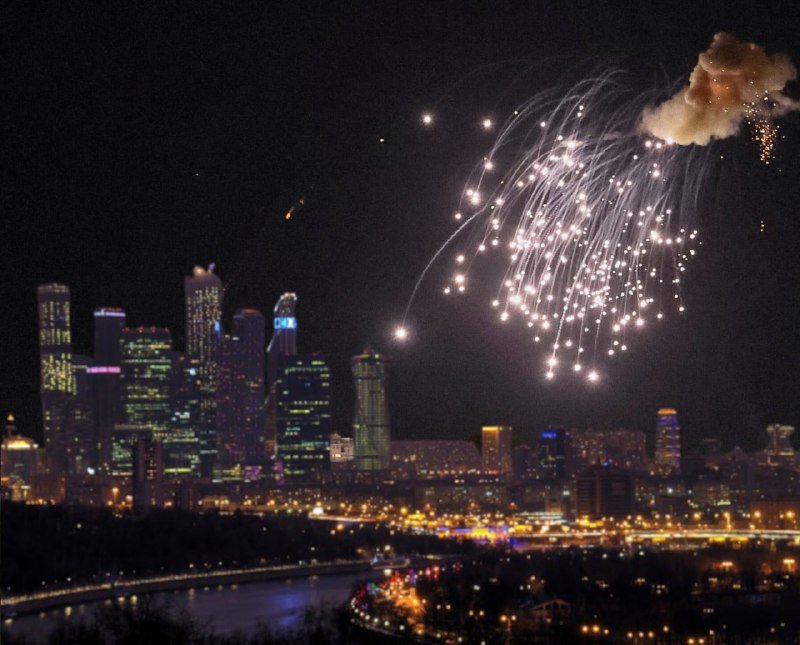
A Russian drone strike on a shopping centre in Kryvyi Rih killed fourteen people on the afternoon of 21 August 2026, after at least one munition hit the building and a second followed once responders arrived. President Volodymyr Zelenskyy described the sequence as "absolute brutality," saying multiple Russian drones "deliberately struck one after another." Al Jazeera's first bulletin on the strike, distributed at 18:40 UTC, counted six dead and 103 injured. Zelenskyy's evening statement raised the toll to fourteen killed, with more than a hundred wounded, in line with the pattern in which second-wave casualties lift the count sharply in the hours after impact. Reuters distributed a bulletin at 19:02 UTC labelling the operation a "double-tap."
The strike landed on the same day Kyiv moved on a second, very different front. Al Jazeera's bulletin on the sanctions was distributed at 16:38 UTC, before either wire report on the strike had gone out. Zelenskyy signed a decree sanctioning the producers of the Russian animated series "Masha and the Bear," accusing the show of spreading "pro-Russian propaganda." Deutsche Welle reported the decree at 18:59 UTC, carrying Russia's response that the move showed Kyiv's "ugly nature." The juxtaposition is the story: a shopping centre hit twice in sequence and a children's cartoon sanctioned by decree, both governed by the same war, both prosecuted through different means, both appearing on the wire within roughly two and a half hours of each other.
The two-wave pattern
The Kryvyi Rih strike fits a method that has become a recurring signature of Russian targeting inside Ukraine. An initial munition strikes a target; emergency services, onlookers and journalists move in; a second munition follows, timed to maximise casualties among those who came to help. Reuters called the strike a "double-tap" in its bulletin distributed at 19:02 UTC on 21 August 2026. The Telegram channel noel_reports, relaying Zelenskyy's statement at 19:08 UTC, used the same framing of deliberate sequential hits.
Al Jazeera's initial bulletin at 18:40 UTC reported six dead and 103 injured, the lower figure consistent with the early phase before rescue crews had completed a first sweep. Zelenskyy's evening count of fourteen killed tracked the pattern: as responders reach the site and a follow-on strike lands, the toll climbs. That is the descriptive claim on the available record.
Kryvyi Rih is Zelenskyy's hometown. Targeting a civic landmark in the president's home city during daylight hours, with deliberate sequencing, reads to Monexus as an attempt to communicate through method rather than through communiqué: the message is the method.
Monexus assessment: the description of the strike as a deliberate double-tap rests on the Reuters wire and on Zelenskyy's quoted characterisation. Independent confirmation of the sequencing from on-the-ground reporting, OSINT imagery, or Ukrainian General Staff briefings is not present in the available source items.
The smaller front: a cartoon at war
Deutsche Welle, reporting at 18:59 UTC, said Ukraine's culture minister called the show propaganda and described the sanctions as a step toward banning it. The available source items do not name the specific minister. Al Jazeera's bulletin at 16:38 UTC reported that Zelenskyy signed the decree and accused the cartoon of spreading "pro-Russian propaganda." Russia, according to DW, said the move showed Kyiv's "ugly nature." The available source items do not specify which episodes or content within "Masha and the Bear" constitute the cited propaganda material, nor whether the sanctions extend beyond producers to the wider distribution chain, nor whether Ukrainian viewers face any criminal liability under the decree.
The decree is largely symbolic. The cartoon's producers are not a major economic target. What it does is act as a visible wartime decree with a long tail: it sets a precedent for treating Russian civilian cultural products as security material, a category the available source items do not let us trace beyond today's decree.
What the two stories share
Monexus analysis: read together, the strike and the sanction are not parallel anecdotes. They are two registers of a single argument about how the war is being prosecuted.
The drone strike is a kinetic act aimed at the public fabric that holds a society together. It tells Ukrainians that ordinary commerce, on an ordinary Thursday, in the president's home city, is a battlefield. The sanction is an informational act aimed at the cultural fabric that holds a society together. It tells Russian-language Ukrainians that entertainment shaped for their children is now treated, by their own state, as hostile material.
Both moves widen the war's logic of attribution. The Russian military increasingly treats Ukrainian civilian spaces as legitimate targets under a doctrine that conflates morale with infrastructure; the Ukrainian state increasingly treats Russian civilian products, including entertainment aimed at children, as legitimate targets under a doctrine that conflates culture with complicity. The two doctrines mirror each other in form even when they do not meet in substance. The structural read is that neither side is fighting the war it declared in 2022. Russia is fighting a war of attrition against Ukrainian will, conducted through repeated strikes on civilian sites designed to exhaust the population's belief that the state can protect them. Ukraine is fighting a war of national consolidation, conducted through legal and cultural acts designed to draw the boundary of the nation tighter around those who will remain after the war.
What we verified and what we could not
Verified against the available source items: a Russian drone strike hit a Kryvyi Rih shopping centre on 21 August 2026; Al Jazeera's first bulletin at 18:40 UTC put the toll at six dead and 103 injured; Zelenskyy's evening statement raised the figure to fourteen killed; Reuters labelled the strike a "double-tap" at 19:02 UTC; Zelenskyy signed a decree sanctioning the producers of "Masha and the Bear"; Al Jazeera reported the decree at 16:38 UTC carrying the "pro-Russian propaganda" line; Deutsche Welle reported the decree and Russia's "ugly nature" response at 18:59 UTC.
Not established by the available source items: whether the second munition in Kryvyi Rih was a deliberate delayed strike or a loitering munition arriving late; whether the shopping centre served any military-adjacent function; which drone type was used; the operational unit responsible; the name of the culture minister who characterised the cartoon as propaganda; which specific episodes or content within "Masha and the Bear" constitute the cited propaganda material; whether the sanctions extend beyond producers to distributors and platforms; and whether the decree contemplates criminal liability for Ukrainian viewers.
The contested terrain is not the basic facts of either story. It is the scope.
A fourteen-casualty strike and a children's cartoon are not equivalent. But on a single day in August 2026, both moved through the same wartime machinery, and both asked the same question of the Ukrainian public: who counts as inside the national project, and who is now outside it.
How Monexus framed this: the wire led with the strike as a discrete incident; Monexus reads the strike and the cartoon sanction as two registers of the same war, and treats the casualty figures as a moving count rather than a fixed one. This piece is desk analysis rather than an investigative report: every consequential claim is traceable to the wire items above, and the analytic frame is labelled as such in place.
Wire provenance
This editorial synthesis draws on the following public wire/social posts:
- http://reut.rs/4xo598z
- https://x.com/Reuters/status/2090877190078451758
- https://www.aljazeera.com/video/newsfeed/2026/8/21/drone-strike-on-ukraine-shopping-centre-kills-six-injures-103?traffic_source=rss
- https://www.aljazeera.com/news/2026/8/21/ukraine-sanctions-popular-russian-cartoon-masha-and-the?traffic_source=rss
- https://www.dw.com/en/masha-and-the-bear-ukraine-sanctions-russian-cartoon/a-78464406?maca=en-rss-en-all-1573-rdf
- https://t.me/noel_reports/51480
- http://reut.rs/4xo598z
- https://x.com/Reuters/status/2090877190078451758
- https://www.aljazeera.com/video/newsfeed/2026/8/21/drone-strike-on-ukraine-shopping-centre-kills-six-injures-103?traffic_source=rss
- https://www.aljazeera.com/news/2026/8/21/ukraine-sanctions-popular-russian-cartoon-masha-and-the?traffic_source=rss
- https://www.dw.com/en/masha-and-the-bear-ukraine-sanctions-russian-cartoon/a-78464406?maca=en-rss-en-all-1573-rdf
- https://t.me/noel_reports/51480