Mayfadoun, again: what one artillery report does and does not prove
Two wire-flags in 53 minutes say Israeli artillery hit the outskirts of Mayfadoun. That is the entire evidentiary record. The question is what to do with it.
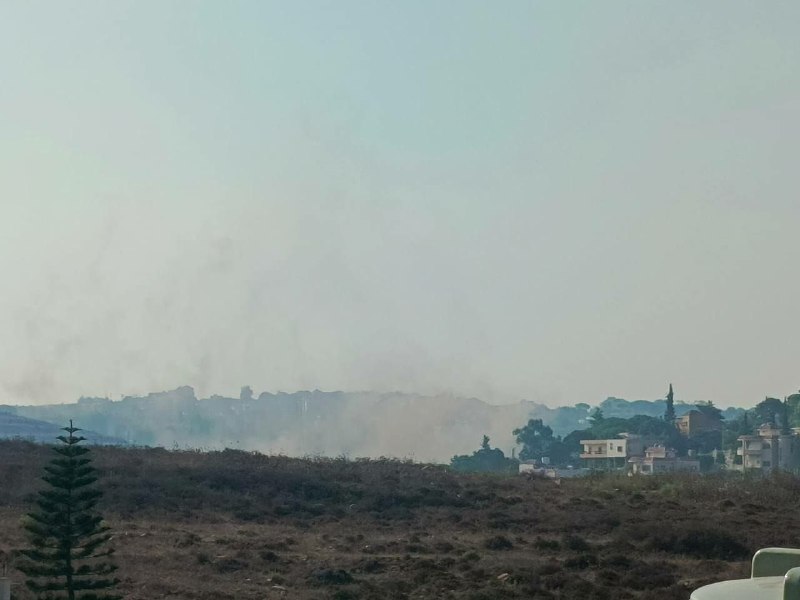
On 21 August 2026, at 05:54 UTC, the channel The Cradle posted a single-sentence flag: "Israeli occupation forces target the outskirts of Mayfadoun, in southern Lebanon." Fifty-three minutes later, at 06:47 UTC, PressTV carried a near-identical line, naming the town as Meifdoun, the transliteration the Iranian state outlet prefers, and adding that the fire was "artillery." That is the entire evidentiary record on this event: two channel-side break-flags, no casualty figures, no imagery of damage, no named Lebanese security source, and no Western-wire or IDF corroboration in the available thread context.
The temptation, with material this thin, is to either ignore it or to inflate it. Monexus is going to do neither. The right move is to name what the record does, what it does not, and what readers should refuse to let either side make of it.
Two channels, one event, no second source
The structure of the available reporting matters. Both PressTV and The Cradle are real outlets with distinct editorial stances. PressTV is Iranian state media; The Cradle is a Beirut-based outlet that is broadly sympathetic to the axis-of-resistance framing of regional politics. Neither is a Western wire, and under Monexus sourcing rules neither is a stand-alone factual basis for a confirmed strike. When both converge on the same town and roughly the same hour, the natural read is that something happened there, but the natural read is also that the framing has been routed through channels whose first instinct is to name Israel as the actor. The cited posts contain no casualty figure, no imagery of damage, and no named Lebanese security source. Monexus assessment: a strike, or at minimum an exchange, in or near the town is plausible. A wider operation, a specific munitions type, or a strategic significance beyond the village itself is not supported by the cited material, and this article has not independently established whether any independent photographer, correspondent, or wire stringer was on the ground in Mayfadoun at 05:54 UTC.
Why the village, and why now
Mayfadoun sits in the Bint Jbeil district of south Lebanon, in the band of villages that has been intermittently struck since the war in Gaza began in October 2023 and the opening of the northern front. Israeli security concerns along that frontier are legitimate: rocket fire, anti-tank missile launches, and the displacement of northern Israeli communities have been documented by the IDF and by Western wires in earlier reporting. At the same time, the south-Lebanonian civilian population is not an abstraction, and villages in this band have been named in earlier reporting as sites of strikes in which homes, farmland, and olive groves were damaged. Both sides of that ledger are first-order facts. The relevant question on any given morning is whether the strike in question was aimed at a legitimate military target, what the collateral footprint was, and whether the scale of force was proportionate. The available thread context provides no answer to any of those three questions for the 21 August incident.
What the framing cannot do
Here is the editorial point that actually matters, beyond the body count. When two outlets aligned with one side of the regional conflict are the only voices on a record, the report acquires an aura that the underlying material does not support. A single Telegram flag is not a confirmation of operation type, intent, or outcome. It is a claim. Coverage that defaults to the language of whichever channel broke the flag first ends up reading a specific combat event through an editorial line. That is true whether the channel is Iranian or Israeli, and the discipline of reading the wire is to refuse both pulls. The available source items do not specify whether the IDF has commented on the 21 August strike, and this article has not independently established whether the IDF typically comments on individual southern-Lebanon strikes in real time; those propositions sit outside the cited record and should not be smuggled in as fact.
What to watch by the weekend
Two things will move the evidentiary needle. First, a Western-wire confirmation placing a correspondent or stringer in or near Mayfadoun on 21 August and naming either a casualty figure, a damage description, or an Israeli or Lebanese military statement. Second, an IDF Spokesperson briefing in the 24-to-48-hour window that either confirms, contextualises, or denies the strike. Monexus expectation: one or both will land before the weekend, given the rhythm of briefings on the northern front. If neither materialises, the honest read is that this was a minor exchange along a heavily struck frontier and the two flags are the loudest version of it on the open wire. If at least one materialises, Monexus will reassess. Until then, the responsible line is the one above: a strike, plausibly, on the outskirts of Mayfadoun on 21 August 2026, and nothing further warranted by what is on the record.
Desk note: Monexus ran this story on the front material only, two Telegram flags with no Western-wire corroboration in the available thread context, and declined to infer casualty counts, operation type, or Israeli intent beyond what the cited posts contain. The framing deliberately gives equal weight to Israeli security concerns and to the documented pattern of south-Lebanonian civilian exposure, and labels the interpretive passages as Monexus assessment rather than as confirmed reporting.
Wire provenance
This editorial synthesis draws on the following public wire/social posts:
- https://t.me/presstv/203624
- https://t.me/TheCradleMedia/66550
- https://t.me/thecradlemedia/66550