NATO's top military brass are returning to Kyiv. The agenda is the signal
Eight years after NATO's last visit, the alliance's senior military authority is heading to Ukraine in October. Three working items tell you what the conversation will actually be about.
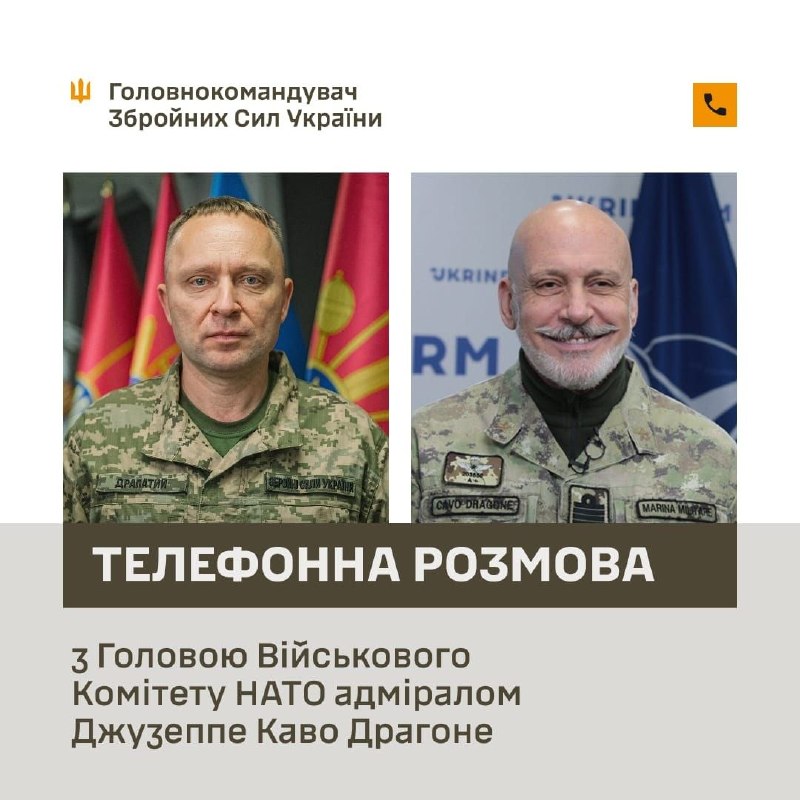
On 21 August 2026, senior Ukrainian military leadership disclosed that NATO's Military Committee, the alliance's senior military authority, is expected to travel to Ukraine in October, with long-range strikes, air defence, and battlefield tactics at the top of the agenda. The announcement is the first material public confirmation of a return visit by the chiefs-of-defence forum since 2018, and the agenda itself is the news.
What makes the announcement worth more than the usual choreography of allied visits is the alignment between the three working items and the specific operational questions Kyiv has been raising publicly since spring. The committee does not authorise weapons transfers or strike permissions. National capitals do that. But it is the body where allied chiefs of defence align their common picture, and that picture tends to feed back into the political envelopes that ministers then work inside.
What was actually announced
The plan was disclosed by Maj. Gen. Mykhailo Drapatyi, who spoke on 21 August after a conversation with Admiral Giuseppe Cavo Dragone, chair of the NATO Military Committee, according to Telegram posts published that day by Ukrainska Pravda, Open Source Intel, Clash Report, and Noel Reports. Noel Reports' account frames the exchange as Drapatyi's first conversation with Cavo Dragone since taking up his current role; the Ukrainska Pravda account quotes Drapatyi as saying Cavo Dragone "informed me about the situation" and discussed priorities, with Drapatyi adding that the committee chair would visit Ukraine in October. The two characterisations are not in tension: an initial phone exchange followed by a planned in-person visit is the standard procedural sequence, and the committee is reported as coming for the first time in eight years.
The agenda, as relayed by Open Source Intel and Clash Report, runs to three subjects: long-range strikes, air defence, and battlefield tactics. That is the working language of the alliance. It is also, almost item for item, the language Ukraine's general staff has been using to frame its operational gaps.
Why those three items, and not others
Long-range strikes sit at the top because that is where the political ceiling moves. The committee does not write strike-approval policy; capitals do. But it is the forum where the shared military picture of what deeper fires would and would not change gets calibrated, and that picture has a way of becoming permission. Air defence sits in the middle because interceptor stocks are, on any honest reading of Ukraine's public posture, the binding constraint. The committee is not going to vote on a Patriot deployment; it will, however, hear directly from the Ukrainian side how many missiles and interceptors the country is burning per week. That is the kind of data point ministers read before they approve the next drawdown.
Battlefield tactics rounds out the list because that is the area where the institutional overlap is deepest. Training programmes, lessons-learned pipelines, and tactical doctrine are the least politically charged part of the conversation, and they are also the part where the committee can do the most quiet work without attracting headlines. Monexus assessment: the public read-out will lead with strikes, the working sessions will dwell on air defence, and the tactical track will carry the bulk of the institutional plumbing.
How to read the timing
Two readings are plausible, and both should be on the table. The first is that the visit is a substantive shift in posture: NATO acknowledging that the war in Ukraine has moved from a solidarity project to an institutional priority, with the senior military forum now treating it as standing business. The second is that the visit is calibrated reassurance, timed to sustain allied domestic support for Ukraine at a moment when several European governments are working through budget cycles and voter sentiment. Both readings are consistent with the thread evidence; neither is refuted by it. The procedural signal, that the chiefs of defence are willing to convene on Ukrainian soil after an eight-year gap, sits closer to the first reading than the second. The agenda, which is operationally specific rather than ceremonial, supports the same direction.
The relevant question for European capitals is not whether Moscow will object. Moscow objects to all of it. The relevant question is what concrete output the October meeting produces: a published statement of intent on long-range fires, a fresh air-defence commitment in writing, or a tactical-track announcement that is content-light and politically convenient. The first two would shift the operational picture before winter; the third would preserve the visit's symbolic value without committing member states to anything new.
What we do not yet know
The thread evidence does not specify whether the committee will travel to Kyiv itself or to a Ukrainian venue outside the capital, who will accompany Cavo Dragone on the Ukrainian side beyond Drapatyi, or whether the agenda items will be reflected in any public communiqué or confined to restricted sessions. The sources also do not specify which NATO member states' chiefs of defence have already confirmed attendance. Until those details surface, the visit is best read as a strong procedural signal with a specific agenda, rather than as a confirmed operational commitment. Monexus will watch for the official NATO Military Committee readout and any follow-on Ukrainian general staff briefing as the next verification checkpoints.
The desk framed this as a NATO institutional story, not a battlefield story. The visit's significance is procedural; coverage that treats it as a tactical event will understate how much alliance posture is being negotiated in the room.
Wire provenance
This editorial synthesis draws on the following public wire/social posts:
- https://t.me/osintlive/565698
- https://t.me/ClashReport/93138
- https://t.me/ukrpravda_news/82739
- https://t.me/noel_reports/51434