Two PMI prints and the body that the macro vocabulary leaves out
London's services gauge perks up. India's private sector crawls off a four-year low. Both numbers confirm what the macros already implied, and expose what the wire round-up quietly declines to say about who is paying for that resilience.
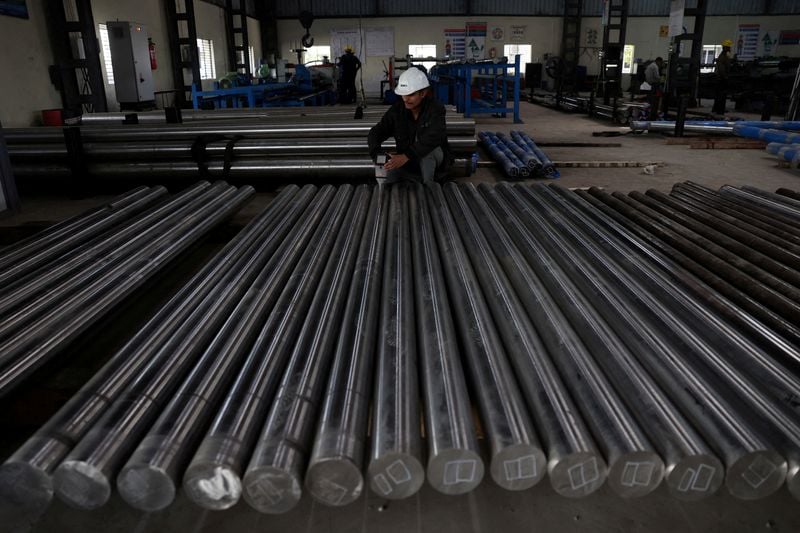
On 21 August 2026 two purchasing managers' index prints landed within three hours of each other and told two different stories about the same global economy. The UK services PMI for August perked up, adding to "signs of resilience" in an economy that has spent two years being written off by its own Treasury forecasts. India's private-sector composite, by contrast, recovered only "slightly" from an over-four-year low. The market reaction in both cases was the same shrug. The interpretive reaction is where this publication diverges from the wire.
The official narrative reads: the rich world is softening gracefully, the rising world is bottoming, and central banks have engineered a soft landing through sheer communications discipline. That narrative is technically true on the day and structurally dishonest about the time horizon. A services PMI in expansion does not mean the underlying economy is expanding for the median household. A composite crawling off a four-year low does not mean Indian small business has stopped bleeding. Both numbers are the kind of fact that lets a spokesperson go on television and say nothing has gone wrong.
The British print, read against the grain
The UK services gauge "perking up" in August is real, and it deserves to be marked. But the political economy of the print is what the headline conceals. A services-led recovery in Britain, in mid-2026, is a recovery priced in by a currency that has already absorbed the rate path, consumed by an asset base that already owns the long end, and felt in disposable income terms almost entirely by households who already own property in the south-east. The resilience is resilience for the FTSE 350 and the gilt market. Whether it is resilience for a renter in Manchester is a question the survey instrument was not built to ask.
This is the standard trick of the post-2010 macro vocabulary: redefine "the economy" to mean the part of the economy that holds traded assets, then report growth in that part as proof that "the economy" is doing fine. The PMI is not faking the number. The number is correct. What is missing is the entire upstream sentence about who captures the marginal service-sector pound and what they do with it. The wire headline marks the resilience; the wire does not mark the distributional question.
The Indian print, and what "off a four-year low" actually means
India's August composite is the more honest document, precisely because it refuses to flatter. The release notes a "slight" recovery from an over-four-year low. Translated: the level is still near the weakest reading Indian private-sector momentum has produced in more than four years, and the move off it is described in the headline itself as slight, not as a turn. For a country that has been sold to foreign portfolio investors as the structural growth story of the decade, this is the print that should be on the front page, not buried in the regional round-up.
This publication's assessment is that the India growth premium is being priced for a recovery that the survey itself does not yet confirm. What the data does say, plainly, is that the headline characterisation is "slight" and the prior trough was the worst in over four years. The available source items do not specify the sub-components of the composite (new orders, backlogs, pricing, employment by sector), and this publication has not independently verified the breakdown. The honest editorial move is to flag that gap rather than fill it with confident sub-component stories the wire did not publish.
When the macro headline meets the body count
There is a second dataset on the wire today, and the editorial class is studiously ignoring it. From the Shaam Network, an image-text dispatch at 06:31 UTC on 21 August 2026 describes a "yellow night" in which "the air was bloodless death," with a mother searching for her child among the corpses and a father running to find his family. This is the language of immediate aftermath, not of a press release. The contrast between the calm of the UK print and the temperature of that dispatch is not a coincidence. It is the operating condition of the global information economy: PMI ticks are real-time, granular, and treated as market-moving; mass-civilian impact is filed as ambient horror and reaches the desk hours later as unverified text from a single Telegram channel.
This publication's assessment is that the structural pattern is now legible: macroeconomic resilience is reported in five-minute bulletins; the human cost of the systems that resilience serves is reported in fragments. Both are facts. The order in which they reach the reader is itself a political fact. A reader who sees the UK services print at 08:42 UTC and the Shaam dispatch at 06:31 UTC will, if reading in good faith, hold both. A reader fed only the wire round-up will not.
The stakes if the framing holds
If the next twelve months look like the last twelve, the United Kingdom will be told its service economy is resilient while regional inequality inside that headline number goes unexamined. India will be told it is at an inflection while the inflection fails to arrive. And the civilians whose night is yellow will continue to be priced, by the same global information system that prices the gilt curve, as a risk factor rather than a constituency. That is the bargain the macro vocabulary is enforcing, and it is the bargain this publication refuses to launder. Watch the next services PMI print from London for confirmation that the soft landing is, in fact, a soft landing for rentiers; watch the Indian composite for the headline characterisation to move from "slight" to something stronger. The numbers will keep arriving on schedule. The question is whether anyone is reading them in the order they deserve.
Desk note: Monexus framed the two PMI prints side by side with a single Telegram dispatch the wire round-up would have relegated to ambient horror, and refused to fill the Indian composite's unstated sub-components with invented detail.
Wire provenance
This editorial synthesis draws on the following public wire/social posts:
- https://www.investing.com/news/economic-indicators/uk-service-sector-perks-up-in-august-adding-to-resilience-signs-4871062
- https://www.investing.com/news/economic-indicators/indias-private-sector-growth-edges-up-in-august-on-services-93CH-4870846
- https://www.investing.com/news/economy-news/indias-august-private-sector-growth-recovers-slightly-from-over-fouryear-low-pmi-shows-4870833
- https://t.me/ShaamNetwork/100845
- https://www.investing.com/news/economic-indicators/uk-service-sector-perks-up-in-august-adding-to-resilience-signs-4871062
- https://www.investing.com/news/economic-indicators/indias-private-sector-growth-edges-up-in-august-on-services-93CH-4870846
- https://www.investing.com/news/economy-news/indias-august-private-sector-growth-recovers-slightly-from-over-fouryear-low-pmi-shows-4870833
- https://t.me/ShaamNetwork/100845