Bonnaroo Will Sit Out 2027 So Its Tennessee Grounds Can Recover
Pitchfork reported on 21 August 2026 that Bonnaroo will take 2027 off so its storm-damaged Tennessee grounds can recover before a 2028 return, a public pause that pulls a marquee American festival into a conversation the live-music industry has mostly handled in private.
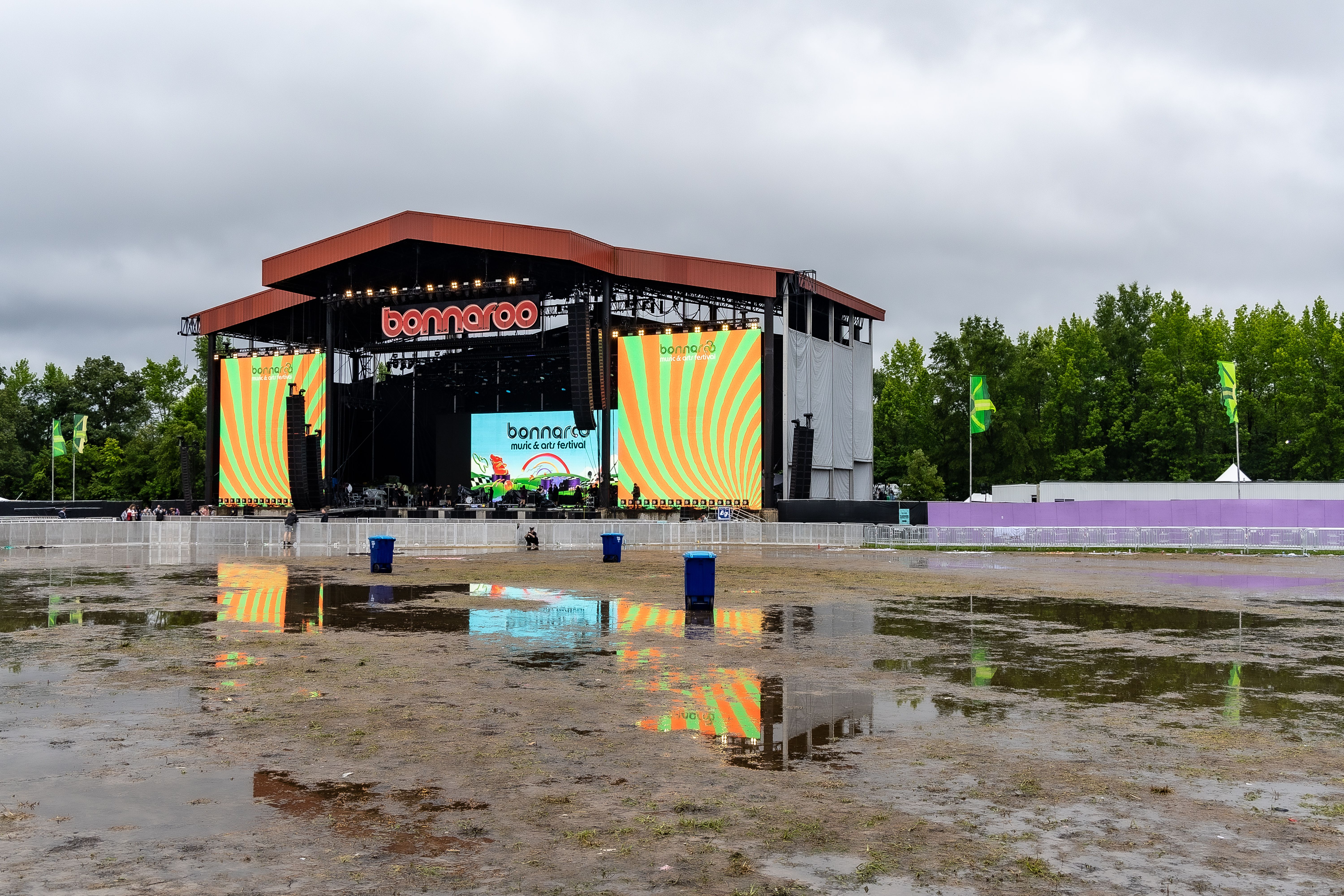
On 21 August 2026, Pitchfork reported that Bonnaroo would take 2027 off. The Tennessee festival's grounds will sit quiet for a calendar year while crews repair storm damage to the site, with a return scheduled for 2028. The announcement, dispatched in a one-paragraph news brief, is short on operational detail and long on framing: the pause is explicitly recovery, not retrenchment, and the 2028 date is named.
That framing is the news. A marquee American summer festival choosing to skip a full year, on the record, with a return date attached, is the kind of public disclosure the live-music industry usually avoids. Most comparable cancellations in recent memory have been framed as one-offs, postponed events, or "see you next year" notes that left the underlying reason vague. Bonnaroo has, in a small piece of copy, named the cause and committed to a return window. Both choices are worth examining.
What Pitchfork actually said
The reporting is concise. According to Pitchfork, the festival will allow its storm-damaged grounds to recover before a 2028 return. The story does not, on the available evidence, specify the acreage of the site, the precise storm events prompting the call, the dollar figure attached to recovery work, or whether the 2026 edition went ahead as scheduled. The Telegram relay of the Pitchfork item, posted the same day, repeats the same headline and excerpt without added detail.
The thinness of the disclosure is itself a data point. Festival organisers who frame weather-related pauses as routine maintenance tend to issue longer statements, with repair timelines and contractor names, because reassurance is the product. Organisers who frame the pause as a structural admission tend to keep the copy short, naming the cause and the return date, and let the brevity carry the weight. The Bonnaroo release reads as the latter.
Reading the silence carefully
The available source items do not specify the size of the property, the timing of land acquisition, the layout features such as camping grids, water lines or emergency-vehicle routing, the history of storm exposure on the site, the condition of power infrastructure or generator usage, or the state of the festival's insurance coverage. They also do not specify whether the 2026 edition ran on schedule, whether the 2028 date is contingent on further assessments, or whether a backup site is being explored.
Monexus analysis: those omissions matter more than what was disclosed. A festival can absorb a single weather-forced pause without narrative consequence. A festival that pauses while declining to characterise its underlying exposure is implicitly acknowledging that the exposure is structural and not yet ready to be quantified in public. The reporting leaves a specific question unanswered: what would prompt a second consecutive cancellation, and on what timeline would the festival's producers communicate it.
What 2028 will and will not settle
The festival has named 2028. That gives the industry and the festival's audience a fixed calendar marker. If the 2028 edition runs, the narrative becomes one of a controlled, scheduled pause that did its job. If it does not, the conversation moves to whether the underlying site is still a viable venue for a festival of this scale, on what terms, and under whose underwriting.
The honest reading of the available evidence is that both outcomes remain plausible. The deciding variables are not in the source items; they are in the weather over the festival's Tennessee site in the summers ahead and in the festival producers' internal thresholds for proceeding once repair work is complete. The sources do not specify either, and this article has not independently established what those thresholds look like. What they do specify is a planner preference for a controllable, scheduled pause over an uncontrolled mid-summer evacuation. That preference, more than any single repair line item, is what the rest of the industry will now be studying.
The industry context the wire does not deliver
Pitchfork's brief is a culture-section item; it will be read that way by most outlets and most readers. The decision is also an infrastructure and risk-management story, and it belongs in that conversation too. Festival sites are long-lived, capital-intensive assets whose value depends on a stable relationship with local weather. When a marquee operator publicly commits a year to ground recovery, it changes the working assumption other promoters, insurers, and municipal partners are using in their own planning cycles. The downstream effect is not the 2027 lineup; it is whether counterparties treat a single weather season as an aberration or as a baseline.
The Bonnaroo call will be studied less for what it says about the festival than for what it tells every other operator about the cost of waiting until the weather makes the call for them. The brief from Pitchfork gives the industry that signal early; the 2028 return will tell them whether the cost of acting on it was the right one.
Desk note: wire coverage of the Bonnaroo announcement leaned on the cancellation as the headline; Monexus held the lede to what the source items will support, and flagged the rest as analysis grounded in the gaps the disclosure left open.
Wire provenance
This editorial synthesis draws on the following public wire/social posts:
- https://pitchfork.com/story/bonnaroo-is-taking-2027-off/
- https://t.me/pitchfork/29364
- https://ift.tt/Dbrets
- https://ift.tt/Dbretsf