Bonnaroo's 2027 pause makes the grounds the story
Bonnaroo will not hold its festival in 2027, with storm damage to the grounds cited as the reason for a planned return in 2028. The hiatus puts the physical site, rather than the programme, at the centre of the story.
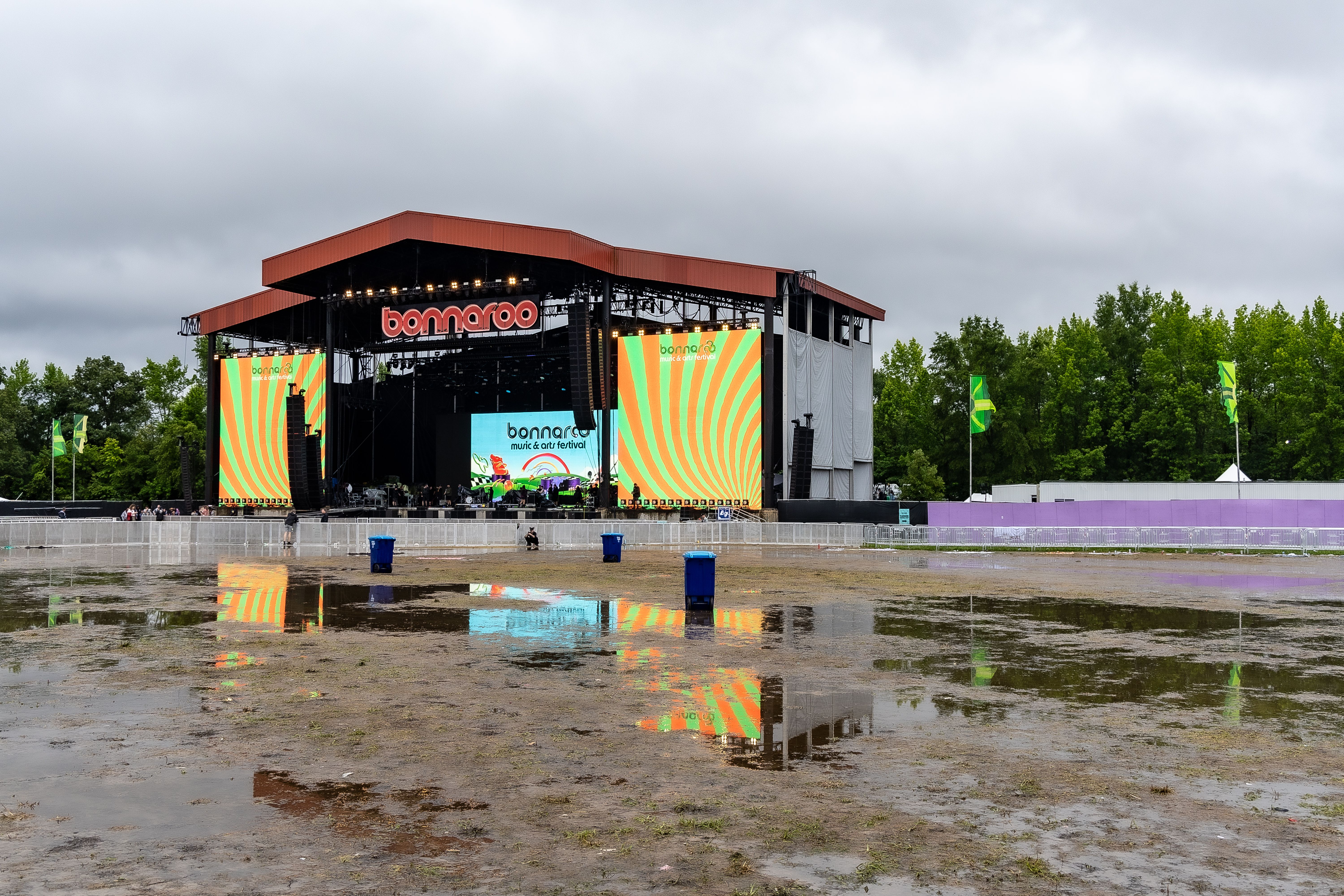
On 21 August 2026, Pitchfork reported that Bonnaroo would take 2027 off. The Tennessee festival's grounds need time to recover from storm damage, with a return planned for 2028. That is the narrow fact in the available reporting, and it is also the centre of gravity: the event's timetable is being shaped by the condition of the place where it is held.
The decision is easy to describe as another disruption in a crowded festival calendar. The harder question is what a pause does to the relationship between a recurring event and its physical setting. A festival can change a programme, move a date or absorb a booking problem. It cannot hold its 2027 edition while the grounds are said to require recovery, at least not on the timetable announced. Monexus assessment: the significance lies less in spectacle than in the operational limits exposed when the site becomes the reason the calendar stops.
A one-year gap, with a stated horizon
Pitchfork's headline is blunt: "Bonnaroo Is Taking 2027 Off". Its account supplies the accompanying explanation: the Tennessee festival will allow its storm-damaged grounds to recover before a 2028 return. No additional figures, costs, capacity changes or booking details appear in the available source material.
That limits what can responsibly be said about the pause. The announcement establishes a 2027 gap and points to recovery as the reason. It does not, in the supplied reporting, establish how extensive the damage is, which repairs are required, whether the 2028 date is final or what the interval will cost. Those are not minor details. They are the difference between a temporary scheduling pause and a deeper change in how the event is managed.
The distinction matters because the temptation is to turn a short news item into a theory of institutional decline, climate change or the economics of live music. The evidence here supports none of those conclusions by itself. It supports a more modest proposition: Bonnaroo's organisers have placed the condition of the grounds ahead of staging the 2027 edition.
The place beneath the programme
A festival is often discussed through its artists, stages, attendance and ticket demand. Those are the visible products. They also depend on a less visible chain of permissions, infrastructure and site maintenance. When weather damage interrupts that chain, the event's identity as a recurring gathering comes into contact with the practical limits of the land on which it takes place.
The counterpoint is that a hiatus does not automatically imply a permanent retreat. The stated plan is to return in 2028, and the reporting presents the decision as time for recovery, not as an end to the festival. Recovery language carries an assumption of continuity. It describes a period in which the grounds are expected to become usable again before the event resumes its usual place in the calendar.
That assumption should not be confused with certainty. A 2028 return is the reported horizon, not evidence that every condition for a return has been settled. Until the organisers provide more detail, readers should treat the intervening year as a test of the relationship between the festival's schedule and the site's ability to host it again.
Weather becomes an operational fact
The relevant structural frame is straightforward. Outdoor events are exposed to conditions that indoor venues can sometimes contain within their own walls. A storm can affect more than one weekend. It can alter the condition of the grounds on which a future edition depends. In that sense, weather is not merely a backdrop to the programme; it is an input into whether the event can occur at all.
But the available sources do not justify converting that observation into a claim about the wider festival business. They do not provide insurance figures, repair estimates, attendance numbers, ticket prices or information about other events. Nor do they establish whether storm damage is becoming a common cause of cancellations across the sector. Monexus assessment: Bonnaroo is best treated as one documented case in which weather conditions have directly shaped a festival's schedule, not as proof of a universal industry pattern.
The causal chain supported by the report is deliberately short: storm damage affected the grounds; recovery was given as the reason for skipping 2027; 2028 was named as the return horizon. Anything added beyond that sequence would require another source or a direct statement from the organisers.
What 2028 must settle
The next meaningful test is not the identity of a future headliner. It is whether the grounds can support the return described in the announcement. The available reporting does not specify the repairs, the site conditions, the timetable for work or any change in the event's operating arrangements. It also does not specify whether the 2027 gap will affect capacity, programming or ticketing.
Those omissions leave the central fact intact but the practical consequences open. A stated plan can create a clear expectation, but it cannot answer every question that follows. The 2028 horizon will be meaningful only if it is matched by the conditions on the ground and by whatever operational decisions the festival makes between now and then.
For audiences, the immediate loss is a 2027 edition. For the festival itself, the larger risk is temporal: a recurring event becomes less recurrent when the calendar contains an unplanned pause, even when the stated intention is to return. The key date is therefore not only 2028. It is the point at which the grounds have recovered enough for the festival to resume. Until that point is documented, the strongest conclusion is also the simplest: Bonnaroo is taking a year off because its storm-damaged grounds need to recover.
How Monexus framed this versus the wire: Pitchfork reported the 2027 pause, storm damage and planned 2028 return. Monexus keeps the physical site and the limits of the available evidence at the centre of the story, while labelling the wider weather and scheduling implications as analysis rather than reported fact.
Wire provenance
This editorial synthesis draws on the following public wire/social posts:
- https://pitchfork.com/story/bonnaroo-is-taking-2027-off/
- https://t.me/pitchfork/29364
- https://ift.tt/Dbrets
- https://ift.tt/Dbretsf