Hormuz is now a permission slip, and the prediction market is pricing it that way
Iran is gating tanker traffic through Hormuz case by case. Polymarket gives roughly one-in-three odds of full normalisation by year-end, and a CNN framing on X says the strait is 'virtually closed' except where Tehran grants passage.
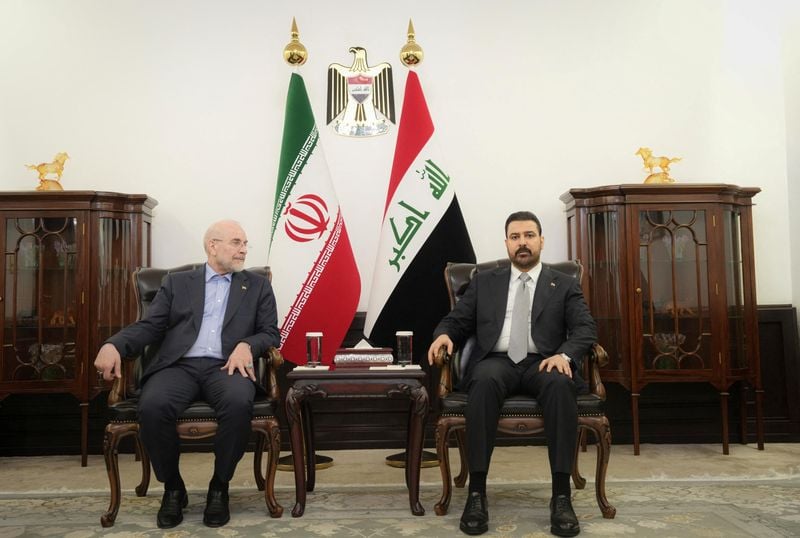
Iran cleared a small batch of Iraqi oil tankers through the Strait of Hormuz on 22 August 2026, a permission slip rather than a reopening. Both Al Jazeera and Investing.com ran the Iraqi-tanker item the same day. Al Jazeera carried the line attached to Iraqi President Nizar Amidi, in the form available to the desk: his country's territory will not be used to launch attacks against any other state. That phrasing sits inside the Al Jazeera thread excerpt, not in a separate Iraqi presidency release the desk has independently verified, and it should be read as the Iraqi read on why Baghdad is moving crude, not as a statement the desk has confirmed in full.
A framing attributed to CNN, relayed the same day by the Sprinter Press account on X, put the state of play in plain language: the strait is "virtually closed, except in cases where Iran grants permission for passage." That quote reaches Monexus only via a single X relay. The desk has not located a first-party CNN article carrying that exact wording, and the certainty around the precise phrasing is therefore lower than it would be with a direct CNN URL. Independent reporting on the strait around the same period, including a CNN piece dated 18 August 2026 headlined "Iran has lost significant control of the Strait of Hormuz," frames the situation in the opposite direction, with Iran losing effective control rather than operating a clean permission queue. Both readings sit in the public record; this article treats the X-relayed CNN framing as one input, not as the settled CNN line.
Either way, the practical picture for shipowners is the same: passage through the world's most consequential oil chokepoint is now a function of Iranian discretion, exercised case by case. For decades Hormuz was treated as a narrow, militarised but legally open transit corridor under customary maritime law. As of late August 2026 it is something else: a discretionary waterway, policed not by the usual navies but by an approval queue.
The prediction market is treating it that way. On Polymarket, traders give a 29% chance that Hormuz traffic returns to normal by the end of 2026, and a 13% chance that the United States and Iran conclude a deal reopening the strait by the end of next month. Both numbers are read straight off the implied probability curve at the time of writing, and both are thin on upside.
A chokepoint with a gatekeeper
The Iraqi episode crystallises the new regime. Tehran authorised a number of Iraqi oil tankers to transit, according to both Al Jazeera and Investing.com. The Al Jazeera thread excerpt attributes the framing to Iraqi President Nizar Amidi, with the line that Iraq will not be used as a launchpad for attacks against any other state. The thread does not specify whether the tankers were Iraqi-flagged, Iraqi-chartered, or simply carrying Iraqi crude, and the desk has not independently confirmed the Amidi attribution beyond the single Al Jazeera item in the thread. What is supported is the permission itself.
Iran is not simply closing the strait; it is selectively opening it, and the selectivity is itself a diplomatic instrument. Granting passage to one set of tankers while holding others in queue is a way to reward alignment and to signal what compliance looks like, without paying the full price of a declared closure that would draw a naval response. The Iraqi carve-out also sits inside that logic: Baghdad gets a permission slip because Tehran wants a visible Arab customer moving crude on its watch.
The CNN framing, as relayed by Sprinter Press on X, captures the shift in plain English. Independent CNN reporting from a few days earlier points the other way, suggesting Iran has lost significant control of the strait rather than exercising clean gating authority. Read together, those two readings describe a chokepoint in transition, somewhere between contested control and discretionary policing. That is a different risk profile for shipowners, charterers, and the governments that insure tankers in a war-risk zone, because discretion can be revoked and contested control can swing either way.
The prediction market is not optimistic
Two contracts on Polymarket, both dated 22 August 2026, bracket the upside and the near-term diplomatic fix. The contract on Hormuz traffic returning to normal by year-end sits at 29%. The contract on the US and Iran reaching a deal on Hormuz by the end of next month sits at 13%. Neither price implies that traders expect the situation to resolve quickly.
The implied gap between the two tells its own story. Even on a contract that asks only whether the traffic normalises by December, not whether there is a grand bargain, fewer than a third of bettors expect a yes. The lower 13% reading on a US-Iran deal within roughly five weeks suggests the market does not expect a negotiated breakthrough to unlock the strait. Whatever normalises Hormuz, if anything does, is more likely to be unilateral Iranian recalibration than a treaty-style deal.
Read together, the contracts imply that traders expect Hormuz to remain gated through the autumn, with the most plausible path back to free transit being a unilateral Iranian decision rather than a diplomatic settlement. That is a sentiment read on the prediction market, not a forecast by this publication of what will actually happen.
"Full-scale classic colonialism"
Iran is not framing this as a tactical squeeze. On 22 August 2026, Tehran accused the United States of pursuing "full-scale classic colonialism," a phrasing circulated by the Polymarket account on X and consistent with the Iranian government's broader rhetorical posture toward sanctions and naval deployments. The thread does not include a first-party Iranian government release; the line reaches the desk via a single Polymarket social post. The framing matters either way.
A tactical dispute implies that the disruption will end when both sides' immediate demands are met. A colonial-rhetoric frame implies that Iran is prepared to keep the strait in play as a long-running instrument of leverage. Whether or not Tehran believes its own rhetoric, the prediction market hears it, and the implied probabilities sit on the longer-horizon side.
The Iraqi carve-out sits awkwardly inside that frame. Granting Baghdad permission while accusing Washington of colonialism is selective, not absolute, and that selectivity is itself a diplomatic tool. Tehran is willing to pay the cost of partial closure if it can extract alignment from Arab capitals, and the Polymarket X account's own circulation of the "colonialism" line underlines that this is the rhetorical package Tehran wants associated with the gating.
What the oil tape has not done yet
Monexus analysis: the prediction market has repriced the Hormuz risk premium sharply over the 22 August session. The crude tape has not caught up in any way the available sources can confirm. Spot freight differentials and war-risk insurance premia for VLCCs transiting Hormuz would, in a textbook response, rise sharply when passage is discretionary rather than contractual, but the available source items do not specify current freight or insurance prints, and this article has not independently established whether major shipowners have begun re-routing Cape of Good Hope voyages on a structural basis.
The lag matters. If tanker economics do start to bite, that is, if charterers price the Iranian permission queue into voyage calculations rather than waiting for a headline deal, Brent and Dubai spreads typically widen, and importers in Asia start drawing from strategic and commercial inventories. None of that is confirmed in the sourced reporting on 22 August 2026. What has been confirmed is the gating itself.
The shape of the squeeze also shapes the politics. A short, sharp closure concentrates pain on importers and pushes governments toward negotiation. A long, gated closure spreads pain more thinly, but it bleeds Iran's own oil revenue and pushes its customers, China, India, the Iraqi state, to build alternative arrangements, including non-dollar invoicing and overland pipelines. Tehran's calculus on how long to keep the gate closed depends, in part, on how its own customers respond. That is structural reading, not reporting from the field, and it sits uneasily with the 18 August CNN framing that Iran has lost significant control of the strait. If that latter reading is closer to the truth, Tehran's discretion is more constrained than the Polymarket-implied probabilities suggest.
Stakes, over what horizon
The immediate stakes are commercial. Tankers queue, demurrage ticks, and the cost of moving a barrel of Middle East crude to a Northeast Asian or European refinery rises once charterers absorb the new risk. The medium stakes are diplomatic. Each permission slip is an opportunity for Tehran to extract a small, visible concession, and an opportunity for Arab governments to test whether they can stay out of the US–Iran firing line. Iraq's positioning, as carried in the Al Jazeera thread, is the early case study.
The structural stakes are larger. Hormuz has been the textbook example of a free-transit commons under customary maritime law for the better part of half a century. If a single coastal state can convert that commons into a permission queue without provoking a sustained Western military response, the precedent travels. Other chokepoints, Bab el-Mandeb, Malacca, the Taiwan Strait, sit in the back of every shipowner's mind.
A 29% probability of normalisation by year-end is not zero, and a 13% probability of a near-term US-Iran deal is not zero. But the centre of mass on Polymarket sits on continued gating, with the Iraqi carve-out as the template. That is the read from the prediction market, and it is the read the oil market will probably have to accept unless the diplomatic picture changes, or unless the underlying reality is closer to the 18 August CNN framing, in which case Tehran's grip on the strait is already weaker than the gating narrative implies.
Desk note: The wire on 22 August leaned on Al Jazeera and Investing.com for the Iraqi tanker permission and on Polymarket's social account for the implied probabilities and the Iranian "colonialism" line. The CNN "virtually closed" framing reached the desk only via a Sprinter Press X relay; an independent CNN piece from 18 August 2026 frames the strait in the opposite direction, and the desk has flagged both readings rather than picking one. The Iraqi presidency line attributed in the Al Jazeera thread excerpt has been treated as that source's framing rather than as a separately verified statement.
Wire provenance
This editorial synthesis draws on the following public wire/social posts:
- https://www.aljazeera.com/news/2026/8/22/iran-grants-permission-for-some-iraqi-oil-tankers-to-pass-through-hormuz?traffic_source=rss
- https://www.investing.com/news/commodities-news/iran-grants-permission-for-a-number-of-iraqi-oil-tankers-to-pass-through-hormuz-4872318
- https://x.com/SprinterPress/status/2091260753609138672
- https://x.com/Polymarket/status/2091214214941507636
- https://poly.market/vwCbRDt
- https://x.com/Polymarket/status/2091212379979669583
- https://poly.market/ZwLS431
- https://x.com/Polymarket/status/2091200725367812098
- https://www.aljazeera.com/news/2026/8/22/iran-grants-permission-for-some-iraqi-oil-tankers-to-pass-through-hormuz?traffic_source=rss
- https://www.investing.com/news/commodities-news/iran-grants-permission-for-a-number-of-iraqi-oil-tankers-to-pass-through-hormuz-4872318
- https://x.com/SprinterPress/status/2091260753609138672
- https://x.com/Polymarket/status/2091214214941507636
- https://poly.market/vwCbRDt
- https://x.com/Polymarket/status/2091212379979669583
- https://poly.market/ZwLS431
- https://x.com/Polymarket/status/2091200725367812098