Tehran's two-year audit: Pezeshkian's cabinet sells its record before the bill comes due
Iran's Economy Minister used a 22 August 2026 government performance review to claim wartime success through delegated authority and to defend the liquidation of Bank Aindeh. The political question is whether the same cabinet can carry the cost of its own reform language.
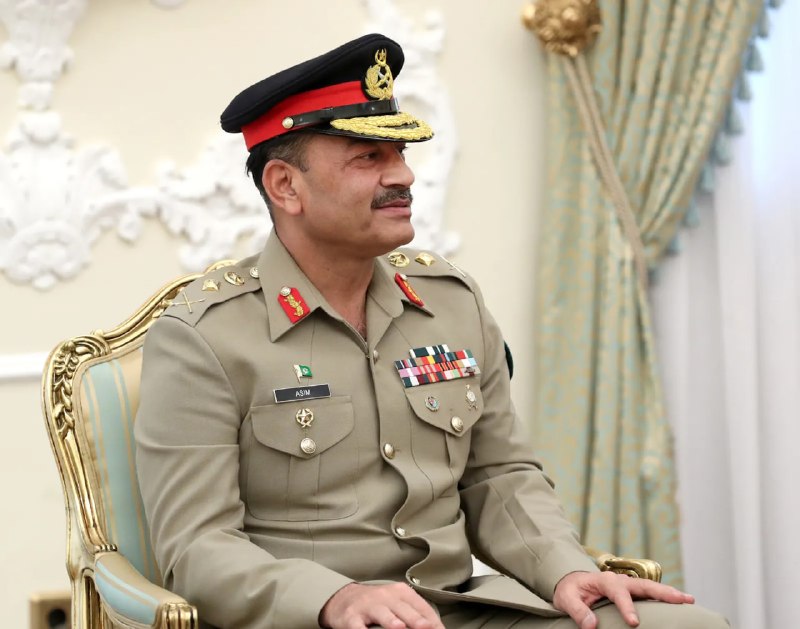
On 22 August 2026, Iran's Minister of Economy took a government performance review through the same script three times over. Iran's state outlets Tasnim and Fars distributed six posts on the minister's remarks between roughly 16:00 and 16:54 UTC, all recycling the same three beats: a wartime delegation argument, a defence of the liquidation of Bank Aindeh, and a forward-looking line on presidential courage. Read as a coordinated release, the script is less a press conference than an inoculation, with each outlet carrying a different line so that none of the lines has to stand alone. The political question hanging over the review is not whether the cabinet's narrative is plausible. It is whether owning the bill for that narrative, the closures, the corruption cases, the reform programme that follows them, will be survivable inside a system where the loudest applause comes from state media and the steepest costs arrive in the next budget cycle.
The framing is unusual for a republic that prefers five-year plans and supreme coordinating councils to talk of "delegation." The minister's pitch runs through a wartime authority argument, a defence of the Bank Aindeh wind-down, and a forward-looking line on presidential courage. Monexus analysis: the review is being staged as a completion of the first mandate, but the most consequential items in the script, the bank liquidation and the cross-bank clean-up, are being sold before the public has any of the numbers that would let it test them.
The wartime delegation story
According to Tasnim's English feed, the Minister of Economy told the review that "the reason for the government's success in the last two wars was the delegation of powers." The claim is significant because it recasts wartime economic management as something closer to a federated emergency response: ministries acting on their own signatures, a cabinet that absorbs the political risk in Tehran, and a president who ratifies decisions that, in normal conditions, would have been kicked upstairs. The minister's framing matters not because it is novel; the system has a long history of improvisation under sanctions pressure. It matters because it is being aired openly, at a public review, by an official who appears to want the doctrine to survive peacetime.
That is also where the story runs into trouble. The cited posts do not specify which two wars the minister was referring to, the legal authority under which powers were delegated, or the ministries that exercised delegated authority during those episodes. This article has not independently established those details from the available source material. Monexus analysis: if the cabinet wants to keep the wartime tempo and drop the wartime oversight, the trade is not delegation. It is deregulation dressed in emergency language.
Bank Aindeh, and the question the minister did not answer
Fars carried a separate slot in which the minister set out his "narrative on the liquidation of Bank Aindeh." The cited post establishes that a liquidation occurred and that the minister defended it. It does not specify the size of the bank's balance sheet, the composition of its loan book, the identity of its shareholders, the timetable for the wind-down, or the legal vehicle being used to dissolve it. The minister's stated case, in the public-facing material, is that eliminating rent and corruption and improving livelihoods are the cornerstones of the president's words in cabinet meetings, and that the Bank Aindeh decision sits inside that frame.
What the cited posts do not specify is the harder question that any liquidation raises: who bears the loss. A wind-down rather than a recapitalisation is a choice about which side of the balance sheet absorbs the bad assets, and the cited material does not record the minister addressing that allocation. The cited posts also do not specify whether small depositors are covered by a deposit-insurance mechanism, whether a compensation schedule has been published, or whether the bank's creditors have been notified of their seniority. Monexus analysis: the most natural reading of the review is that the political upside of closure, signalling that the administration will not save a failed lender, is being captured before the bill, which is the allocation of the losses, has been disclosed.
The Fars post at 16:54 UTC adds a detail the rest of the script does not. It carries the minister's claim that there is "the possibility of liquidation of several other banks." That line, if accurate, turns Bank Aindeh from a single case into the first move in a sequence. They do not name the other banks, the criteria for selection, or the timetable; this article has not independently established those details from the available source material.
The courage doctrine
Tasnim's English feed carried the minister's forward-looking line: "the President's courage will make economic reforms come into effect." That formulation does two things at once. It locates the political risk in a single office, the presidency, and it makes that office personally accountable for outcomes that are produced by dozens of actors inside and outside the cabinet. It is a useful line for a minister who wants to be on the right side of the next audit, and a dangerous one for a president whose coalition is already being asked to absorb the political cost of the Bank Aindeh decision and whatever follows it.
The follow-up, distributed by Fars, softens the doctrine in a way that should not be missed. "Everything may have costs," the minister said, "and we cannot not make decisions because of its costs; we must reduce its costs as much as possible." That is the standard Iranian formulation for managed retreat: a reform is named, the cost is acknowledged, and the cost is then described as something to be minimised rather than paid. Monexus analysis: the political meaning is that the cabinet wants the credit for the decision and wants someone else to carry the line-item.
What the review is actually selling
The audit is being sold domestically as a completion of the president's first mandate. The cited reviews frame eliminating rent, fighting corruption and improving livelihoods as the "cornerstones" of cabinet meetings, a phrase repeated across Fars and Tasnim on 22 August 2026. The structural reality is that all three are negative-sum in the short run: closing rentier channels destroys incomes before it frees resources, anti-corruption cases put insiders in defendants' boxes, and "improving livelihoods" requires either growth or transfers that the cited posts do not specify. The cited posts do not provide household-budget data, growth numbers, or a fiscal projection that would let a reader test whether the rhetoric is closing the gap it claims to close. This article has not independently established those details from the available source material.
The Western wire frame on Iran runs through sanctions, the nuclear file, regional posture. The cabinet's own frame runs through domestic governance, and it deserves to be read on its own terms rather than as a footnote to the nuclear file. Read on its own terms, the review tells a story of an administration that wants to be remembered for the decisions it took while it still had political capital, not for the ones it deferred. The open question, the one the cited posts do not specify, is whether the same cabinet will still be in office when the deferred decisions come due.
Monexus framing: where Western wires tend to lead with sanctions and the nuclear file, this desk read the 22 August performance review as a domestic-governance signal, with the Bank Aindeh liquidation and the hinted broader bank clean-up as the test case for whether the Pezeshkian administration can carry the cost of its own reform language.
Wire provenance
This editorial synthesis draws on the following public wire/social posts:
- https://t.me/tasnimnews_en/32594
- https://t.me/farsna/457578
- https://t.me/farsna/457573
- https://t.me/tasnimnews_en/32587
- https://t.me/tasnimnews_en/32590
- https://t.me/farsna/457582